


The central government has recently announced that it will be extending the tenure of the Mahanadi Water Disputes Tribunal by nine months, providing some much-needed time to resolve the ongoing issues between Odisha and Chhattisgarh regarding the sharing of river water. This decision, which was made by the Ministry of Jal Shakti and notified on Friday, will now allow the tribunal to continue its work until January 13 of next year. This comes as a relief to both states, as the tribunal's current tenure was set to end in just a few days on April 13.
According to an official statement, this decision was made after a joint request from the governments of Odisha and Chhattisgarh. Both states agreed that an extension was necessary in order to effectively complete the adjudication process. Due to the COVID-19 pandemic and the absence of a permanent chairperson, the tribunal had been unable to conduct any activities for the past nine months.
This extension will now give them the opportunity to continue their hearing and prevent the panel from expiring without a final resolution. The Mahanadi Water Disputes Tribunal was initially formed in 2018 after the Odisha government accused Chhattisgarh of restricting the free flow of water downstream by constructing multiple barrages in the upstream of the Mahanadi river. In light of this, the central government has announced that the tribunal's submission of report and decision will now be extended for a nine-month period, effective from April 14, 2026, until January 13, 2027.
The members of the tribunal have also conducted a field visit to the Mahanadi river-linked areas in both states to gain a deeper understanding of the situation. While the legal aspects are being addressed in the tribunal, the state governments have also engaged in negotiations in hopes of reaching an amicable resolution. Several rounds of talks have already taken place, and it is hoped that with this extension, a mutually beneficial solution can be reached.
Overall, this decision by the central government has been welcomed by both Odisha and Chhattisgarh, as it gives them more time to work towards a fair and just resolution for all parties involved. This is an important issue that affects the lives and livelihoods of many people, and it is crucial that it is addressed with care and diligence. With this extension, there is now renewed hope that a satisfactory outcome can be achieved.
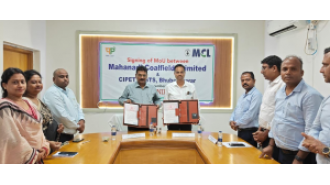
CIPET: CSTS, Bhubaneswar and MCL, Sambalpur have signed an MoU for employment-oriented training prog...
Read More
Marxism and other radical philosophies face constant criticism, but their ideals of social, cultural...
Read More
Xbox announced Minecraft's first new dimension in 15 years, boosting its sales and solidifying its p...
Read More
One reader believes that Marvel's Wolverine is the top game of 2026, despite conflicting opinions fr...
Read More