

Exit 8: The Game That Inspired the Movie As Backrooms makes its way into theaters, it's not the only horror film based on liminal spaces. One reader delves into the game that inspired the movie Exit 8. I may have done things in the wrong order.
Recently, I went to see a Japanese horror film called Exit 8 without knowing that it was actually based on a video game. After the movie, I found out about the game and decided to give it a try. The game, simply titled "Exit 8," starts off without any flashy intro or title screen.
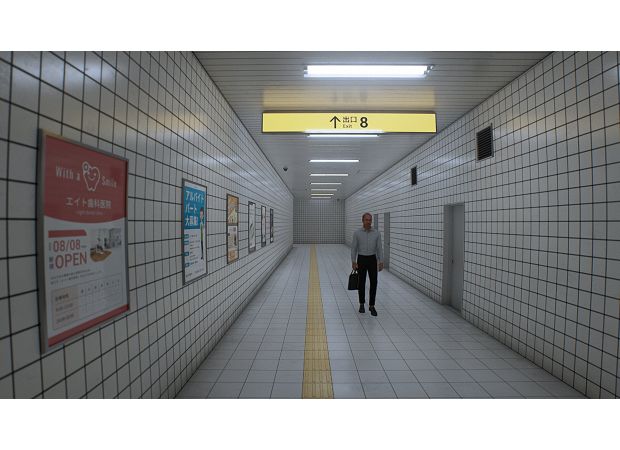
It puts you in a first-person view, walking down a white-tiled passageway with six billboards on one side and three doors on the other. A yellow line runs down the middle of the floor, and a man in a light blue shirt calmly walks towards you. An overhead sign points you in the direction of Exit 8.
The only sounds accompanying you are footsteps and the faint hum of electric lights. Playing this game allows you to explore every detail of the Tokyo subway system. It's primarily a walking simulator with basic controls – you can look around, walk, and run, and that's about it.
After walking through the passageway three times, the game takes a turn and presents you with a new sign on the wall. The sign reads: "The Guide." It gives you some advice: don't ignore any anomalies. If you come across any, turn back immediately.
And if you don't find any, don't turn back. As you continue, you come across another sign that reads "Exit 0." After that, you return to the same passageway, but now you have to pay attention to any differences. Is the man walking towards you behaving the same as before?
Have the billboards changed in size or content? If you spot any differences, you must turn back. The game also messes with you in other ways.
Since the gameplay is quite mundane – just walking down the same passageway – you may drop your guard and wonder what the point of it all is. But just when you're starting to get bored, an anomaly occurs. Some of the deviations are harmless, like a missing door handle or a strange smudge on the ceiling.
But others are creepy and make you want to turn around and run. A door might creak open on its own, or the lights may flicker and fail. You may even see distant figures that make you question whether they're ghosts and if they can hurt you.
The game has its moments of pause, which are essential for effective horror. Some may argue that there are too many pauses, but they only intensify the scares. One particular anomaly in the game scared me to the core.
It's the kind of payoff that every horror fan hopes for. However, it's also one of the dullest games I've ever played. The game's duality is what makes it so effective – it starts off as a harmless, repetitive experience, but then turns into a terrifying nightmare.
The film "Exit 8," directed by Genki Kawamura, adds an interesting narrative that the game doesn't have. I found it engaging and well-directed, but more disturbing than scary. If you're a fan of Japan and horror, I highly recommend watching the movie.
The game, on the other hand, is an acquired taste. Some may find it frustrating, while others may be intrigued. But for those who are determined to reach the end, don't worry – the game does have an ending.
And if you pay attention to those pesky anomalies, you may just reach it. By reader Michael Veal Spot the Difference The views expressed in this article do not necessarily reflect those of GameCentral or Metro. You can submit your own 500 to 600-word reader feature at any time, which may be published in the next appropriate weekend slot.
Just contact us at email or use our Submit Stuff page. And don't forget to add Metro as a preferred source on Google!

Odisha's four Left parties are calling for the removal of the Chief Election Commissioner and for th...
Read More
Readers debate Rare's best game while one explains why they sold their Xbox Series X console....
Read More
What 733 people over 50 told me about AI: more capable, less fearful, but concerned about one thing....
Read More
Improved education but still issues at Baman Abakash High School in Itamati panchayat, as mid-day me...
Read More