
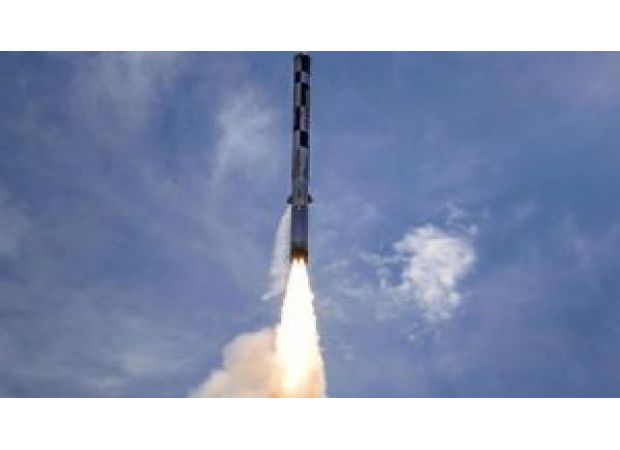

On Saturday, Defence Secretary Rajesh Kumar Singh announced a successful missile deal between India and Vietnam, while also mentioning a similar agreement with Indonesia that is currently in the final stages. Singh, who is attending the Shangri-La Dialogue in Singapore, made these comments in response to a question about potential buyers of the BrahMos missile system. According to Singh, the deal with Vietnam has already been signed, although it has not been publicly announced yet.
The Philippines was the first foreign country to purchase the BrahMos system from India in 2022, with a contract worth nearly USD 375 million. In March, Indonesia also announced that they had entered into an agreement with India to procure the missile system. Recent news reports suggest that Vietnam is also close to signing a deal, but Singh's comments on Saturday were the first official confirmation.
However, the exact values of the Vietnam and Indonesia deals have not been disclosed yet. Singh also touched on the broader issue of sharing advanced defence technologies, stating that countries usually sell sophisticated weapons to those they consider as friendly partners. "Obviously, you share technology with people you trust," he said.
He further emphasized India's commitment to the ASEAN nations and treating them as "friendly foreign countries" with whom they can share advanced defence technologies. The Association of Southeast Asian Nations comprises 11 member states, including Brunei Darussalam, Cambodia, Indonesia, Laos, Malaysia, Myanmar, the Philippines, Singapore, Thailand, Timor-Leste, and Vietnam. Several ASEAN member states, including the Philippines and Vietnam, have overlapping maritime claims with China in the South China Sea, one of the world's busiest trade routes.
India's export of BrahMos missiles to countries in the region has drawn attention as New Delhi expands its defence ties with Southeast Asian nations. In his address at the Shangri-La Dialogue, Singh stated that India is ready to work with partners across the region and beyond to build resilient supply chains, trusted defence partnerships, secure maritime commons, and innovation cooperation. He also highlighted the importance of resilience in today's global security landscape, given factors such as geopolitical uncertainty, conflicts, disruptions in trade routes, supply chain vulnerabilities, technological disruptions, and growing strategic competition.
Singh stressed the need for nations to have resilient, trusted, diversified, and technologically adaptive defence industrial ecosystems. For India, resilience is not just about self-reliance, but also about developing trusted partnerships, diversified manufacturing networks, innovation ecosystems, and secure supply chains that contribute to regional and global stability. He also mentioned the major reforms undertaken by India in defence production, innovation, and exports over the past decade.
These include opening the sector to greater private-sector participation, promoting startups and small industries, strengthening indigenous design and manufacturing capabilities, and expanding collaboration with global partners. Singh stated that India is not only modernising its armed forces but is also becoming a reliable defence manufacturing and maintenance hub. He noted that government-owned companies currently account for 72% of India's defence production, with the private sector contributing the rest.
Three Indian government-owned defence firms are also among the top 100 arms-producing companies in the world. The Indian defence industry has developed capabilities in areas such as missile systems, fighter aircraft, and main battle tanks. Efforts are also underway to bridge gaps in propulsion technologies across land, air, and sea domains.
Singh reiterated that India's objective is not to create exclusive blocs but inclusive and reliable partnerships that strengthen collective security and reduce strategic vulnerabilities. In conclusion, Singh's comments shed light on India's growing defence ties with countries in the Southeast Asian region and its commitment to promoting stability and resilience through partnerships and advanced technologies.
What 733 people over 50 told me about AI: more capable, less fearful, but concerned about one thing....
Read More
2 officials in Bhubaneswar, Odisha were arrested for transferring Rs 9.24 crore of public money to p...
Read More
Marxism and other radical philosophies face constant criticism, but their ideals of social, cultural...
Read More
India and UAE will work together to implement initiatives for trade in local currencies, payment sys...
Read More