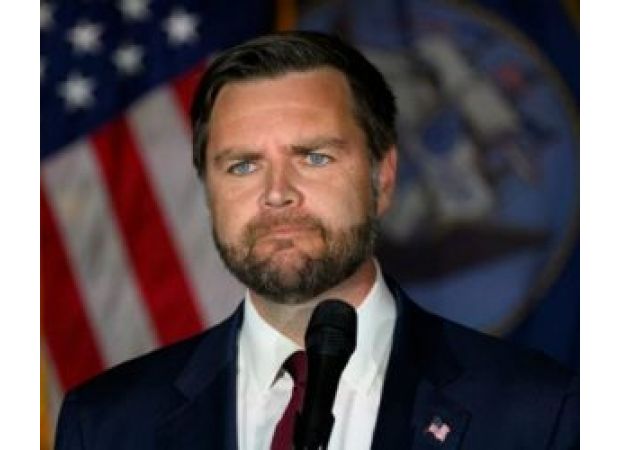

As the deadline for the two-week ceasefire between the United States and Iran approached, there were doubts about whether last-minute talks would be successful in extending the truce. Both countries had warned that without an agreement, they were prepared to resume fighting. US Vice President JD Vance, who was expected to lead the American negotiating team, remained in Washington on Tuesday, according to a White House official.
Meanwhile, Pakistan, which had been urging both sides to return to Islamabad for further negotiations, was still waiting for confirmation from Iran about their participation. According to two regional officials, Washington and Tehran had indicated their willingness to hold a second round of talks. The US team would be led by Vance, while Iranian Parliament Speaker Mohammad Bagher Qalibaf would be the top negotiator.
However, both officials preferred to remain anonymous as they were not authorized to speak to the media. On the other hand, Pakistan's Information Minister Attaullah Tarar stated later on Tuesday that Iran had not yet confirmed their participation, despite the fact that the deadline was only a day away. Iran's Foreign Ministry spokesperson Esmail Baghaei also stated that there was no final decision on attending the talks, citing the US's recent actions in the Strait of Hormuz as unacceptable.
The White House had scheduled policy meetings for Vance on Wednesday morning, but there was no confirmation if he would still travel to Pakistan. Requests for comments from the vice president's office and the White House went unanswered. Meanwhile, US President Donald Trump continued to maintain a tough stance, warning that if an agreement was not reached before the ceasefire deadline, "lots of bombs" would start going off.
On the other hand, Iran's chief negotiator claimed that they had new strategies in place that had not yet been revealed. The ceasefire, which began on April 8th, could potentially be extended if talks resumed. However, in an interview with CNBC, Trump expressed his reluctance to do so, stating that "We don't have that much time." He also emphasized that Iran had a choice and needed to come to the negotiating table.
The White House had previously announced that Vance would lead the American delegation, but Iran had not yet announced who they would send. In a broadcast on Tuesday, Iranian state television stated that no delegation from Iran had visited Islamabad so far. In a separate development, the US military announced on Tuesday that they had boarded an oil tanker that had previously been sanctioned for smuggling Iranian crude oil in Asia.
The Pentagon stated that the M/T Tifani was boarded without incident. However, they did not disclose the location of the boarding, even though ship-tracking data showed the vessel in the Indian Ocean between Sri Lanka and Indonesia on Tuesday. The Pentagon also warned that international waters were not a safe haven for sanctioned vessels.
This comes after the US military seized an Iranian container ship on Sunday, which was the first interception under the blockade of Iranian ports. Iran's joint military command condemned the seizure as an act of piracy and a violation of the ceasefire. The US imposed the blockade in order to pressure Iran into ending their control over the Strait of Hormuz, a crucial shipping lane for 20% of the world's natural gas and crude oil.
Iran's control over the strait had caused oil prices to skyrocket, with Brent crude trading at close to USD 95 per barrel on Tuesday, a 30% increase from February 28th when the war began. The strait was previously open to international shipping, and Trump has demanded that it be reopened without any hindrance. In Brussels, European Union transportation ministers met to discuss measures to protect consumers after the head of the International Energy Agency warned that Europe had only around six weeks of jet fuel supplies left.
Over the weekend, Iran announced that they had received new proposals from the US, but also stated that there was still a significant gap between the two sides. The previous round of negotiations had been derailed due to Iran's nuclear enrichment program, their regional proxies, and their control over the strait. In response, Qalibaf accused the US of wanting Iran to surrender, stating in a post on X that they would not accept negotiations under the shadow of threats.
Despite the tense rhetoric, Pakistani officials remain hopeful that Iran will send a delegation to resume talks. These talks are considered to be the highest-level negotiations between the US and Iran since the 1979 Islamic Revolution. The first round of talks, held on April 11th and 12th, ended without an agreement.
Pakistan has also been actively involved in trying to facilitate the talks, with Foreign Minister Ishaq Dar meeting with the acting US ambassador in Islamabad to urge for an extension of the ceasefire. Additionally, Dar also met with the ambassador from China, a key trading partner for Iran. Security has been tightened in Pakistan's capital, with thousands of personnel deployed and increased patrols along routes leading to the airport.
In other news, Israel's military announced on Tuesday that they had sentenced two soldiers to 30 days in jail and removed them from combat duty for vandalizing a statue of Jesus Christ in Lebanon. This comes after images emerged of an Israeli soldier smashing the statue's head with a sledgehammer, prompting widespread condemnation. The military stated that one soldier had caused the statue to fall while the other filmed the destruction.
They also mentioned that the statue had been replaced. Amidst these developments, historic diplomatic talks between Israel and Lebanon are set to resume on Thursday in Washington. This was confirmed by an Israeli, a Lebanese, and a US official, who spoke on the condition of anonymity.
The Israeli and Lebanese ambassadors had met last week for the first direct diplomatic talks in decades. The talks are aimed at disarming Hezbollah and reaching a peace agreement with Lebanon. Meanwhile, a 10-day ceasefire is currently in effect in Lebanon, where fighting between Israel and Iranian-backed Hezbollah militants broke out two days after the US and Israel launched joint strikes on Iran at the start of the war.
The fighting in Lebanon has claimed the lives of over 2,290 people. Since the war began, at least 3,375 people have been killed in Iran, while 23 have died in Israel and more than a dozen in Gulf Arab states. The war has also claimed the lives of 15 Israeli soldiers in Lebanon and 13 US service members throughout the region.
As the deadline for the ceasefire approaches, tensions remain high in the region. Orissa Post, Odisha's No.1 English Daily, will continue to provide updates on the situation.

ED has appealed to SC against HC quashing NewsClick’s money laundering case over alleged FDI rule ...
Read More
Thriving under pressure takes resilience, self-awareness, and lifting others, not just technical ski...
Read More
In June, Lisa Renee Olaso and her fiancée Cyril Christopher looked for a rental after moving from D...
Read More