
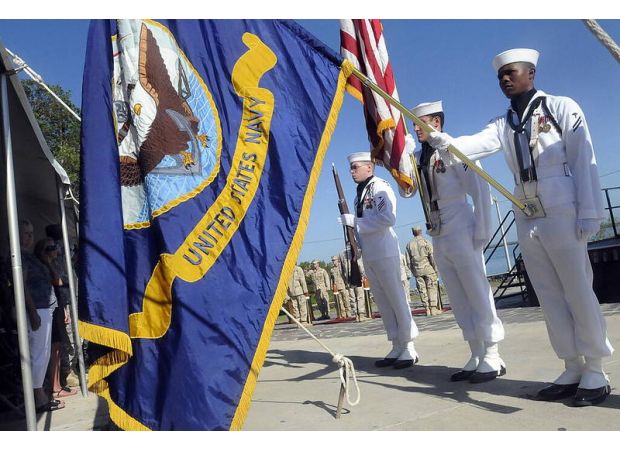

Defense Secretary Pete Hegseth has found himself at the center of controversy once again. This time, reports have surfaced that he personally removed several officers from a Navy promotion list, sparking criticism and concern over possible political influence in military advancement. According to The New York Times, this decision disproportionately affected women and Black service members, raising questions about the fairness and transparency of the promotion process.
The outlet reports that Hegseth blocked the promotions of several Navy captains who were recommended for elevation to rear admiral. The updated list allegedly included no women and only two nonwhite officers out of 22 nominees. This has been described as an unusual intervention by current and former defense officials, who note that promotion recommendations typically go through military channels before being approved by civilian leaders.
Critics of Hegseth argue that his actions raise doubts about whether race or gender played a role in the decision-making process. However, the Pentagon has denied these claims, stating that promotions are based on merit, qualifications, and performance, rather than factors such as race or gender. In a statement, the Defense Department declared that the era of promoting based on identity is over, and that the most qualified individuals will be selected for the job.
This statement was released in response to a tweet by DOW Rapid Response, a military news outlet, which claimed that the controversy surrounding Hegseth's decision was evidence of ongoing diversity initiatives within the armed forces. This latest controversy comes amidst a broader restructuring effort under Hegseth's leadership. Since taking office, he has pledged to eliminate diversity, equity, and inclusion initiatives within the military and has overseen the removal or reassignment of numerous senior military leaders, including women and minority officers.
This has sparked concerns about the long-term impact on the diversity and representation within the armed forces. This is not the first time that Hegseth has faced backlash for his decision-making. In a previous incident, he halted the advancement of four Army colonels selected for promotion to one-star general, all of whom were women or Black men.
This trend has raised concerns among Democratic lawmakers and military personnel, who fear that repeated interference in personnel decisions could undermine trust in the promotion system and affect retention among qualified officers. During a recent hearing, Sen. Jack Reed expressed his worry that these actions could lead to a depletion of experienced and high-performing senior officers, while also causing younger officers to question whether they should continue to serve.
The Pentagon maintains that their promotion decisions are solely based on qualifications and performance. However, the controversy surrounding Hegseth's actions has sparked a wider debate over the administration's approach to diversity policies and leadership selection within the U.S. military.
In related news, the U.S. Navy recently lifted its ban on dreadlocks and other hairstyles, a move that has been praised as a step towards greater inclusivity within the armed forces. This change reflects a growing recognition of the importance of diversity and representation in the military and the need to continuously strive towards a more fair and equitable environment for all service members.

Things are changing in Hollyoaks....
Read More
John Legend is helping struggling students cover off-campus housing, AfroTech says, as Bilt and Scho...
Read More
AI makes solo AI startups easier to build, but harder to discover. The real challenge is getting fou...
Read More
FDA approved IORT in 1999; it delivers one radiation dose to breast tissue after surgery instead of ...
Read More