
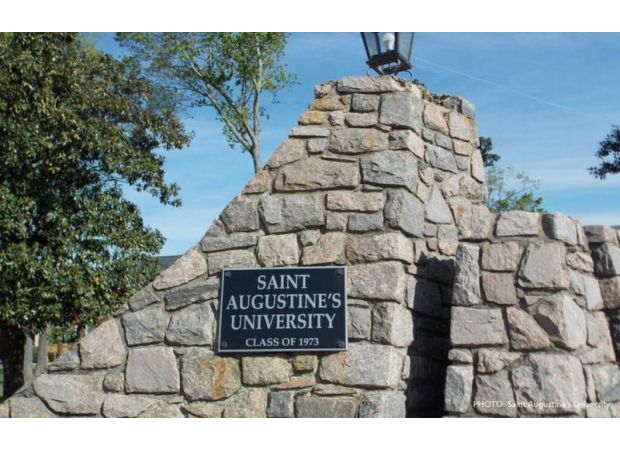

Saint Augustine's University, a historically Black institution with a rich history spanning 158 years, will not be offering any classes or educational programs this fall. This decision comes in the midst of financial struggles and an uncertain future for the Raleigh, North Carolina university, as reported by The News & Observer. The university had previously planned to launch eight online, non-degree programs in September, covering subjects such as artificial intelligence, programming, and public health.
However, due to ongoing financial and accreditation issues, these plans have been put on hold. The courses, which would have cost students between $1,100 and $4,500, were not expected to bring in significant revenue. In April, Saint Augustine's announced its voluntary entry into Chapter 11 bankruptcy proceedings and the end of its legal fight over accreditation.
The university's accreditation was set to expire on May 15. At a bankruptcy hearing on Aug. 20, university attorney Ciara Rogers stated that pausing the online programs would help reduce expenses, including payroll.
The decision was supported by bankruptcy administrator Brian Behr, who emphasized the need for the university to emerge from bankruptcy in a stronger financial position. Despite these efforts, U.S. Bankruptcy Judge David Warren expressed concern about the university's current state, describing it as "essentially closed." In addition to pausing the online programs, Saint Augustine's has also ended its partnership with third-party provider Ed2Go, which offered virtual continuing education courses.
Students currently enrolled in these programs will still be able to complete them. In an effort to generate revenue and improve its financial situation, the university is exploring the option of leveraging its real estate. It has applied to hire Avison Young to advise on property strategy, with potential plans to sell portions of its 105-acre campus, which is valued at approximately $200 million.
Former Massachusetts Institute of Technology Chancellor Phillip Clay, who has studied historically Black colleges and universities and their long-term viability, has been enlisted as a pro bono adviser by the university's Board of Trustees. As the university prepares to return to bankruptcy court on Aug. 26, there is still hope for a brighter future.
While the decision to pause classes and programs may be seen as a setback, the university remains determined to overcome its financial challenges and continue providing valuable educational opportunities to its students.

Odisha Tourism Department signs MoUs to boost homestays and adventure/heritage tourism with SBI, Dep...
Read More
India and UAE will work together to implement initiatives for trade in local currencies, payment sys...
Read More
Switch 2 price increase by Nintendo didn't last a month as some retailers are now selling it for les...
Read More
Xbox exec reassures fans that GTA 6 pre-orders are doing extremely well despite recent layoffs and w...
Read More