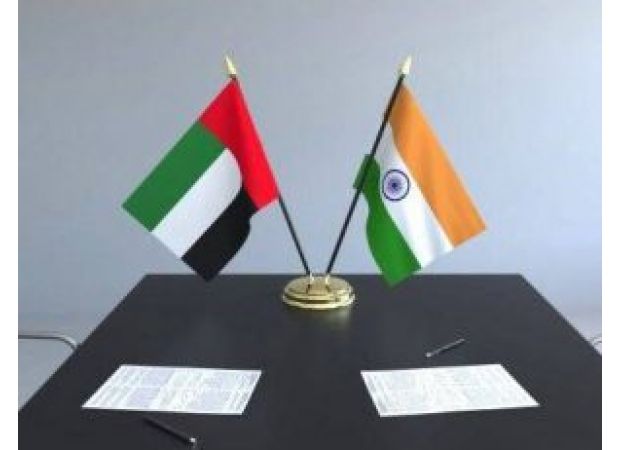

In a meeting held in Mumbai, India and the United Arab Emirates (UAE) have joined hands to work towards implementing various initiatives to enhance trade and investment between the two countries. These initiatives include settling trade in local currencies, integrating payment and messaging systems, and introducing central-bank digital currencies. The ultimate goal is to increase the two-way commerce from the current USD 101.25 billion to USD 200 billion by the year 2032.
The Ministry of Commerce and Industry stated that these initiatives have the potential to make bilateral trade and investment more efficient, accessible, and resilient. These matters were discussed during the 14th meeting of the India-UAE High Level Joint Task Force on Investments, which was set up in 2013 to promote trade, investment, and economic ties between the two nations. The task force serves as a platform to address issues faced by investors from both countries.
The meeting was co-chaired by Commerce and Industry Minister Piyush Goyal and Managing Director of Abu Dhabi Investment Authority Sheikh Hamed bin Zayed Al Nahyan. They reviewed the progress made by the central banks of the UAE and India on initiatives related to local-currency settlement, the integration of payment and messaging systems, and central-bank digital currencies. Both sides agreed to work together to ensure the timely implementation of these initiatives.
After the meeting, Goyal addressed the media and stated that the settlement of trade in local currency has been gradually gaining momentum and is now in double digits. This system allows Indian exporters to receive payments in rupees, while imports from the UAE can be paid in dirhams. Goyal explained that this arrangement is beneficial as the accumulated holdings of each other's currencies can be periodically converted into USD, providing more stability and convenience.
The two sides also discussed areas where they can enhance two-way investment flows, such as energy, industry, logistics, infrastructure, technology, artificial intelligence, space, food security, agricultural innovation, and the startup ecosystem. Goyal highlighted the importance of energy security and stated that both countries are exploring the possibility of expanding strategic petroleum reserves in India. They are also looking into the potential of UAE becoming a significant source of LPG, LNG, and gas for India, as well as the feasibility of subsea pipelines for gas transportation and storage.
The meeting also focused on enhancing civil aviation cooperation, with the aim of improving air connectivity between Abu Dhabi and India. They also explored investment opportunities in developing an aviation and logistics hub in Dholera. The bilateral trade between India and the UAE has reached USD 101.25 billion, with the non-oil trade touching USD 76.2 billion.
Both nations have implemented a Comprehensive Economic Partnership Agreement in May 2022, and a bilateral investment treaty in August 2024, with the aim of protecting and promoting investments. Goyal stated that the CEPA, which is now four years old, has led to a doubling of bilateral trade to USD 100 billion. The two sides have set an ambitious target of doubling it to USD 200 billion by the year 2032.
The meeting also reviewed the progress of several joint investment projects and areas of collaboration, including the Food Park project in Gujarat. They noted the expected operationalization of Invest India, a national investment promotion agency, in the UAE before the end of 2026. The meeting also acknowledged recent investments made by UAE in India, including Emirates NBD's acquisition of a majority stake in RBL Bank of India for about USD 3 billion and International Holding Company's USD 1 billion investment in Sammaan Capital of India.
They also discussed a joint investment intent of USD 11.5 billion for the establishment of an integrated aluminum complex in Odisha. The opening of branch offices of Mashreq Bank, First Abu Dhabi Bank, and Abu Dhabi National Insurance Company in GIFT City in India was also noted. The UAE is one of the largest sources of foreign direct investment for India, with investments of USD 25 billion.
Goyal mentioned that the UAE has expressed its intent to invest another USD 25 billion shortly, with the ultimate goal of reaching USD 100 billion in the coming years. He also highlighted areas of investment interest for the UAE, such as ports, shipbuilding, space, startups, and stock markets. In July 2023, the Reserve Bank of India and the Central Bank of the UAE signed two MoUs to promote the use of local currencies and the UAE Dirham for cross-border transactions and to cooperate on linking their payment and messaging systems.
The first MoU aims to establish a Local Currency Settlement System to facilitate the use of Indian rupees and Emirati dirhams in bilateral trade. This arrangement will also promote investments and remittances between the two countries, as well as optimize transaction costs and settlement time. Under the second MoU, the two central banks have agreed to cooperate on linking their fast payment systems and exploring the possibility of linking their payments messaging systems.
This cooperation will allow for the use of the Unified Payments Interface of India with the Instant Payment Platform of the UAE and the Structured Financial Messaging System of India with the messaging system in the UAE. In conclusion, the meeting between India and the UAE has paved the way for further cooperation and collaboration in various sectors, with the aim of enhancing trade and investment between the two nations. Both sides have expressed their commitment to ensuring the timely implementation of the initiatives discussed and achieving the target of USD 200 billion in bilateral trade by the year 2032.
Fund backs theater instruction, productions, & performance chances for future students....
Read More
One reader believes that Marvel's Wolverine is the top game of 2026, despite conflicting opinions fr...
Read More
Odisha's four Left parties are calling for the removal of the Chief Election Commissioner and for th...
Read More