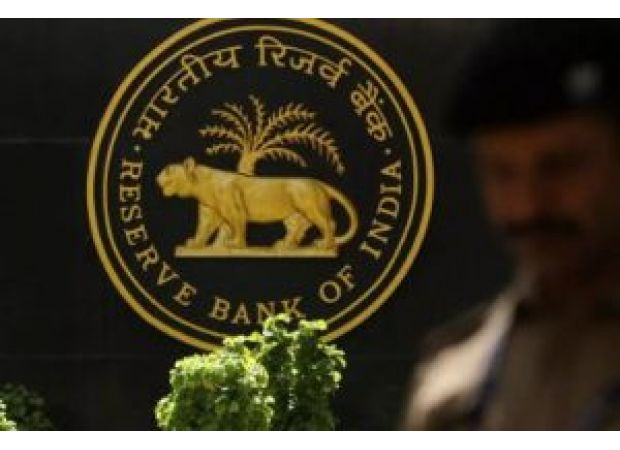

The governor of the Reserve Bank of India, Sanjay Malhotra, made some exciting announcements during a speech after the Monetary Policy Committee meeting on Friday. He discussed various measures being taken to attract foreign capital and strengthen the country's balance of payments. Firstly, the limits for investment by non-resident Indians (NRIs) and overseas citizens of India (OCIs) in equity instruments traded on the stock market without SEBI registration are being increased.
This move is also being extended to all individual persons residing outside India, on par with NRIs and OCIs. In addition, a facility of concessional forex swap will be provided until September 2026 to incentivize external commercial borrowings by public sector undertakings (PSUs). This means that PSUs will be able to borrow funds in foreign currency at a lower cost.
Furthermore, a similar facility will be provided to authorized dealer (AD) banks to bear the full hedging cost for raising fresh 3-5 year foreign currency non-resident (FCNR) deposits until September 2026. The RBI is also expanding the universe of 'specified securities' to attract foreign capital for government securities under the Fully Accessible Route. This includes all new issuances of 15-, 30-, and 40-year tenor government securities.
Additionally, the limits for short-term investments, concentration, and individual securities on foreign portfolio investment (FPI) under the General Route are being removed. These measures, along with the tax benefits announced by the government earlier, are expected to attract foreign capital for government borrowing. The governor also mentioned that the time for realization of export proceeds will be restored to nine months.
This will help promote exports and attract and incentivize capital inflows. However, the exchange rate policy remains unchanged, with no specific target or band being set. Instead, the exchange rate will be determined by market forces.
The governor stressed that while market-driven adjustments are allowed, excessive volatility and disorderly movements will be curbed. In conclusion, the governor stated that the RBI will continue to make the necessary policy adjustments to further promote exports and attract and incentivize capital inflows. These measures, along with others taken by the government, are expected to strengthen the country's balance of payments.

Square Enix brings back turn-based combat and 2D visuals in a retro Final Fantasy spin-off starring ...
Read More
Mumbai: Sources say Tiger Shroff shooting suspects scoped out several celebrities’ homes, includin...
Read More
Polish PM Donald Tusk will visit India Oct 21-23 for talks with PM Modi to strengthen India-EU ties....
Read More