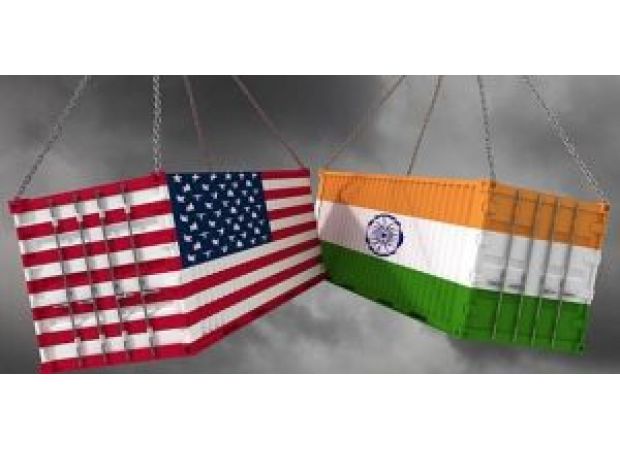

New Delhi: On Tuesday, high-level trade talks were held between India and the United States with the goal of fixing a proposed bilateral trade agreement. This agreement was previously negotiated earlier this year, but due to changes in US tariff policy, the framework was disrupted. Commerce and Industry Minister Piyush Goyal met with US Trade Representative Jamieson Greer in New Delhi to discuss and hopefully finalize an interim trade pact before July 24, when Washington's temporary 10 percent tariff on imports from trading partners is set to expire.
In a post on social media, Minister Goyal expressed his excitement for the productive discussions with the tweet, "Warm welcome to @USTradeRep Amb Jamieson Greer, @USAmbIndia Amb Sergio Gor and their delegation to @DoC_GoI. Looking forward to productive discussions on the bilateral trade agreement between." Greer's visit comes shortly after Prime Minister Narendra Modi and US President Donald Trump's meeting at the G7 summit in France on June 17. This meeting has added new momentum to the trade negotiations, which both sides view as crucial for strengthening economic ties.
The US Embassy in India also shared their support for the bilateral trade partnership in a social media post, stating that it is a win-win for both countries. "Stronger ties create American manufacturing jobs while supporting India's growth as the world's largest democracy. From energy security to tech talent exchanges, we're building the future together," the embassy said.
Another post from the embassy stated, "@USTradeRep Jamieson Greer and Indian Minister of Commerce and Industry @PiyushGoyal met in New Delhi today to advance negotiations on the Interim Agreement launched by President Trump and Prime Minister Modi." The embassy emphasized that the US is still focused on securing a fair and reciprocal trade deal that benefits both nations. During the day, Finance Minister Nirmala Sitharaman also held discussions with a delegation led by US Trade Representative Jamieson Greer. The finance ministry shared in a post on social media that both sides discussed strengthening bilateral trade and economic cooperation, with a focus on new opportunities for growth and deeper commercial engagement.
The meeting was attended by Commerce Secretary Rajesh Agrawal and India's chief negotiator Darpan Jain, and sources say the meeting will continue on Wednesday. The talks between the ministers were centered around revising a framework agreement that was announced in February. However, this framework was built around tariff commitments that were later deemed uncertain due to a US Supreme Court ruling that struck down sweeping tariffs announced by Trump.
Meanwhile, on June 15, Agrawal stated that the discussions between the two sides will focus on finalizing the framework deal. President Trump also expressed confidence in finalizing the trade agreement on June 17, stating that the two countries are "very close." In February of this year, India and the US launched formal negotiations for the Bilateral Trade Agreement (BTA). The first phase of this agreement was announced and based on the 50 percent tariffs that were imposed by the US on Indian goods.
However, on February 20, the US Supreme Court struck down these sweeping tariffs, forcing the Trump administration to impose temporary 10 percent tariffs on all countries for 150 days from February 24. These tariffs are set to expire on July 24 this year. Under the initial framework, India proposed to eliminate or reduce tariffs on all US industrial goods and a wide range of food and agricultural products, including Dried Distillers' Grains, red sorghum for animal feed, tree nuts, fresh and processed fruit, soybean oil, wine and spirits, and additional products.
India also expressed its intentions to purchase USD 500 billion worth of US energy products, aircraft and aircraft parts, precious metals, technology products, and coking coal over the next five years. However, as the tariff landscape changed in the US, both sides are now reexamining the framework of the agreement. The joint statement from February includes a clause that allows for modifications to be made to the agreed-upon tariffs if there are any changes from either country.
Additionally, in order to retain bargaining leverage, the US Trade Representative launched two Section 301 investigations in March that cover about 60 economies. One investigation focused on alleged excess industrial capacity, while the other examined forced-labor concerns in global supply chains. India was included in both investigations.
When the first phase of the agreement was initially finalized, India had a comparative advantage over its competitor countries such as ASEAN nations, Sri Lanka, Pakistan, and Bangladesh. In 2025-26, the US was the second-largest trading partner of India. Despite high tariffs, India's outbound shipments to the US grew marginally by 0.92 percent to USD 87.3 billion during the last fiscal year, while imports increased by 15.95 percent to USD 52.9 billion.
However, the trade surplus declined to USD 34.4 billion in 2025-26 from USD 40.89 billion in 2024-25. Overall, both India and the US are working towards finalizing a strong and mutually beneficial trade agreement. The talks and negotiations are ongoing, with both sides hoping to reach a resolution before the temporary tariffs expire in July.

Improved education but still issues at Baman Abakash High School in Itamati panchayat, as mid-day me...
Read More
Switch 2 price increase by Nintendo didn't last a month as some retailers are now selling it for les...
Read More
Many gamers are now in their 40s, yet publishers still prioritize catering to younger audiences, lea...
Read More