


According to a recent report by Fast Company, the traditional mid-career path is undergoing significant changes. Companies are streamlining their operations and eliminating management layers, which means that experienced employees are now expected to take on additional responsibilities without receiving promotions or pay increases. This trend has prompted career experts to advise workers to reassess their roles and communicate the value they bring to their organizations.
This shift in the mid-career landscape is part of a larger trend of businesses restructuring their workforces. Revelio Labs, a labor market analytics firm, has reported a 35% drop in entry-level job postings in the United States since early 2023. Additionally, a 2025 survey by Korn Ferry, an executive search and consulting firm, revealed that 41% of professionals reported their employers reducing management layers in the previous year.
While news of layoffs and hiring slowdowns often dominates headlines, career experts say that the brunt of the burden is falling on experienced professionals who hold mid-level positions within organizations. As companies flatten their hierarchies, tasks that were once assigned to junior employees, managers, or cross-functional teams are now being reassigned to mid-career staff. This means that these individuals are taking on more responsibilities without any changes to their job titles or compensation.
To navigate this changing landscape, career advisors suggest that employees begin by evaluating how their roles have evolved over time. This includes identifying tasks that have been inherited from entry-level positions, former supervisors, other departments, or newly implemented artificial intelligence systems. From there, workers should differentiate between responsibilities that require their expertise and judgment, and routine tasks that could be delegated, automated, or eliminated.
Once employees have a clear understanding of their evolving role, career experts recommend discussing it with their superiors. This conversation should involve outlining the value that the employee has brought to the organization through their expanded responsibilities. It may also be appropriate to request adjustments to workload, authority, or recognition.
This could include asking for more decision-making responsibilities, an updated job title, a raise in compensation, or increased visibility with senior leadership. As organizations continue to operate with leaner teams, career experts stress the importance of clearly defining and communicating one's evolving contributions. This can help ensure that expanded responsibilities lead to long-term career growth rather than becoming an overlooked expectation.
With the traditional mid-career path shifting, it is crucial for workers to proactively reassess their roles and communicate their value to ensure their continued success and growth within their organizations.
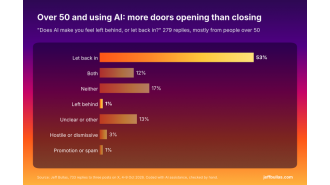
What 733 people over 50 told me about AI: more capable, less fearful, but concerned about one thing....
Read More
Across Europe, fuel prices, poor schools, weak public services, and a housing crisis are fueling wee...
Read More
Odisha Tourism Department signs MoUs to boost homestays and adventure/heritage tourism with SBI, Dep...
Read More
AI makes solo AI startups easier to build, but harder to discover. The real challenge is getting fou...
Read More