
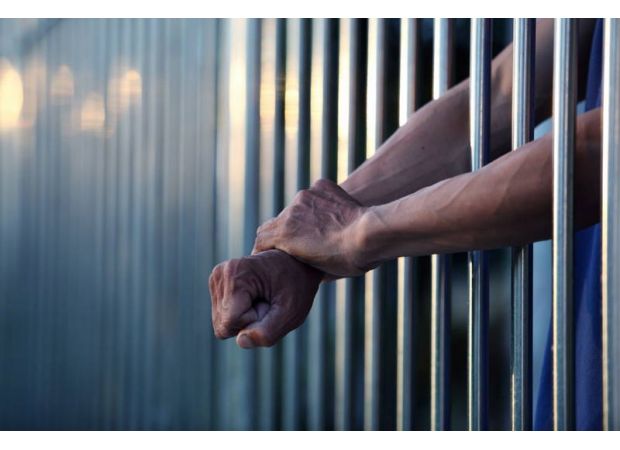

Jarred Shaw, a professional basketball player from the United States, found himself in a dire situation while playing in Indonesia. He had been arrested for possessing imported cannabis gummies and was initially facing the possibility of execution. However, after a judge found him guilty of drug possession but cleared him of trafficking, the death penalty was taken off the table.
This was a huge relief for Shaw, who had been living in fear for his life. As reported by The Guardian, Shaw received his sentence in December. He was sentenced to 26 months in jail, including time served, and was also fined $50,000.
Although this was still a harsh punishment, it was a far better outcome than facing a firing squad in a foreign country. Despite this, Shaw was still struggling with his health. He had ordered the cannabis gummies to help treat his Crohn's disease, a chronic inflammatory bowel disease.
Unfortunately, the prison food he was given did not provide the necessary nutrition for his condition, causing him to lose 35 pounds since his arrest. Standing at six feet and eleven inches tall, Shaw explained, "When I got arrested, I was 245lbs. I'm down to 210lbs now, and it's concerning.
The proper nutrition isn't here." So while he may have been spared the death penalty, he was still facing a serious health issue that could potentially lead to his demise. Crohn's disease is a debilitating condition that causes chronic inflammation in the gastrointestinal tract, according to the Crohn's & Colitis Foundation. Unfortunately, there is currently no known cure for it.
Shaw's troubles began in May when he received a package in the lobby of his apartment complex. The package contained 132 pieces of cannabis candy, and the Indonesian police were alerted by customs at the airport. They had been tipped off that Shaw had received a suspicious package from Thailand.
As Ronald Sipayung, the Soekarno-Hatta Airport police chief, stated, "Looking back, it's just a f**ked situation." Shaw had been using cannabis to help alleviate the symptoms of his disease and had been doing so for medical purposes in Thailand, where he lived during the offseason. He expressed his regrets, saying, "I wish I could go back and change my actions, but it was definitely a relief to know I wasn't getting the death penalty." Despite being in jail for six months, Shaw's health had deteriorated. He was finally assessed by a doctor who found that he was experiencing abdominal pain, mild anemia, and had tested positive for an E coli infection.
If left untreated, this infection could cause severe symptoms such as diarrhea, bleeding, and fever. The doctor also noted that Shaw had previously been diagnosed with ulcerative colitis, another type of inflammatory bowel disease. Since the doctor's assessment, Shaw has been waiting for three days to be taken to the hospital for further testing, including a colonoscopy and intestinal ultrasound, as recommended by the doctor.
However, he has yet to be taken to the hospital, and he is growing increasingly concerned. "We're trying to get them to understand," he explains. "Even though there's no cure for Crohn's, you have to treat it, or it could get worse.
Hopefully, someone with higher power can at least help me get to the hospital." Despite his dire situation, Shaw is still holding onto hope. His lawyers are currently petitioning Indonesia's Minister of Health to consider granting him a compassionate release. They are hoping that Shaw's lack of a criminal record and his cooperation in court will be enough to secure his release.
In the meantime, he continues to wait, hoping for a chance to return home and receive the proper medical care he desperately needs.

Improved education but still issues at Baman Abakash High School in Itamati panchayat, as mid-day me...
Read More
Xbox exec reassures fans that GTA 6 pre-orders are doing extremely well despite recent layoffs and w...
Read More
India and UAE will work together to implement initiatives for trade in local currencies, payment sys...
Read More
Odisha Tourism Department signs MoUs to boost homestays and adventure/heritage tourism with SBI, Dep...
Read More