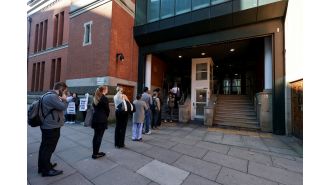

According to recent data from the federal court, more and more Americans are facing financial hardships and turning to personal bankruptcy. As NPR reports, the number of personal bankruptcy cases filed in the 12-month period ending March 31 has increased by nearly 12% compared to the previous year and by almost 50% compared to three years ago. However, filings are still below pre-pandemic levels, indicating that the increase is not necessarily a sign of a weakening economy.
Experts in finance say that the rise in bankruptcy filings is not surprising given the current state of the economy. With mounting debt, rising borrowing costs, and the expiration of pandemic-related financial assistance, more consumers are finding themselves in a position where bankruptcy is their most practical option. Sasha Indarte, a finance professor at the University of Pennsylvania's Wharton School, explains that this trend shows that consumers are struggling to meet their financial obligations.
For those who are unfamiliar with the concept, personal bankruptcy is a legal process that allows individuals to seek court protection when they can no longer meet their financial obligations. Depending on the type of filing, consumers may be able to restructure their debt or have certain debts discharged. Filing for bankruptcy also triggers an automatic stay, which temporarily stops most collection efforts.
Mary Eschelbach Hansen, a bankruptcy economist at American University, points out that one of the biggest benefits of filing for bankruptcy is that it puts a stop to creditor harassment. While bankruptcy may have a negative impact on a person's credit report for a number of years, experts say that its long-term effects are often overestimated. In fact, research has shown that most people begin rebuilding their credit within a year of filing.
Harvard Business School assistant professor Samuel Antill found that bankruptcy can actually provide a path towards financial recovery rather than being seen as a failure. During the COVID-19 pandemic, bankruptcy filings decreased as government relief programs such as stimulus payments and expanded unemployment benefits helped many households stay afloat. However, as these programs came to an end and consumers continued to face challenges such as inflation, higher interest rates, and accumulated debt, filings gradually returned to more typical levels.
Economists caution that bankruptcy filings should not be used as the sole measure of the economy, as they primarily represent those who are facing the most severe financial difficulties rather than the overall financial health of households. For some individuals, bankruptcy is not something to be ashamed of, but rather a necessary step towards financial recovery. Oklahoma City resident Rebecca Lessley, who filed for bankruptcy after losing her job and falling behind on debt payments, found comfort in learning that many of her friends had gone through the same process.
She explains that she now feels a sense of relief and hopes that this will lead to a path towards better financial success.

UT linebacker forfeited a game due to buying a $427 plane ticket, now he's using that same amount to...
Read More
Some readers are skeptical of Jason and Lucia's characters in GTA 6, with one citing concerns about ...
Read More
AI may be able to write, but authorship is more than just typing - it's about purpose, evaluation, a...
Read More