

It was about ten years ago when I had the chance to explore the Musée Rodin in Paris. Now, I am by no means an artist, but like most people, I walked in with the assumption that Rodin himself was the sole creator of his famous sculptures. However, during my visit, I stumbled upon the studio behind the name and was surprised to find out that Rodin's artistic process involved a network of skilled assistants and craftsmen.
According to the Musée Rodin, while Rodin was heavily involved in the conception and modeling of his sculptures, the physical realization of his major works often relied on a team of experts. He employed skilled practitioners to enlarge and reduce models, marble carvers to transform plaster into stone, foundries to cast bronze, and even had assistants like Camille Claudel to work on intricate details. It was not always Rodin's hands that struck the chisel, yet we still credit him as the creator of these masterpieces.
This discovery shook my simplistic understanding of authorship and made me question the true definition of an artist. Recently, I came across a New York Times profile titled "The Incredible Art of Being Jeff Koons" and the same question surfaced once again, but this time, in a more relevant context of the age of AI. At one point, Koons had over a hundred people working in his studio, including teams dedicated to hand-copying old masters.
While his operation is now smaller, his methods remain meticulous - utilizing digital models, scans, standardized lighting, paint-by-numbers codes, and external foundries and fabricators. Koons stated that his systems ensure that every aspect of his art, from the smallest detail to the overall composition, is exactly how he wants it to be. But then, who can truly be considered the creator of his art?
The easy answer may be his team, but I believe the more interesting answer is that Koons himself is the author. This distinction brings to light one of the most uncomfortable questions faced by writers in this age - if AI is used to research, structure, edit, and even write sentences, who should be credited as the author? The debate around AI and writing has divided into two camps - one that believes a "real" writer should write every word, and AI can only assist with tasks such as spell-check and research, while the other camp believes in completely handing over the writing process to machines.
However, these extreme views fail to capture the complexity of the situation. The first camp confuses authorship with mere keystrokes, while the second camp confuses supervision with authorship. The truth lies somewhere in between.
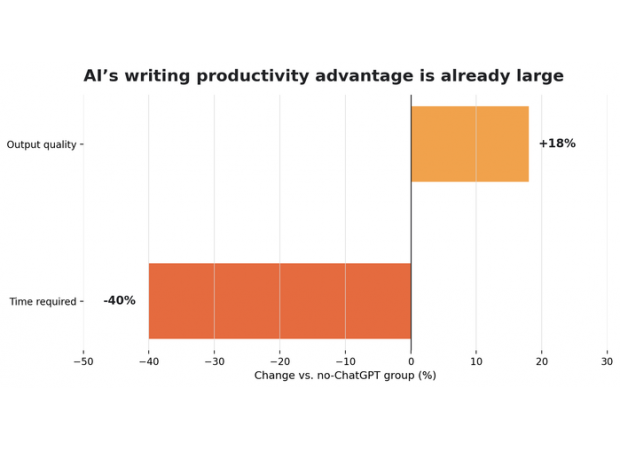
The temptation to rely on AI is undeniable, especially after a study showed that using ChatGPT can reduce writing time by 40% and increase quality by 18%. But speed does not equate to authorship. The progression of human work throughout history has seen us move from physical labor to operating machines to designing systems.
Similarly, for writers, the ladder may look like this - sentence maker, editor, director, and finally, architect of meaning. There is immense potential in this progression, as one person can now explore more research, test more counterarguments, and move from idea to published work at a much faster pace. However, there is also a danger of falling into the trap of the "fragile director" - someone who can produce impressive-looking work at a rapid speed but lacks the necessary craft to judge its quality.
Artificial intelligence has accelerated this move up the ladder, as it can now automate physical and cognitive labor. But this also means that we can now climb up the leverage ladder before mastering the necessary skills, creating a new figure - the fragile director. To be a successful director, one must have an internal model built through years of practice and experience.
AI may assist in automating tasks, but it cannot replace the apprenticeship that develops judgment. This is why I believe that the ideal future is not one where humans stop doing and only supervise machines. Part of what makes art and writing so intriguing is the technical excellence achieved by human hands.
The execution is not just a means to deliver an idea; it is an integral part of the idea itself. The same applies to writing - a sentence can contain not just information, but also rhythm, personality, and years of practice. We admire writers like Orwell and Didion not only for their ideas but also for the precision with which they express them.
The danger of relying too heavily on AI is that it can give us the appearance of mastery without the necessary apprenticeship that shapes our judgment. This is known as "cognitive offloading," which can impede skill acquisition and contribute to skill decay. While there are tasks that AI can help with, such as transcribing interviews or searching for quotes, there are also aspects of writing that should be preserved.
Wrestling with an argument or finding the perfect sentence can be formative friction, which helps develop our skills. The danger lies in completely offloading these tasks to AI and losing the opportunity for growth. The research on AI and writing suggests that it creates a trade-off rather than a simple win or loss.
While it can improve individual writers' creativity, it can also lead to homogenization and produce work that looks impressive but lacks substance. This is where the term "AI slop" comes into play. It refers to low-quality digital content produced in large quantities with the help of AI.
However, the real issue is not the slop itself but the act of abdication - outsourcing not only production but also curiosity, experience, and taste to machines. The result is content that may be grammatically correct but lacks depth and originality. In conclusion, the examples of Rodin and Koons show us that authorship has never been limited to the physical act of production.
Art has a long history of collaboration and delegation, and what matters is the nature of the contribution and the degree of creative control. The same applies to writing, where AI can assist but cannot replace the writer's unique voice and judgment. Ultimately, it is up to us to find a balance between utilizing AI's potential and preserving the essential elements of writing that make it truly human.
Ten years ago, I found myself wandering through the Musée Rodin in Paris. As someone who is not an artist, I entered the gallery with the common belief that Rodin was solely responsible for creating all of the famous sculptures bearing his name. However, I soon learned the truth behind the name and the studio that supported it.
While Rodin was heavily involved in the conception and design of his sculptures, the physical realization of his major works often relied on a network of skilled assistants and craftspeople. The Musée Rodin explains that Rodin employed various practitioners to help with enlarging and reducing models, carving marble, translating plaster into stone, casting bronze, and tackling difficult details. As it turns out, not every chisel blow was struck by Rodin's hand.
Yet, we continue to refer to his works as "a Rodin." This discovery stayed with me because it challenged my simplistic understanding of authorship. Little did I know, a few days ago, I would come across a New York Times profile titled "The Incredible Art of Being Jeff Koons," which would bring back the same question in a way that feels particularly relevant in the age of AI. At one point, Koons had a team of over 100 people working in his studio, including teams dedicated to hand-copying old masters.
While his operation is now smaller, the system remains meticulous: digital models, scans, standardized lighting, paint-by-numbers codes, external foundries, and specialized fabricators. Koons explained to the Times that these systems ensure that every aspect of his work, from gestures to colors to shapes, is exactly as he envisioned. So, who can we say actually made the art?
The easy answer is his team, but the more thought-provoking answer is Koons himself as the author. This distinction raises a pressing question for writers in today's world: if AI is assisting with research, structure, editing, and even sentence composition, who should be considered the author? The debate around AI and writing has led to two opposing viewpoints.
On one side, there are those who believe in abstinence – that a "real" writer should produce every word without any AI assistance. On the other side, there are those who believe in abdication – giving the machine a topic and allowing it to handle all aspects of the writing process, with the human writer simply glancing over the final result before publishing it under their name. However, both of these extremes fail to fully grasp the concept of authorship.
The first assumes authorship is solely based on keystrokes, while the second confuses supervision with authorship. The reality is that AI can greatly enhance productivity, but it cannot replace the role of the writer as the author. Humans have been moving up the "abstraction stack" for centuries, from manual labor to operating machines to designing systems.
This trend is only accelerated by AI, which can now automate not only physical labor but also parts of cognitive labor. In terms of writing, this means that a writer's role can evolve from being a "sentence maker" to an editor, director, and ultimately, an architect of meaning. While this progression offers immense benefits, there is also a potential danger.
With AI, writers can now leap up the ladder of leverage before fully mastering the craft of writing, creating a new figure – the fragile director. These individuals can produce impressive-looking work at a remarkable speed, but may not possess the necessary expertise to determine whether it is actually "good." This is where the metaphor of "moving up" becomes problematic. While leveraging AI can greatly improve productivity, it does not automatically lead to mastery.
Rodin was able to delegate tasks because he had spent years developing his craft as a sculptor. Similarly, a great editor or conductor has acquired their expertise through years of practice. AI can only be a tool – it cannot replace the internal model and judgment built through experience.
It is important to recognize that writing is not just about conveying information, but also about precision, rhythm, surprise, personality, and years of practice. We admire writers like Orwell and Didion not just for their ideas, but also for the precision with which they express those ideas. The danger with relying too heavily on AI is that it can give the appearance of mastery without the necessary apprenticeship that develops judgment.
This brings us to the concept of "cognitive offloading" – the idea that relying on AI can impede skill acquisition or contribute to skill decay. However, this outcome is not solely dependent on the technology itself, but rather how we choose to use it. There are certain tasks, such as transcribing or searching for quotes, that can be automated by AI to free up time for more formative friction – wrestling with an argument or finding the perfect sentence.
The research on AI and writing suggests that there is a trade-off rather than a clear-cut win or loss. While AI can enhance creativity and productivity, it can also lead to homogenization and a lack of diversity in output. This is because AI can make each individual better while also making everyone more similar.
This is where the term "AI slop" comes into play – referring to low-quality digital content produced in bulk with the help of AI. However, the root of the problem is not the technology itself, but rather the attitude of abdication – outsourcing not just production, but also curiosity, experience, point of view, taste, and judgment. When this happens, the result can be grammatically correct but intellectually empty content.
In light of this, we need to redefine the concept of authorship. As shown by Rodin and Koons, authorship has never been solely reliant on the physical act of production. Instead, what matters is the nature of the contribution and the degree of creative control.
This is also reflected in copyright law, which recognizes that using AI as an assistive tool does not prevent copyright protection, as long as there is human input and control. In the end, authorship is not about "touching every word," but rather about the role of the individual in shaping and directing the final product. It is about finding the balance between automating tasks that waste time and preserving those that contribute to skill development.
AI can be a valuable tool in the writing process, but it cannot replace the unique human touch and judgment that makes great writing.
BJP MP Praveen Khandelwal is pleased with the results of the 18th BRICS Summit, saying that the New ...
Read More
Government investigates med schools for racial discrimination in admissions....
Read More
Trump opposes calls to regulate AI, saying it could harm US in the race against other countries....
Read More
New film "Hanuman Ansh" about spiritual leader Neem Karoli Baba earns Rs 200 crore at box office. Di...
Read More