
When I turned 51, I found myself in a challenging situation. I had to apply for 700 jobs. Yes, you read that right, seven hundred.
The mere thought of it was daunting. Each application required at least half an hour of my time, from customizing my resume and cover letter to filling out forms that asked for information already included in my CV. In total, that was 350 hours, almost nine weeks of my life spent asking for a chance to work.
But all I got back were two words: overqualified and "culture fit". These words were used to describe my extensive resume, which highlighted my success in the early days of the computer industry, where I had taken a budget of $800,000 and turned it into $30 million in just one year. I had also been hired by one of the largest telecommunication companies in the country to build their wholesale internet traffic division, which resulted in a yearly revenue of $50 million in just twelve months.
However, despite these achievements, I was deemed overqualified and not a "culture fit" for these companies. But what do these words really mean? "Overqualified" is often used as a polite way to say "we can't afford you" or "we think you'll leave".
And "culture fit"? Well, that's just a way of saying "we can't picture you in our team". But these are not reasons, they are verdicts.
And they cannot be appealed because no one is willing to say what they truly mean. Unfortunately, I am not the only one facing this issue. According to a poll by AARP, 64% of workers over the age of 50 have experienced age discrimination at work and 91% believe it is a common occurrence.
And it's not just about finding a job, it's also about keeping one. A study by ProPublica and Urban Institute found that more than half of American workers over the age of 50 are forced out of their career jobs before they are ready to leave. And even if they do find a new job, they often earn less than their previous salary and stay unemployed for twice as long as younger workers.
It's no wonder that mentions of ageism in Glassdoor reviews have increased by 133% in just one year. But there is no one person to blame for this situation. It's a result of a system that values speed and efficiency over experience and knowledge.
A system that only sees a date on a resume, not a career. A resume that hands over your life story to a stranger and asks them to be fair with it. And while many of us over the age of 50 continue to accept this deal, the job market has quietly changed.
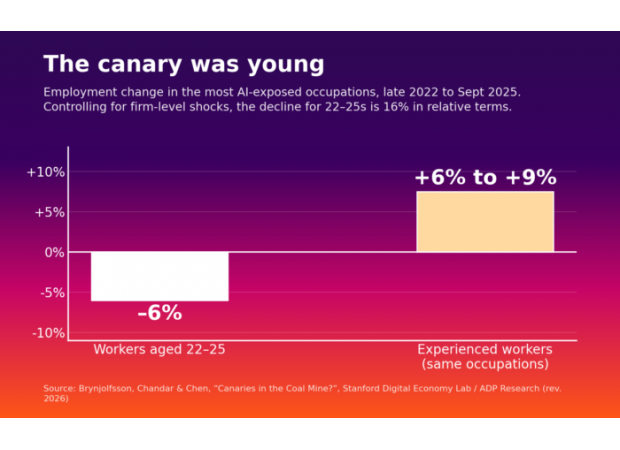
A study by Stanford's Digital Economy Lab found that in the most AI-exposed occupations, experience has become more valuable, not less. And this trend is not just limited to job seekers. The market for fractional executives, where experienced professionals offer their expertise to businesses, has grown to over $5.7 billion and is expected to continue growing at a rate of 14% per year.
And in the consulting market, two-thirds of business owners are over the age of 50. So why is it that our experience is deemed overqualified for a salary but valuable as an advisor? The only difference is which door we walk through.
It's time to change the narrative and recognize the value of experience and knowledge in the workplace. But it's not just about finding a job, it's also about being visible in a world where half of the internet is now written by machines. This flood of content has not buried humans, it has made us stand out.
While machines can produce thousands of articles, what is truly valuable is knowing, in your body, what it takes to turn a $4 million business into a $50 million one in just twelve months. And that is something that only comes with experience. But unfortunately, our experience remains invisible until we make it visible.
The Edelman and LinkedIn B2B Thought Leadership Impact Report has found that thought leadership is a more trustworthy basis for judging a company's capabilities, and 90% of senior decision-makers are more receptive to a business that consistently publishes something worth reading. And yet, only around 1% of LinkedIn members post anything in a given week. So instead of being scared of being seen as an "influencer", let's focus on what is being asked of us.
A personal brand is not about gaining a following, it's about having a public record of how we think. It's about showcasing our expertise and knowledge, not our dancing skills or morning routine. And in a world where decision-makers are reading and looking for valuable insights, it's time for us to start writing and sharing our experiences.
Because while the market may have changed its mind, the story hasn't. When I turned 51, I found myself in a tough spot. I had to apply for 700 jobs.
Yes, you read that right, 700. Not 70, but 700. It was a daunting task, considering the amount of time and effort it takes to tailor each application, write cover letters, and fill out redundant forms that require you to retype your already attached CV.
I calculated that it would take me approximately 350 hours, almost nine working weeks, to complete this task. And for what? To beg for a job.
I received only two responses. "Overqualified" and "culture fit". These words were like a slap in the face.
I couldn't understand why my resume, which showcased my accomplishments such as selling PC's and increasing annual budgets from $800,000 to $30 million, or building a wholesale internet division that generated $50 million in revenue in just one year, was being reduced to just two words. It felt like a rejection of my entire career. But these two words, "overqualified" and "culture fit", have a deeper meaning.
They are a polite way of saying "we can't afford you" or "we think you'll leave" or "you'll make your manager uncomfortable". And then there's "culture fit", which is just another way of saying "we can't picture you in the room". These words are not reasons, they are verdicts.
And the worst part is, they cannot be appealed because no one ever has to explain what they actually mean. And I'm not the only one facing this issue. A poll conducted by AARP found that 64% of workers aged 50 and above have experienced age discrimination at work, with 91% believing it is a common occurrence.
And according to a ProPublica and Urban Institute investigation, more than half of American workers over 50 are pushed out of their careers before they are ready, with very few being able to earn what they did before. And even if they do find work, they stay unemployed for twice as long as their younger counterparts. To make matters worse, mentions of ageism in Glassdoor reviews have increased by 133% in just one year.
But the sad truth is, there is no one to blame for this discrimination. It's not like hiring managers wake up in the morning wanting to throw away decades of experience. It's just that the system is designed to prioritize speed over competence.
It doesn't see a career, it only sees a date on your resume. Speaking of resumes, they're like a summary of your life story, handed over to a stranger who is expected to be fair with it. And that's the deal most people over 50 still accept, myself included, until I reached 700 job applications.
But here's something interesting that happened while everyone was busy being afraid of robots taking over our jobs. A study by Stanford's Digital Economy Lab found that in the most AI-exposed occupations, workers aged 22 to 25 saw a 6% decrease in employment, while workers with real experience saw an increase of 6% to 9%. This means that, contrary to popular belief, experience actually became more valuable with the rise of AI.
The market has silently reevaluated and increased the value of workers with real experience, without anyone ever mentioning it. This shift can also be seen in the success rates of company founders. A study by MIT found that people in their 40s, 50s, and 60s were more likely to build top-performing companies compared to those in their 20s and 30s.
And in the consulting market, where businesses buy senior expertise, the number of fractional leaders (those with 15 years or more of experience) has doubled in just two years, with an expected increase in the use of fractional leadership by small and mid-sized businesses in the coming year. It's interesting to note that the same experience that made me overqualified for a salaried job also makes me desirable and more expensive as an advisor. It's the same track record, but with a different verdict, simply because I walked through a different door.
But what's even more surprising is that, while everyone was worried about robots replacing us, half of the internet is now synthetic, with AI-generated articles making up 52% of all new articles. Yet, when it comes to what actually ranks in Google, only 14% of the content is AI-generated, with the remaining 86% being human-written. This means that the flood of AI-generated content did not bury the human, but rather made them stand out even more.
The truth is, content is not scarce. Information is not scarce. With machines capable of producing thousands of articles in the time it takes us to finish our coffee, what is scarce is real experience.
And that's where people over 50 have an advantage. We have decades of experience that we can bring to the table, but most of us are not utilizing it. Instead, only 1% of LinkedIn users post anything in a given week, yet this 1% generates nine billion impressions.
This means that the decision-makers, those who have the power to hire us, are reading, while we are not writing. And this is not just about building a personal brand or becoming an influencer. It's about having a public record of how we think and what we have learned throughout our careers.
It's what potential buyers see when they search for us before a meeting. It's either a decade of well-thought-out ideas or just a profile photo and a job title. And studies have shown that thought leadership carries more weight and trust than a company's own marketing efforts.
It's what sets us apart and makes us more desirable. So let's set aside the notion of becoming an influencer and focus on what is being asked of us. A B2B personal brand is not about having a huge following, it's about having a platform to showcase our thoughts and experiences.
It's about being visible in a market that has silently reevaluated and increased the value of real experience. It's about being recognized for our knowledge and expertise, rather than being reduced to just two words: overqualified and culture fit.

India and UAE will work together to implement initiatives for trade in local currencies, payment sys...
Read More
One reader believes that Marvel's Wolverine is the top game of 2026, despite conflicting opinions fr...
Read More
Xbox exec reassures fans that GTA 6 pre-orders are doing extremely well despite recent layoffs and w...
Read More