
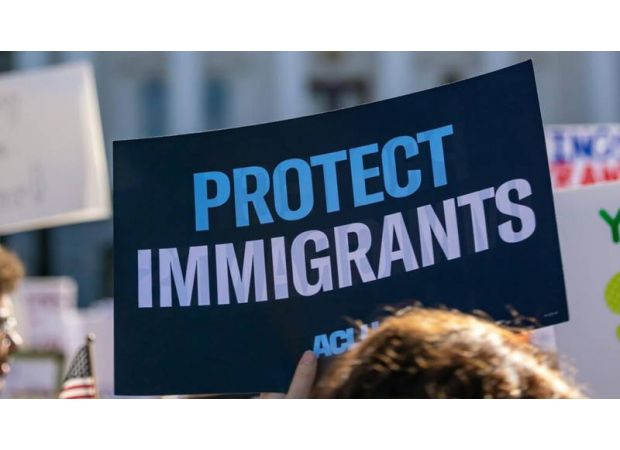

According to a recent report from AP News, the Trump administration has announced a temporary halt on immigrant visa processing for individuals around the world. This decision was made in order to provide training to U.S. consular officers regarding stricter standards for determining whether potential immigrants may become dependent on government benefits.
This pause, which began in early August, is expected to continue until early to mid-September, with interviews being rescheduled for September, October, or November for those affected. Primarily, this pause affects individuals seeking immigrant visas through family relationships, such as parents, spouses, children, and siblings of U.S. citizens.
However, those applying for employment-based visas with employer sponsorship will likely not be affected, as they can demonstrate expected earnings, as stated by AP. The State Department has clarified that this training is meant to assist consular officers in consistently determining whether applicants may become a “public charge,” a designation under immigration law that could result in inadmissibility based on the likelihood of relying on government assistance. In a statement, a spokesperson from the State Department emphasized that this decision is part of the Trump administration's efforts to uphold the highest standards of screening and vetting for visa applicants, in order to protect the American people.
Additionally, the State Department has introduced a pilot program which allows consular officers to request that certain immigrant visa applicants who were initially denied based on public-charge grounds apply for a bond, as a way to demonstrate that they are unlikely to become a public charge after entering the United States. This temporary pause comes just days after U.S. District Judge Jeannette Vargas struck down a separate Trump administration policy that suspended immigrant visa processing for individuals from 75 countries.
Vargas ruled that Secretary of State Marco Rubio had exceeded his authority by denying otherwise eligible applicants based on their nationality. This policy, which was put in place in January, was also motivated by concerns that immigrants may become dependent on public assistance. This recent decision is part of the Trump administration's broader efforts to tighten both legal and illegal immigration.
According to Reuters, this includes revoking visas and green cards, increasing scrutiny of applicants, and raising fees for certain work visas. President Trump has stated that these policies are intended to enhance domestic security. In light of these developments, there have been concerns about how unequal immigration enforcement may be impacting the health and wallets of Black women in particular.

One reader believes that Marvel's Wolverine is the top game of 2026, despite conflicting opinions fr...
Read More
The Indian government is implementing AI and data-driven tools to improve the functioning of its bur...
Read More
Marxism and other radical philosophies face constant criticism, but their ideals of social, cultural...
Read More
Odisha Tourism Department signs MoUs to boost homestays and adventure/heritage tourism with SBI, Dep...
Read More