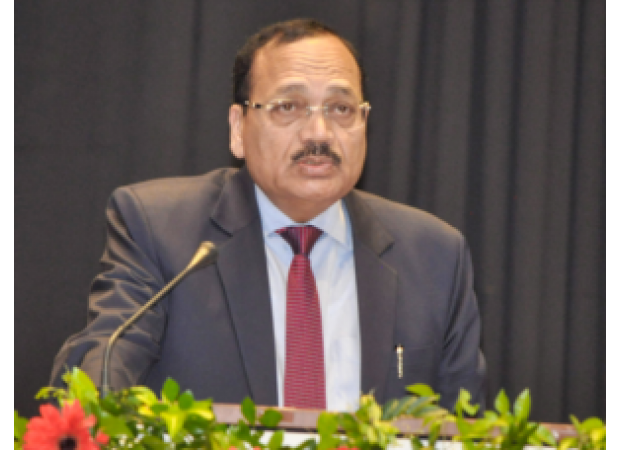

In New Delhi, Chief Justice of India Surya Kant expressed his concern about the delay in establishing the Arbitration Council of India. He expressed his hope that a bill addressing this issue will finally be presented to Parliament. This statement was made during the silver jubilee event of the Indian Institute of Arbitration and Mediation.
CJI Kant emphasized that India is shifting its perspective on alternative dispute resolution, considering it as an equal avenue for justice rather than a secondary option. He reminded the audience that the Arbitration Council of India was introduced in 2019 through an amendment that aimed to accredit arbitrators and grade institutions. However, six years have passed and the council has yet to be formed.
The Draft Arbitration and Conciliation Bill, proposed by the Viswanathan Committee and released for public consultation in October 2024, remains in its draft form. The CJI expressed his hope that a revised version of the bill will be presented to Parliament. The CJI highlighted the importance of bridging the gap between announcing a plan and implementing it, especially if the goal is to establish India as a preferred seat for dispute resolution.
He pointed out that this gap creates a credibility deficit that cannot be resolved through legislation alone. Credibility is not solely built through judgments, but also through efficient implementation of plans and policies. While acknowledging that the courts are essential in protecting rights, the CJI also stressed the need for alternative avenues for dispute resolution, especially considering the over five crore pending cases in Indian courts.
He stated that the backlog cannot be resolved solely through the courtroom and must be partly addressed through alternative methods. Under the theme of "Reimagining ADR Innovation, Technology and the Future of Justice," the CJI discussed the role of arbitration, mediation, and digital dispute resolution in establishing a trustworthy system for resolving disputes outside of traditional courtrooms. He emphasized that not every dispute requires a judicial verdict and many can be resolved through proper understanding and negotiation.
The CJI noted that India is gradually moving towards treating ADR as a reliable pathway for justice and a dependable pillar in the justice system. However, he also acknowledged the scale of the problem, with over five crore cases pending in Indian courts, and the need for continued efforts to address it. The CJI stated that the modern justice ecosystem includes various avenues such as arbitration centers, mediation institutions, online dispute resolution platforms, community mediation, and hybrid processes.
He clarified that these options do not compete with courts but rather complement them by resolving disputes that do not require a judicial decision. This, in turn, allows the courts to focus on cases that truly require a reasoned judgment. In conclusion, the CJI outlined three key factors that will determine the success of the mediation movement in India: the professionalization of mediator training and accreditation, the willingness of corporate India to include mediation clauses in business agreements, and India's ratification of the Singapore Convention on Mediation.
He also mentioned Orissa POST, the No.1 English Daily in Odisha, as the source of this news.
Odisha Tourism Department signs MoUs to boost homestays and adventure/heritage tourism with SBI, Dep...
Read More
Odisha's four Left parties are calling for the removal of the Chief Election Commissioner and for th...
Read More
Xbox announced Minecraft's first new dimension in 15 years, boosting its sales and solidifying its p...
Read More