
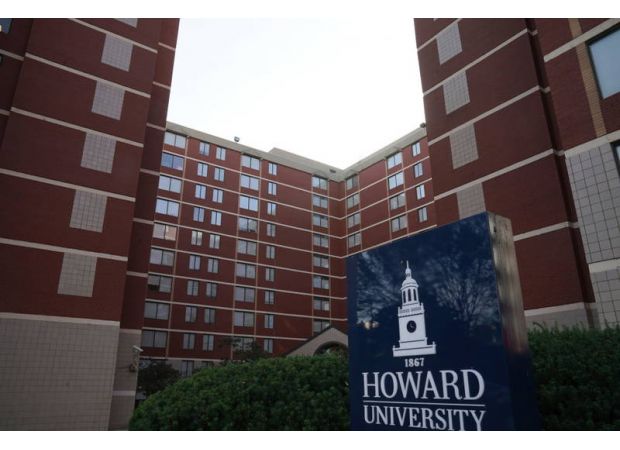

A recent study has revealed some interesting findings about the long-term benefits of attending a historically Black college or university (HBCU). Published in February in Jama Network Open, the study suggests that students who attend an HBCU, which provides a culturally affirming academic environment, tend to have better outcomes in the decades that follow. The Guardian reports that the study involved nearly 2,000 Black adults, with 35% of them having attended an HBCU between 1940 and 1980.
The study's results show that the college one attends can have a significant impact on their overall well-being. This is particularly relevant during the 40-year period that the study covered, as there were significant policy changes that affected the education system in the United States. These changes, such as the 1952 Brown v Board of Education and the 1964 Civil Rights Act, brought about a shift in racial dynamics in schools, providing Black students with more educational options than ever before.
However, the study also reveals that the effects of these policy changes on the mental, emotional, and physical health of Black students varied depending on the type of educational institution they attended. The results showed that Black students who attended HBCUs had better memory and cognitive function compared to their peers at predominantly white institutions (PWIs). Dr.
Marilyn Thomas, an assistant professor of medicine at the University of California, San Francisco, explains that this was evident across all three time periods covered by the study. One of the key factors that differentiated HBCU and PWI attendees was their early-life experiences. The study found that HBCU students were more likely to come from functional households, where their mothers had received a college education.
"Participants who attended HBCUs were more likely, for example, to have mothers or female caregivers who had a college education," adds Thomas. "They were also more likely to have reported being shown affection when they were growing up, love and affection." Dr. Thomas' previous research has focused on the correlation between experiences of racism and overall health.
The current study adds to the growing body of evidence that HBCU graduates, who are subjected to fewer instances of racism, have lower stress levels because of their supportive school environment. While other studies have looked at the relationship between the length of one's education and cognitive function, this study sheds light on the role of culturally affirming institutions in promoting better health outcomes. "What's really significant about this finding is that it suggests that culturally affirming spaces can indeed promote and protect cognitive health," says Thomas.
"And it goes beyond that, because it also shows that these benefits last long after graduation - we're talking about people with an average age of 62. These benefits are long-lasting." These findings are particularly relevant in the current climate, where anti-diversity, equity, and inclusion (DEI) legislation is gaining momentum. Under the Trump administration, there has been a crackdown on DEI programming at colleges and universities, potentially leading to similar instances of isolation and lack of cultural empowerment for students.
While the study only scratches the surface of the relationship between HBCU attendance and better health outcomes, it highlights the importance of supporting and uplifting these institutions for students of color. "This study demonstrates that when we create environments where marginalized individuals feel welcomed and affirmed, they are able to live healthier lives," says Thomas. In light of this, it is worth considering the recent announcement of rapper Cardi B's 'Am I The Drama' album rollout, which will be hosted at Howard University.
This is just one example of how HBCUs continue to play a pivotal role in promoting diversity and inclusion in education.

CIPET: CSTS, Bhubaneswar and MCL, Sambalpur have signed an MoU for employment-oriented training prog...
Read More
The letters page doubts that the PS6 will be released in 2027 and a reader ponders what would happen...
Read More
Switch 2 price increase by Nintendo didn't last a month as some retailers are now selling it for les...
Read More
The Indian government is implementing AI and data-driven tools to improve the functioning of its bur...
Read More