
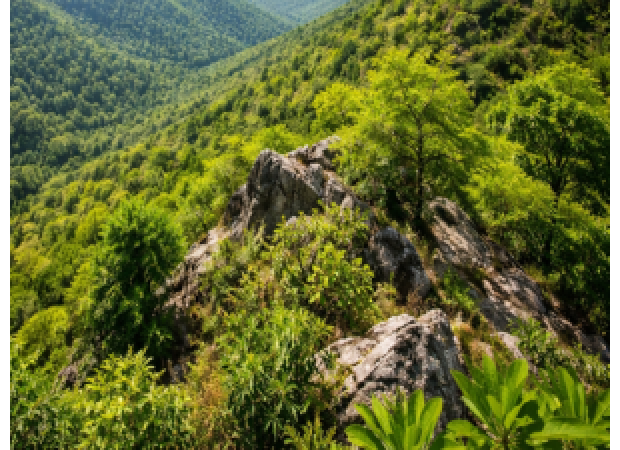

Recently, the Supreme Court of India has taken a significant step towards protecting the Aravalli hill range. A high-powered committee has been formed to conduct an independent review of the report submitted by the Centre. Led by Kanchan Devi, the Director General of the Indian Council of Forestry Research and Education, the committee has been given a deadline of August 31, 2026, to submit their comprehensive report.
This decision by the apex court comes after it stayed the implementation of a report prepared by a committee chaired by the Secretary of the Ministry of Environment, Forest and Climate Change in October 2025. The court had recognized the need for an unbiased and expert opinion on the matter and highlighted the importance of consulting with all relevant stakeholders. The newly constituted high-powered committee comprises of experienced individuals such as Dr.
Subhash Ashutosh, Dr. Rajendra Kumar Sharma, Brij Mohan Singh Rathore, and Prof. Ashok K Bhatnagar.
Additionally, Professor Jagdish Krishnaswamy and Prof. Laxmikant Sharma have been appointed as special invitees for their expertise in the field. The Ministry of Environment, Forest and Climate Change has been directed to nominate an officer of the rank of Director to serve as the committee's Member Secretary.
The main task of this committee is to review the October 2025 report and address key questions raised by it. One of the critical issues is whether limiting the definition of the Aravalli range to areas within 500 metres between two or more hills would significantly reduce the protected territory and allow for continued mining and other harmful activities. The committee will also analyze whether hills with elevations of 100 metres or above should be considered as a continuous ecological formation, even if separated by distances greater than 500 metres.
Another concern raised by the court is the report's claim that only 1,048 out of 12,081 hills in Rajasthan meet the 100-metre elevation criterion. The committee has been tasked with determining the accuracy of this assessment and whether it would leave a large number of hills without sufficient environmental protection. Furthermore, the committee will evaluate whether existing regulatory mechanisms are sufficient or if a more in-depth scientific and geological investigation of the Aravalli system is necessary.
The formation of this high-powered committee is a result of consultations among all parties involved in the case. During the last hearing on May 25, the Centre had suggested the inclusion of four experts recommended by the amicus curiae and the Central Empowered Committee, with the Director General of ICFRE as the chairperson. This decision by the Supreme Court will have a significant impact on the protection of the Aravalli ecosystem, and it sets an example for other states to follow.

Tuesday letters page says the PlayStation 6 may be irrelevant, while a reader asks about music in th...
Read More
Mumbai: Sources say Tiger Shroff shooting suspects scoped out several celebrities’ homes, includin...
Read More
Karan Deol wished father Sunny Deol a happy birthday, thanking him for his love, guidance and cheris...
Read More
Square Enix brings back turn-based combat and 2D visuals in a retro Final Fantasy spin-off starring ...
Read More