
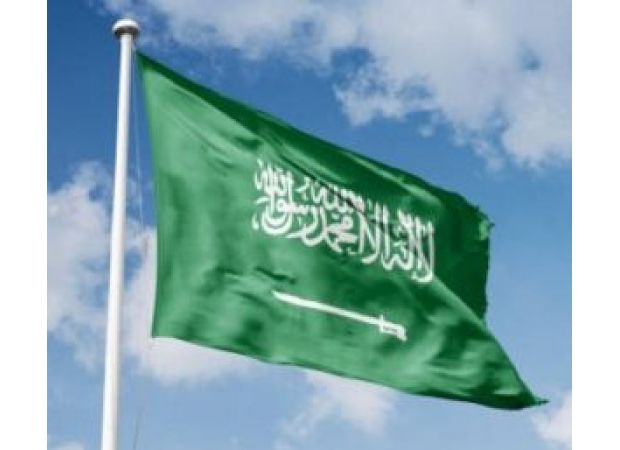

Dubai: Over the weekend, tensions in the Middle East continued to escalate as Saudi Arabia issued emergency alerts and warned of a potential aerial threat from Iran-backed rebels in Yemen. At the same time, Iran's Supreme National Security Council announced that it had sent its conditions for ending the war to the United States through Qatar, a key mediator. These developments came amidst a series of other events, including Israeli airstrikes in Gaza and southern Lebanon, and the execution of a man accused of spying for Israel in Iran.
On Saturday, residents in Riyadh were shaken by the sound of an explosion, following the first alert for the capital city since the recent escalation in fighting with Yemen's Houthi rebels. While no casualties or damage were reported, the incident served as a reminder of the ongoing conflict in the region. Saudi authorities did not comment on the cause of the explosion, but they have previously reported intercepting missiles and drones launched by the Houthis.
Meanwhile, the head of Iran's Supreme National Security Council revealed that the country had shared its conditions for ending the war with the US through Qatar. These conditions include ending the war on all fronts, releasing seized assets, and lifting the US naval blockade of Iranian ports. However, it remains uncertain when these conditions were shared and whether or not the US will agree to them.
The council also stated that they hope for an end to the fighting between Yemen and Saudi Arabia. In a separate event, Iran's state TV announced the execution of a man convicted of spying for Israel's intelligence agency, Mossad. The man, identified as Hossein Pedram, was accused of sharing classified information on sensitive military sites in Iran's Isfahan province.
He was arrested after these sites were targeted in last year's 12-day air war by the US and Israel. This recent surge of executions in Iran has sparked international outcry from human rights groups. Amidst these tensions, the US military stated that it has supported the transit of one billion barrels of oil through the Strait of Hormuz over the past two months.
The head of US Central Command also claimed that Iran has not been able to export any oil due to the US blockade. However, monitoring groups report that shipping traffic in the area remains below pre-war levels, and Iran continues to attack ships as it asserts control over the waterway. In Gaza, Israeli strikes killed three men, including the son of the Gaza Health Ministry's director general.
The Israeli military claimed that they struck "several military operatives," while officials at Shifa Hospital reported that an Israeli strike on a civilian vehicle killed one person and wounded four others. This incident serves as a reminder of the ongoing conflict between Israel and Hamas, which has resulted in the deaths of thousands of Palestinians since a ceasefire last October. In southern Lebanon, Israeli military strikes targeted Hezbollah militant group sites, following an incident where two Israeli soldiers were wounded after their vehicle drove over an explosive device.
The strikes sparked fear and chaos in the area, with one strike nearly hitting paramedics on their way to the scene. Meanwhile, in Iran, race organizers were charged after allowing women to participate in a race without wearing headscarves, a requirement under the country's theocratic rule. In Syria, a funeral was held for 11 soldiers killed in an explosion at an arms depot in Deir el-Zour.
The cause of the blast remains unknown. And in Gaza, over 280,000 children returned to school, many of them attending classes in tents and heavily damaged classrooms. While the conditions may not be ideal, for many families, the return to school brings a sense of normalcy amidst the ongoing conflict.

Actress Rasika Dugal credits the 2018 film Manto for reviving her career, as she reflects on her jou...
Read More
Pusha T and Pharrell have joined forces to bring their hit song "Grindin'" to the coffee world with ...
Read More
June 2026 UGC-NET re-exam results announced by NTA for English, commerce, and sociology papers due t...
Read More
Police in Odisha have filed a new case against BJD leader Bikram Kumar Panda, just released from jai...
Read More