
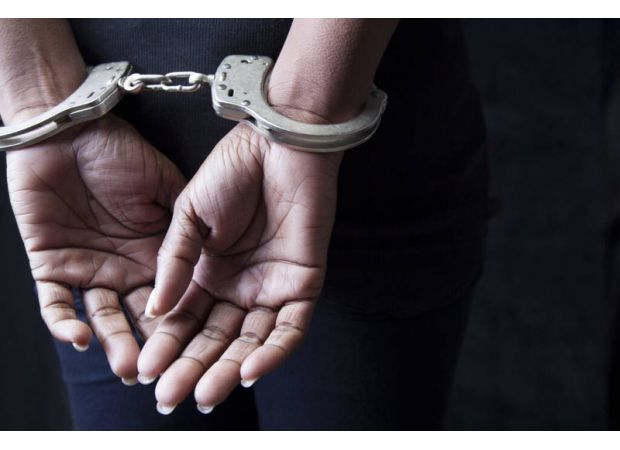

According to a recent report by the Deportation Data Project, Black immigrants are facing heightened targeting by U.S. Immigration and Customs Enforcement (ICE) agents during "street arrests." This adds to the growing concern that the safety of our everyday lives is being threatened. The report, titled "One Year of Immigration Enforcement," sheds light on the significant increase in street arrests of undocumented Black immigrants, a tactic that involves federal agents apprehending individuals in their own neighborhoods, at courthouses, or during routine check-ins at ICE field offices.
For this marginalized community, the report marks a new level of danger imposed by law enforcement, further exacerbating the existing systemic disparities they already face. The "arrest anyone, anywhere" approach, as it is known, has its roots in the record-high numbers of immigrant detentions seen across the nation. Data reveals that the number of ICE agents detaining individuals with no criminal convictions has risen by a staggering 800%.
This has resulted in a decrease in the release rate for detainees without criminal records, from 35% to a mere 7%. NBC News reports that the findings of the report are based on data obtained through a Freedom of Information Act lawsuit, covering arrests made up until March 10th, 2026. David Hausman, the co-director of the Deportation Data Project and assistant professor of law at UC Berkeley, explains that while information on ICE arrests is public, it only tells part of the story.
He states, "It's a well-known fact that ICE has been conducting indiscriminate arrests, but what is less known is that even as more individuals are being detained who could potentially win their cases and remain in the United States, the likelihood of deportation has also increased." Hausman goes on to say that one of the main contributing factors to this trend is the fact that detention often leads individuals to give up on their cases. However, a spokesperson from the Department of Homeland Security (DHS) disputes the projected data, claiming that "70% of ICE arrests are criminal illegal aliens." They also emphasize that the department remains committed to targeting the "worst of the worst," including gang members, pedophiles, and rapists. The spokesperson adds that every individual arrested by ICE has committed a crime by entering the country illegally.
They also call into question the accuracy and methodology used by the Deportation Data Project, stating that the information has not been verified or audited by the DHS or ICE. Despite the DHS's rebuttal, the Deportation Data Project stands by their data, stating that it is based on ICE's own records of arrests, detentions, and deportations. They point out that the increase in arrests during the first nine months of the Trump administration is not limited to Democratic-led cities, such as Minneapolis, as some may assume.
Graeme Blair, co-director of the Deportation Data Project and professor of political science at UCLA, notes that even during the height of the "Minneapolis surge," street arrests only accounted for 15% of all arrests. He also emphasizes that this trend is not limited to specific regions, as the expansion of street arrests is a nationwide phenomenon. In other related news, Memphis Grizzlies player Brandon Clarke was recently arrested for speeding and drug possession.
This incident serves as a reminder of the ongoing issue of over-policing and targeting of Black individuals, even in seemingly unrelated situations. The findings of the Deportation Data Project's report shed light on the pervasive nature of this issue and the urgent need for systemic change.
A human skeleton was discovered in a scrap dealer's settlement during a cleanliness drive in New Del...
Read More
Odisha Tourism Department signs MoUs to boost homestays and adventure/heritage tourism with SBI, Dep...
Read More
One reader believes that Marvel's Wolverine is the top game of 2026, despite conflicting opinions fr...
Read More
2 officials in Bhubaneswar, Odisha were arrested for transferring Rs 9.24 crore of public money to p...
Read More