
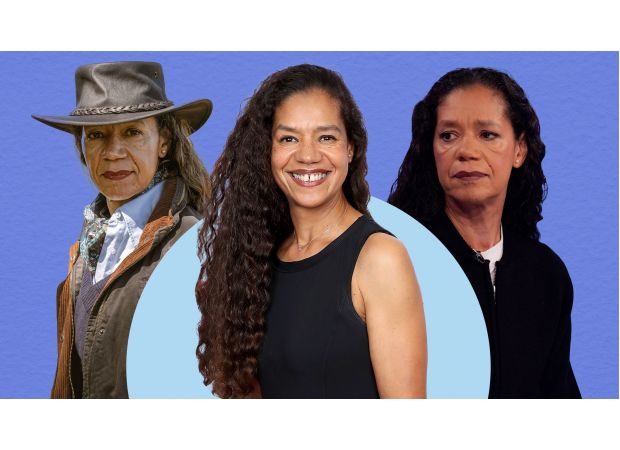

Jaye Griffiths, a well-known face on TV, recently opened up to Metro about her experience with domestic abuse, sharing a message of hope and support for victims. She is now a passionate advocate for Refuge, an organization that provides support and resources for women and girls escaping from abusive relationships. In her conversation with Metro, Jaye shared her own story of domestic violence and coercive control, something she never thought she would survive.
Now, she is grateful for small freedoms like being able to stock her fridge however she wants, and she speaks of her experience with grace, humor, and bravery. But she also sheds light on the lack of resources available for women in similar situations, with many facing the question of "why didn't you just leave?" from those who don't understand the complexities of domestic abuse. Jaye explains how humiliating it can be to admit what's happening at home, causing many women to suffer in silence.
That's why Jaye is proud to support Metro's campaign, This Is Not Right, which aims to address the epidemic of violence against women with the help of Women's Aid. She encourages society to rethink how women are perceived and treated, and to allocate more resources to support victims of abuse. Jaye speaks eloquently about her journey to healing and her life now, which she describes as "beautifully dull" in the best way possible.
But she also speaks of the warning signs of an abusive relationship, such as a partner controlling small things like ordering dinner for her. She urges women to be aware and to not fall into the trap of thinking this behavior is normal. Discussing the alarming statistics of domestic violence, Jaye reveals that she often wonders which women in her village may be going through the same pain she endured.
And with the rise of incel cultures online, Jaye worries about the future of young boys who are taught to hate and feel entitled to women's bodies. But she also offers solutions, such as banning under 16s from social media, as Australia has done, to see if it makes a difference in the long run. Ultimately, Jaye's message is one of hope and change, and she encourages society to come together and support victims of domestic abuse.
Jaye Griffiths is a familiar face on TV, but in a recent interview with Metro, she speaks with a refreshing openness and grace. Her message to victims of domestic violence is one of hope and reassurance - "It will end. And there is better.
And it's not your fault." These words hold a deeper significance, as Jaye herself was a victim of domestic abuse for many years before finding the courage to speak out. A strong advocate for Refuge, a lifeline for women and girls seeking to escape abusive relationships, Jaye openly shares her own story of domestic violence and coercive control. With tears in her eyes, the 62-year-old actress, known for her roles in Emmerdale, Casualty, and Silent Witness, recounts the astonishment she felt at surviving such a traumatic experience.
She even considers the simple freedom of stocking her own fridge as a novelty. In our conversation with Jaye, she exudes a sense of grace, bravery, and a fantastic sense of humor. She trusts us with her story, and we are honored to share it.
Jaye expresses her despair at the lack of resources available to women in need, leaving them with nowhere to turn. She mentions a phrase that she finds both frustrating and exhausting - "Why didn't you just leave?" In fact, when Jaye first confided in others about her situation, some responded with this very question, not understanding the complexities of domestic violence. "It's so humiliating what is happening to you at home," Jaye explains.
"The idea that people would know is untenable, so you just carry on." She also highlights the difficulties faced by women with children, who may have nowhere else to go. With a significant gap in resources to support them, the situation is catastrophic. "If we can afford another war, then we can afford more resources," she passionately states.
Jaye speaks eloquently and thoughtfully as she reflects on her experience. Her life has changed significantly since then, and she no longer has to live in fear or constantly be on edge. Instead, she enjoys a peaceful life in the countryside with her loving partner and beloved dogs.
"It's beautifully dull," she jokes, a stark contrast to the exhausting facade she maintained while in an abusive relationship. However, Jaye also shares the reality of living with an abuser, constantly juggling a busy career while also trying to please a partner who blames you for everything. "The crux of the behavior is that everything is your fault," she reveals.
"You are alienated from normal things, like going out with friends, because your partner wants you to stay with them. And you think, at first, that they just love you so much. But it's all about control." Jaye warns other women to be cautious and aware of these warning signs.
"It may sound childish, but when you're in it, it's massive," she cautions. "Even something as small as not being able to choose your own dinner can be a red flag." As we discuss the alarming statistics of domestic violence, including the fact that one woman a week is murdered by a partner, Jaye reveals that she often walks around her village wondering which of the women she passes might be going through the same pain she did. It's a small glimpse of the larger issue, one that Jaye sadly sees no signs of improving, especially with the rise of incel cultures teaching young boys to hate women and feel entitled.
"They're coming, and they're going to be big and strong, with medieval ideas and opinions," she says. "And then what do we do? This will only get worse." Jaye also suggests following in Australia's footsteps by banning under-16s from social media to combat this toxic culture.
"We should give it a try," she urges. One of the most insidious aspects of abuse is how abusers can appear as charming and likable individuals to everyone else. Jaye herself admits that even her colleagues must have thought she was a "nightmare" while she was struggling in an abusive relationship.
It's a reminder that abuse can happen to anyone, regardless of their public persona. As we wrap up our conversation, Jaye leaves us with one final thought - "Let's have a rethink about how we are perceived, how we are treated, and where resources are allocated. Because if we can afford another war, we can certainly afford to support women in need." And with that, we say goodbye to Jaye, grateful for her courage and grateful for her support of our campaign, This Is Not Right, which aims to shine a light on the epidemic of violence against women.
In June, Lisa Renee Olaso and her fiancée Cyril Christopher looked for a rental after moving from D...
Read More
Things are changing in Hollyoaks....
Read More
Odisha put all districts on alert as a Bay of Bengal low-pressure system may strengthen into a cyclo...
Read More
Congress raises concerns over judicial independence under Modi, citing Justice Kaul’s memoir and u...
Read More