

Exciting news for PlayStation 5 fans! The Wednesday letters page is in agreement with the recent backlash against Nvidia's DLSS 5 technology. One curious reader even wonders why Öoo was never released in the UK Indie World.
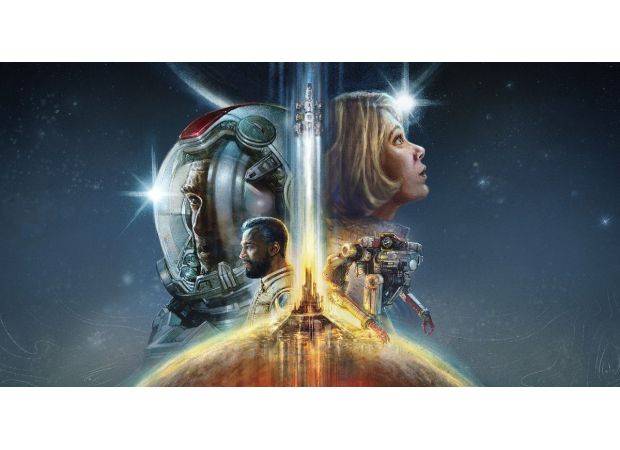
As always, Games Inbox is filled with our readers' letters, comments, and opinions. If you want to join in on the discussions, don't hesitate to email us at email. But let's get to the most exciting news - Starfield is finally coming to PlayStation 5!
As someone who has played the game on PC, I have to say that it's not worth getting too excited about. Sure, the new story DLC may bring some improvements, but the game's fundamental issues are so deeply rooted that it's nearly impossible to fix them. Personally, I feel a bit resentful towards Starfield.
It tied up Bethesda for years and has caused a massive gap of nearly 20 years between Skyrim and The Elder Scrolls 6. And the only other major game they've released during that time is Fallout 4. While people may criticize Sony for "wasting" a generation, it's clear that Bethesda has wasted two.
I mean, Skyrim was originally released on the Xbox 360 - that's a long time ago! But what's even worse is that because of Skyrim, I have very little faith that The Elder Scrolls 6 will be worth the wait. Starfield has a laundry list of issues, one of the main ones being its outdated design.
The dialogue system, AI for companions, and town mechanics are almost identical to Skyrim. And yet, the one thing that should have been similar to Skyrim - the exploration and open world design - is completely missing. Instead, players are left with a never-ending supply of randomly generated planets that are about as interesting to explore as Milton Keynes on a quiet Sunday.
So no, I wouldn't recommend Starfield to any PlayStation owners. Sorry, Korbie! But let's shift gears and talk about something else that's been causing quite a stir in the gaming community - the consumer backlash against AI technology.
As we all know, GC always encourages us to stay positive about the gaming industry by simply playing new games. And while that's certainly good advice, I also find hope in the fact that the majority of gamers are actually against AI technology, despite its importance in the gaming world. The recent introduction of Nvidia's DLSS 5 technology has only further emphasized the fact that AI is slowly trying to take over the art of gaming.
Not only does all AI artwork look the same, but now games are starting to look the same too. And let's be real, the uncanny valley levels are off the charts with this technology. The lack of consistency and poor lighting just make it seem like the game constantly has a spotlight shining on the screen.
But what's even more frustrating is that this is all a solution to a problem that doesn't even exist. And as usual, I'm sure Nvidia and other companies will double down on their use of AI and blame gamers for not liking it. I can only imagine what the next generation of consoles will bring, but it's clear that the next Xbox will likely have some form of AI technology.
And honestly, I'm already sick of it. Sorry, Zeiss! Speaking of ugly technology, let's talk about the Nvidia DLSS 5 again.
Seriously, did anyone involved actually think this was a good idea? Digital Foundry is getting a lot of backlash for being positive about it, and honestly, they deserve it. I mean, have you seen the comparison images?
The only game that looks halfway decent is Starfield, and that's only because it already had a bland art style with lifeless characters. But the Resident Evil Requiem shots are just laughable. And the idea that video game graphics are no longer what the developer intended, but rather some on-the-fly AI creation is just disgusting to me.
The future looks bleak, folks. Sorry, Focus! On a lighter note, can we talk about how Nintendo handles their new product and updates announcements?
While Sony and Nvidia give us detailed blog posts and previews, Nintendo just keeps things a secret and surprises us. Case in point - their boost mode. I only found out about it through news reports, but after trying it out, I have to admit it's quite good.
You can really see the difference it makes, which is rare in these instances. But seriously, when are we getting a proper Nintendo Direct? Only Nintendo knows.
Sorry, St1nger! Moving on to a different topic, let's talk about the Resident Evil series. As a massive fan, I have to admit that all the boss fights follow the same formula - run around, shoot, repeat.
I haven't played Requiem yet, but I can't imagine it's any different. And while I don't necessarily think this is a bad thing, maybe it's time for a change? Sorry, Bobwallett!
And finally, let's take a trip down memory lane and talk about an old game that never got a sequel - Spore. Developed by the creator of SimCity and The Sims, this game was all about controlling a species from microscopic organisms to space-faring aliens. While it may not have lived up to its potential at the time, the creature designer was amazing and I spent hours creating my own creatures.
Personally, I think it's a game that could do very well today with some updates and improvements. And who knows, maybe we'll get a sequel one day? Sorry, Bobwallett!
Thank you for reading this week's edition of Games Inbox. As always, we love to hear your thoughts and opinions, so don't hesitate to email us at email. And if you want exclusive gaming analysis and the latest reviews delivered straight to your inbox, sign up for our GameCentral newsletter!
It's a unique take on the week in gaming and is delivered every Saturday morning. See you all next week! Exciting news for PlayStation 5 owners!
The Wednesday letters page has joined in on the backlash against Nvidia's DLSS 5 technology, with one reader questioning the absence of Öoo in the UK Indie World. It's always interesting to see the opinions and discussions of our readers, so don't hesitate to join in by emailing us at the provided email address. Also, be sure to keep an eye out for our expert, exclusive gaming analysis in the GameCentral newsletter, delivered straight to your inbox every Saturday morning.
But let's move on to the big news – Starfield is finally making its way to PlayStation 5! As someone who has already played it on PC, I can confidently say that it's not something worth getting too excited about. While the new story DLC may bring some improvements, the game's deep-rooted problems make it nearly impossible to fix.
In fact, I have a bit of resentment towards this game. It took up so much of Bethesda's time and will now result in a 20-year gap between Skyrim and The Elder Scrolls 6. Can you believe it?
20 years! And the only other major game they released in that time was Fallout 4. Some might say that Sony has been wasting a generation, but in my opinion, Bethesda has wasted two.
And to think, Skyrim was originally released for the Xbox 360 – it's been a long time coming. To make matters worse, my lack of faith in The Elder Scrolls 6 is due to my disappointment with Starfield. While it has a laundry list of issues, one of the main problems is its outdated design.
The dialogue system, AI for companions, and town mechanics are almost identical to those in Skyrim. And then the one thing you would expect to be similar – the exploration and open-world design – is completely missing. Instead, we are left with a seemingly endless collection of randomly generated, uninteresting planets that are about as thrilling to explore as Milton Keynes on a Sunday.
So, as a PlayStation owner, I cannot in good conscience recommend Starfield. It's not all doom and gloom, though. One thing that gives me hope for the gaming industry is the majority of gamers' stance against artificial intelligence.
This is especially true for a hobby where technology plays such a crucial role. The recent backlash against Nvidia's DLSS 5 technology is a prime example of this. It's clear that AI is attempting to kill art, and it's a shame.
Not only does all AI artwork look the same, but it also seems to be everywhere – and it's so easy to create. Now, we have to deal with games looking like AI creations as well. The uncanny valley levels are off the charts, and there's no consistency whatsoever.
The lighting is terrible, like a high-powered spotlight is constantly shining at the screen. But unfortunately, this is just another example of a solution in search of a problem. And as usual, I imagine Nvidia and other companies will double down on their AI efforts and blame gamers for not liking it.
I can't say for sure what the future holds for PlayStation 6, but it's obvious that the next-generation Xbox will likely follow suit. And quite frankly, I'm already sick of it. On a lighter note, let's take a look at the recent Nintendo Direct.
It's always interesting to see how different companies choose to showcase their new products and updates. Sony opts for a big blog post and detailed information about their PSSR tech, while Nvidia goes all out with a preview blow-out – which seems to have backfired on them. And then there's Nintendo and their boost mode.
Surprisingly, they decided to keep it a secret and not tell anyone. I only found out about it through the news, but after giving it a try, I have to say it's quite impressive. It's rare to see a noticeable difference in these types of situations, but Nintendo has managed to pull it off.
Now, I can't help but eagerly await the announcement of a "proper" Nintendo Direct – whenever that may be. Nintendo is known for keeping us on our toes, so it could happen tomorrow or in December. Who knows what they're thinking?
Speaking of surprises, I was recently thinking about old games that never received a sequel or modern-day equivalent. One title that came to mind was Spore, which I was obsessed with when it first came out. For those who may not know, it was created by the minds behind SimCity and The Sims, making it a highly anticipated release.
The game allowed players to control a species from microscopic organisms to space-faring aliens. In theory, this sounded like an amazing concept, but in reality, it was just a handful of mediocre mini-games. However, the creature designer was a standout feature, and I spent countless hours creating my own creatures and playing around with the editor.
It was the only thing at the time that rivaled the WWE creator-a-wrestler. Unfortunately, Spore was considered a flop, so there was never a sequel. But I do believe that with some updates, it could do very well in today's market.
After all, it was essentially the Minecraft of its time – players could ignore the main game and focus on creating their own content. One of the game's main selling points was that your creations from earlier stages would carry over into later ones, but this wasn't very apparent while playing. To improve upon this, I would suggest making it one cohesive game with consistent controls, rather than a collection of separate mini-games.
Civilization takes place over thousands of years, yet it still feels like one game. Something like that would be a welcome change for Spore.

Material participation is crucial for investors and entrepreneurs to deduct losses from real estate ...
Read More
Readers speculate on potential review scores for GTA 6 and Zelda: Ocarina Of Time, while one reader ...
Read More
Pusha T and Pharrell have joined forces to bring their hit song "Grindin'" to the coffee world with ...
Read More
Saudi Arabia has issued emergency alerts across the kingdom due to a potential aerial threat, while ...
Read More