
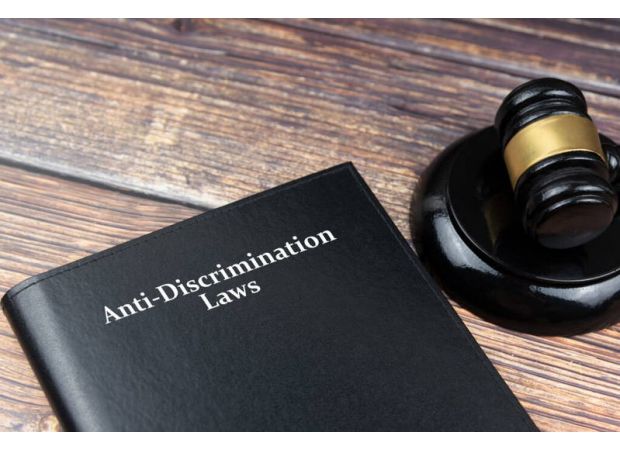

The U.S. Department of Justice recently released a legal opinion that has caused quite a stir among civil rights advocates. The opinion declares the Equal Employment Opportunity Commission's (EEOC) interpretation of disparate-impact discrimination under Title VII of the Civil Rights Act to be unconstitutional.
This move has drawn sharp criticism from those who fear it could harm Black workers and other marginalized groups. The DOJ argues that the EEOC's use of disparate-impact liability, a legal theory of discrimination that holds employers accountable for practices that disproportionately harm protected groups, puts pressure on employers to consider race when making hiring decisions. According to the opinion, the problem with disparate-impact liability is that it can coerce employers into making race-based decisions in order to avoid liability.
The opinion, signed by Office of Legal Counsel Assistant Attorney General T. Elliot Gaiser and Deputy Assistant Attorney General Joshua Craddock, states that employers should be able to use tools such as hiring tests, criminal background checks, and promotion standards without fear of discrimination claims based solely on their effect on different demographic groups. Acting Attorney General Todd Blanche, who previously worked as President Trump's personal defense lawyer, supports the opinion, stating that the EEOC's interpretation has produced unintended consequences.
EEOC Chair Andrea Lucas also welcomes the finding, stating that it will provide clarity regarding the Constitutional limits of disparate impact in employment discrimination matters. However, civil rights advocates argue that the opinion threatens an important legal mechanism for combating systemic discrimination. They point out that for over 50 years, the EEOC has relied on disparate impact to address civil rights violations, and that requiring plaintiffs to demonstrate discriminatory intent is contrary to Supreme Court law and will lead to a sharp increase in unchecked discrimination.
Former Civil Rights Division attorney Stacey Young argues that discrimination often exists without overt expressions of bias and that disparate impact liability has been a cornerstone of civil rights enforcement for decades. Regan Rush, the director of Red Line for Civil Rights at Democracy Forward, states that the DOJ's position ignores the realities of modern discrimination and could make it more difficult for Black workers to challenge policies that produce unequal outcomes. Rush sees this opinion as part of a larger effort by the Trump administration to narrow civil rights protections for people of color.
It is important to note that this opinion does not overturn federal law, but advocates fear it could signal a major shift in how workplace discrimination claims are investigated and enforced. This could have a significant impact on Black workers and other marginalized groups, who may face even more barriers in seeking justice for discrimination in the workplace. This opinion is just the latest in a series of actions by the Trump administration that have raised concerns about the protection of civil rights in the United States.

The Monday letters page debates the value of Marvel's Wolverine, with one reader supporting Sony ove...
Read More
People in Kataka are preparing for Ganesh Puja by buying idols, decorating them, and watching perfor...
Read More
Actress Rasika Dugal credits the 2018 film Manto for reviving her career, as she reflects on her jou...
Read More
I hope people recognize this as cruelty and don't engage in it on television....
Read More