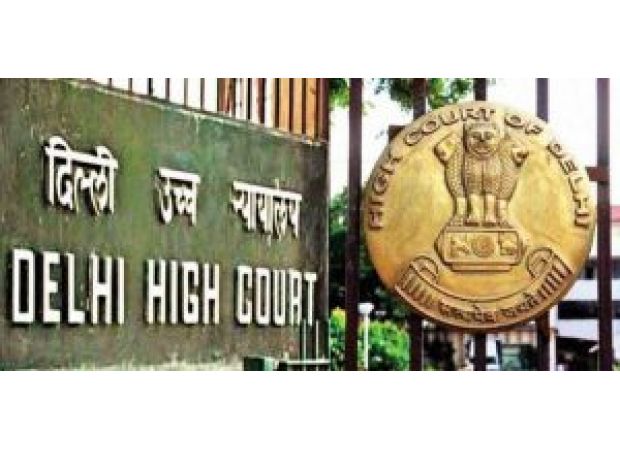

New Delhi: On Thursday, the Delhi High Court took action against former Chief Minister Arvind Kejriwal and other Aam Aadmi Party (AAP) leaders for their attempts to discredit the judiciary in connection with the excise policy case. Justice Swarana Kanta Sharma passed a detailed order, stating that the social media posts, videos, and public statements made against her went beyond fair criticism and amounted to criminal contempt. According to Justice Sharma, the actions of the accused were not just a disagreement, but a deliberate campaign to defame her and the entire judiciary.
The contempt notices were issued to Kejriwal, former Deputy CM Manish Sisodia, MP Sanjay Singh, and AAP leaders Saurabh Bharadwaj, Vinay Mishra, and Durgesh Pathak. Justice Sharma emphasized that while judges are trained to accept fair criticism, they cannot remain silent when there is a coordinated effort to scandalize the judiciary. She clarified that the court was not seeking immunity from criticism, but it had a duty to act when attempts were made to damage the institution of the judiciary.
The Delhi High Court further stated that while criticism of judicial orders was acceptable, there was a thin line between fair criticism and contempt of court. It was noted that any ordinary citizen could criticize a judge or order, but a deliberate campaign to portray a judge as biased was contemptuous. Justice Sharma pointed out that instead of challenging the order refusing recusal before the Supreme Court, Kejriwal chose to publish letters and videos on social media, questioning her impartiality and alleging political bias.
The judge also mentioned that as part of a psychological coercion campaign, even her family members were dragged into the controversy in an attempt to pressure her into recusing from the case. However, Justice Sharma refused to be intimidated and stated that remaining silent would have been a surrender. She made it clear that the contempt proceedings were not motivated by personal anger or grievance, but were aimed at protecting the institution of justice.
Justice Sharma emphasized that while judges may come and go, the institution of justice would remain fearless in India. In light of the initiation of contempt proceedings, Justice Sharma recused herself from further hearing the excise policy case, stating that there may be a perception of bias if she continued to hear the case. She added that another bench would hear the case to avoid any such perception.
Earlier in the day, the Delhi High Court had stated that it would take action against the accused for allegedly circulating extremely defamatory material against the judge hearing the CBI revision petition in the excise policy case. The trial court had earlier discharged all accused persons, including Kejriwal and Sisodia, in a judgment comprising over 1,100 paragraphs. The court held that the prosecution had failed to prove an overarching conspiracy and that the excise policy was the result of a consultative and deliberative process.
In its revision plea before the Delhi High Court, the CBI alleged that the AAP-led Delhi government had manipulated the excise policy to favor certain liquor traders in exchange for kickbacks. On March 9, Justice Sharma had issued notice on the CBI's plea and stayed adverse remarks made by the trial court against the investigating agency and a CBI officer. Orissa POST - Odisha's No.1 English Daily

Many gamers are now in their 40s, yet publishers still prioritize catering to younger audiences, lea...
Read More
Odisha's four Left parties are calling for the removal of the Chief Election Commissioner and for th...
Read More
Xbox exec reassures fans that GTA 6 pre-orders are doing extremely well despite recent layoffs and w...
Read More