
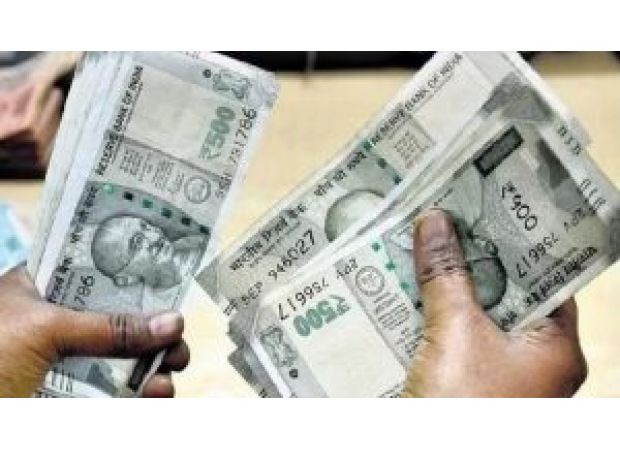

In the fiscal year 2026, Indian banks were able to collect a massive amount of Rs 7,087 crore from customers who failed to maintain a minimum balance in their accounts. This information was shared by Minister of State for Finance, Pankaj Chaudhary, in a written reply to the Rajya Sabha on Tuesday. Private sector banks took the lead in collecting these charges, with a total of Rs 4,948.71 crore, while public sector banks followed with Rs 2,137.92 crore.
According to the data provided by the Reserve Bank of India, HDFC Bank collected the highest amount of Rs 1,798.14 crore, closely followed by Axis Bank at Rs 1,081.33 crore during the fiscal year 2026. This means that these two private-sector banks alone collected a whopping 58 per cent of the total amount charged by 19 private-sector banks. However, it is worth noting that no charges were imposed on Basic Savings Bank Deposit Accounts, including those under the Pradhan Mantri Jan Dhan Yojana, etc.
Addressing another question, Chaudhary mentioned that public sector banks have shown significant improvement in their financial health. They have maintained healthy balance sheets, achieved historically high profits, and have recorded a multi-decadal low level of gross non-performing assets. Furthermore, these banks have been successful in maintaining sustained credit growth across various sectors of the economy.
The government has also introduced the Emergency Credit Line Guarantee Scheme in May 2026 to assist businesses during the West Asia Crisis. This scheme aims to provide guarantee coverage to Member Lending Institutions through the National Credit Guarantee Trustee Company Ltd for the amount in default under the additional credit facility extended to eligible borrowers. This includes 100 per cent guarantee coverage for MSMEs and 90 per cent coverage for non-MSMEs and the scheduled passenger airline sector, with a credit flow of Rs 2,55,000 crore, out of which Rs 5,000 crore is specifically allocated for the scheduled passenger airline sector.
In conclusion, it is evident that the Indian banking sector has been actively working towards improving its financial health and supporting the economy during tough times. The government and the Reserve Bank of India have taken necessary measures to ensure that the banking system remains stable and efficient. This has been reflected in the surge of collections from non-maintenance of minimum balance charges and the successful implementation of various schemes to support businesses.

Trump opposes calls to regulate AI, saying it could harm US in the race against other countries....
Read More
Thursday letters page excited for new Resident Evil movie, reader curious about difficulty of Fire E...
Read More
Material participation is crucial for investors and entrepreneurs to deduct losses from real estate ...
Read More
UT linebacker forfeited a game due to buying a $427 plane ticket, now he's using that same amount to...
Read More