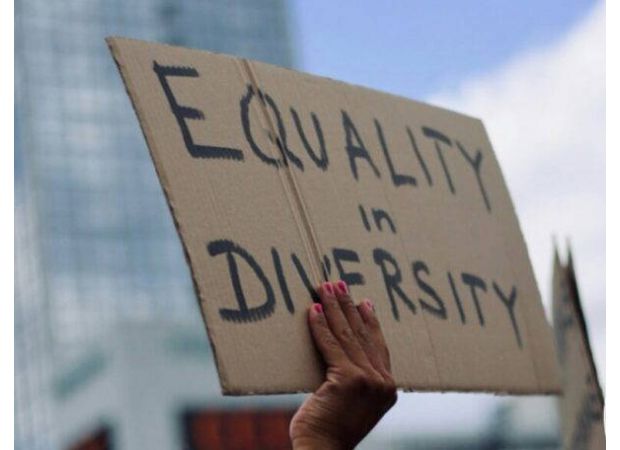

Despite the push from conservative groups to abandon diversity, equity, and inclusion initiatives in the corporate world, recent research has shown that companies who chose to ignore the warning of "go woke, go broke" are actually thriving. A study, led by Jacob Grumbach, an associate professor at the University of California, Berkeley's Goldman School of Public Policy, examined the performance of S&P 500 companies after former President Donald Trump issued executive orders against DEI policies last year. Surprisingly, the companies that continued their DEI commitments despite the orders performed just as well financially as those who scaled back their programs.
In fact, in the days immediately following the orders, the companies that maintained their DEI policies even outperformed those who did not, according to The Guardian. Some of the companies who chose to make changes to their DEI policies include Target, Google, Goldman Sachs, McDonald's, and Walmart. On the other hand, companies like Costco, Apple, and Delta Air Lines stood by their existing diversity initiatives.
Grumbach's study looked at the impact of these corporate decisions on the stock market, specifically focusing on "abnormal returns," which compares a stock's expected performance with its actual performance. The results showed that the companies who stood firm on their stance on DEI did not suffer financially. However, the retreat from DEI in the corporate world is not as black and white as it may seem.
According to David Glasgow, the executive director of New York University's Meltzer Center for Diversity, Inclusion and Belonging, many companies are operating in what he refers to as a "messy middle." This means that they may be keeping some DEI initiatives, while getting rid of others and rebranding certain aspects. It's not always a clear-cut decision for these companies. Grumbach shared his thoughts on the findings, saying, "No matter how we measure DEI in companies, we find the same answer.
Holding on to DEI promises ultimately had no impact on financial performance." This could potentially change the way executives view the risk of maintaining diversity programs within their organizations. DEI policies can have a significant impact on hiring, promotions, funding, and representation in leadership roles - all areas where Black workers and business owners have historically faced obstacles. The release of this study comes at a time when corporate America is reevaluating its approach to diversity, faced with political pressure, legal uncertainties, and backlash from consumers.
However, it's important to note that political pressure and financial performance are not always directly correlated. Companies may have more leeway to stand by their values and commitments to DEI than what the "go woke, go broke" mentality would lead us to believe. In related news, the Equal Employment Opportunity Commission (EEOC) is close to finalizing a new rule that would require companies to report data on race and gender in the workplace.
This development can be attributed to the efforts of the Trump administration.

Fund backs theater instruction, productions, & performance chances for future students....
Read More
Xbox exec reassures fans that GTA 6 pre-orders are doing extremely well despite recent layoffs and w...
Read More
Readers debate Rare's best game while one explains why they sold their Xbox Series X console....
Read More