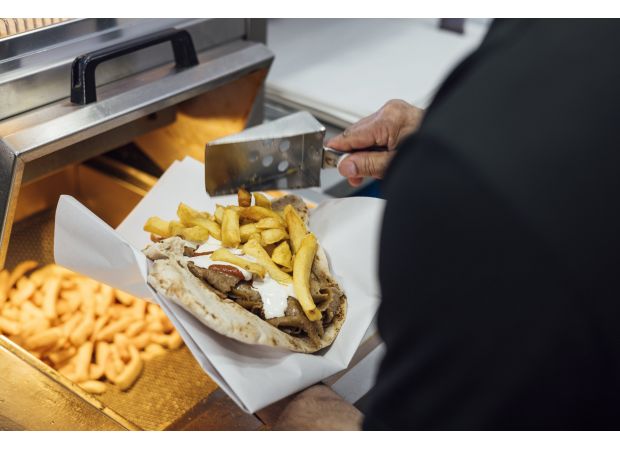

The Food Standards Agency (FSA) has made a concerning discovery – some goat meat has been found to actually contain mutton. It seems that dodgy takeaways and suppliers are taking advantage of unsuspecting customers by selling suspect meat and fish products. This news has recently come to light and it is causing quite a stir.
Last year, the FSA conducted DNA testing on various meat and fish products and found that 73 of them were suspect. This included some rather odd combinations, such as ham pineapple pizzas containing turkey and lamb curries that were actually between 60 and 100% cow DNA. But perhaps the most shocking finding was that beef pepperoni actually contained 73.2% chicken DNA and 15.1% turkey.
And if that wasn't enough, other tests revealed that even goat meat was not safe from this deceit, as it was found to contain mutton. Out of the 263 tests carried out, 73 products were found to contain undeclared species. This is a significant increase from the previous years, with 48 suspect products found in 2020 and only 14 in 2023.
The FSA has expressed their concern about this issue, stating on their website that consumers should have confidence in the safety and authenticity of their food. They also highlight the serious harm that this can cause not only to consumers, but also to food businesses and the entire food industry. In response to the 2013 horse meat scandal, the FSA established the National Food Crime Unit, with the aim of creating a "hostile environment" for those involved in food crime.
They are determined to prevent food from being rendered unsafe or inauthentic through dishonesty. However, despite their efforts, there have been recent cases of food fraud, such as several chip shops in the north west selling catfish as "traditional fish and chips" to cut costs. This catfish is imported from South East Asia and is much cheaper than cod and haddock, which are typically used in fish and chips.
The FSA has urged consumers to stay updated on the latest news and developments by following them on Whatsapp. They also warn that this issue is not limited to just a few businesses and that there are unscrupulous individuals who are mis-selling fish. The Chartered Trading Standards Institute has also acknowledged this problem, but they assure that it is not a widespread issue.
However, they do admit that there is a growing trend of replacing costly ingredients with cheaper alternatives. Last year, two businesses in Lancashire were prosecuted for mis-selling kebab products. The Trading Standards team conducted tests on the lamb seekh kebab and chicken seekh kebab from one of the businesses and found that they both contained a mix of lamb, chicken, and beef.
Similarly, a kebab shop in Burnley was found to be selling mixed lamb and chicken kebabs that were mostly made of beef. Councillor Joshua Roberts has expressed his shock and concern about this issue, stating that consumers are often unaware of the meat they are eating and even the businesses are not always aware of what they are selling. As this issue continues to unfold, it is important for consumers to be vigilant about the food they are consuming and to stay informed about any potential food fraud.
The FSA is working hard to combat this problem, but it is also up to us to be aware and make informed choices about the food we eat.

Marxism and other radical philosophies face constant criticism, but their ideals of social, cultural...
Read More