
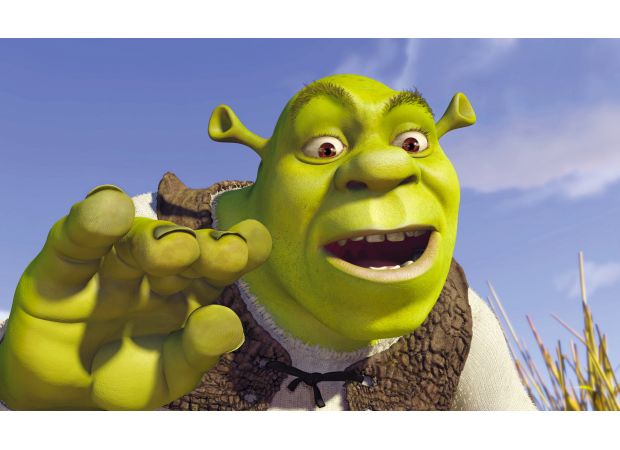

It's been 25 years since the world was first introduced to the lovable green ogre, Shrek. This week, we celebrated his birthday and reflected on the massive impact he's had on our culture. From movies and spin-offs to theme parks and internet memes, Shrek's popularity has only continued to grow over the years.
And it all started with the success of the 2001 original film, which not only made a splash at the box office, but also snagged the very first Oscar for Best Animated Feature. But the road to success was not an easy one for Shrek. In fact, it almost didn't happen at all.
DreamWorks Animation, the studio behind the film, was facing some tough competition from the likes of Disney and Pixar. Despite their live-action wing experiencing a string of Best Picture wins, the animation division was struggling to find its footing. That is, until they took a chance on Shrek.
Based on a 30-page children's book by William Steig, the movie had been in development since the early days of DreamWorks. However, being assigned to the project was seen as a form of punishment among employees. It was even referred to as "the Gulag" or being "Shreked." But despite its rocky beginnings, Shrek persevered and eventually became the cornerstone of DreamWorks Animation's success.
The film almost looked completely different from what we know today. Originally intended as a live-action project, it then shifted to motion-capture animation, resulting in a now-infamous test featuring a creepy-looking Shrek and a much darker tone. However, this version did not sit well with the higher-ups, and the project went through numerous changes before finally landing in the hands of directors Andrew Adamson and Vicky Jenson.
For Jenson, working on Shrek felt like making a movie in their own garage, away from the watchful eye of the studio. And that sense of freedom and rebellion is reflected in the film's unique and satirical take on fairytales. The movie pokes fun at the traditional model of family-friendly films, with its pop-culture references and irreverent humor.
It also breaks away from the Disney norm of using ballads and songbooks, opting instead for popular songs like Smash Mouth's "All Star." But for all its playfulness and cheekiness, Shrek also has a deeper message. As Jenson points out, it was a way for DreamWorks to poke fun at Disney, their biggest competitor. And while former Disney executive Jeffrey Katzenberg may have enjoyed gloating about his former employers, the story always came first for him.
He wanted to make a great movie, and in the end, that's exactly what he did with Shrek. It was a big week for Shrek, the lovable big green ogre who has captured the hearts of fans for 25 years now. From the moment he burst onto the scene, Shrek has been a force to be reckoned with, leaving a lasting impact on the world of animation and beyond.
From the big screen to theme parks to internet memes, the Shrek obsession has never died down. But it all started with the original film back in 2001. And what a success it was, grossing almost half a billion dollars and even competing for the prestigious Palme d'Or at the Cannes Film Festival.
And to top it all off, it was the very first animated film to win an Oscar for Best Animated Feature. But the road to success was not an easy one for Shrek and his friends Donkey and Fiona. In fact, the film almost looked completely different from what we know and love today.
DreamWorks Animation, founded by Hollywood heavyweights Steven Spielberg, Jeffrey Katzenberg, and David Geffen, was determined to challenge the dominance of Walt Disney Pictures in the animation world. And with their live-action films winning multiple Oscars, DreamWorks was ready to make a splash in the animated realm. Their first attempt, Antz, was released just a month before Disney and Pixar's A Bug's Life, but it didn't quite match up to the box office success of their rival.
And their next two hand-drawn animated films, The Prince of Egypt and The Road to El Dorado, were met with mixed reviews and poor box office numbers. DreamWorks needed a hit, and that's where Shrek came in. But the making of Shrek was anything but smooth sailing.
In fact, being assigned to the project was seen as a form of punishment within the company. The film was originally envisioned as a live-action project and then shifted to motion-capture animation, resulting in a rather unsettling animation test that did not sit well with the higher-ups. And the untimely death of original voice actor Chris Farley added another layer of difficulty to the production.
But eventually, with a change in animation studio and the hiring of directors Andrew Adamson and Vicky Jenson, Shrek began to take shape. And what a shape it was - a satirical take on fairytales and a jab at the traditional Disney formula. From pop-culture references to the use of popular songs, Shrek broke the mold of family-friendly animated films, and that approach has resonated with audiences for 25 years now.
But it wasn't just about poking fun at Disney. Director Vicky Jenson explains that it was all about telling a great story, and any digs at Disney were just an added bonus. And DreamWorks co-founder Jeffrey Katzenberg, who had a tumultuous history with Disney, was more than happy to revel in the success and take a few jabs at his former employer.
So as we celebrate Shrek's 25th birthday, let's remember the journey it took to get here. From being "Shreked" by DreamWorks employees to overcoming creative challenges and making a lasting impact on the world of animation, Shrek truly is an ogre with many layers, just like his beloved swamp.
Karan Deol wished father Sunny Deol a happy birthday, thanking him for his love, guidance and cheris...
Read More
A human skeleton was discovered in a scrap dealer's settlement during a cleanliness drive in New Del...
Read More
2 officials in Bhubaneswar, Odisha were arrested for transferring Rs 9.24 crore of public money to p...
Read More
Many gamers are now in their 40s, yet publishers still prioritize catering to younger audiences, lea...
Read More