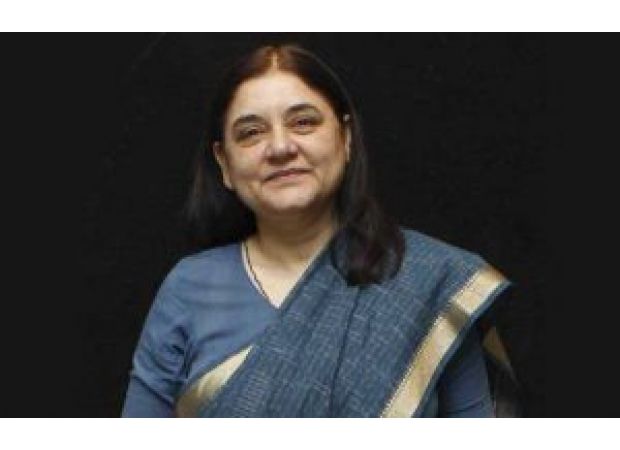

From love marriage to expletives and anti-party activities: Sonia tells the story of Maneka’s fallout New Delhi: Towards the end of 1973, Sanjay Gandhi was introduced to Maneka Gandhi, a pretty and vivacious girl who was ten years younger than him and still a minor. Within a year, they were married, and Maneka, then 18, became part of the Gandhi family, Sonia Gandhi recalls in her memoir, *Belonging: A Journey of Love*. She recounts the much-discussed story of the spirited, talkative girl who became the Choti Bahu, and the domestic and political tensions that, in today’s terms, would be called a reality show.
Maneka was full of zest. At first, it was refreshing to have a younger sister-in-law in the house. But gradually, the atmosphere began to change, and irritations started cropping up at home, Gandhi writes.
The 526-page book, published by HarperCollins India, traces the arc of Gandhi’s remarkable life — from her childhood in post-war Italy, to her marriage into the Nehru-Gandhi family, the assassination of her husband Rajiv Gandhi, and her eventual entry into politics. Gandhi, who was addressed by the staff as Bahurani, thought of Maneka and herself as equal daughters of the house, with enough room for both of them. But Maneka probably saw it as a slight.
“When she spoke rudely, by and large I’d remain silent to keep the peace, but when I felt it had gone too far, I wouldn’t hold back and would respond curtly,” the famously reticent Gandhi recalls in the book. Not long after the marriage, the differences between Sanjay and Maneka became evident to other members of the family, as their exchanges grew louder and more heated. “When annoyed, she would use expletives, even in the presence of my mother-in-law, that were taboo in the home; they embarrassed him and shocked us.
Living in our joint family couldn’t have been easy for a young girl with a sociable and gregarious temperament,” Gandhi adds. According to the book, Maneka seemed to settle down once she began accompanying Sanjay to political functions and programmes. Gandhi writes that Maneka’s influence on Sanjay began affecting his relationship with Rajiv.
The bond between the brothers, who had been inseparable until a few months earlier, turned bitter. As Sanjay’s name became associated with the Emergency, he began voicing opinions in interviews about the sluggish bureaucracy and expressing views that could be interpreted as criticism of the prime minister. His political ambitions found support in some sections of the party, and this did not sit well with his mother.
Indira felt that Maneka was encouraging him in his political activities rather than acting as a moderating influence, Gandhi writes. She had reportedly told Cabinet Secretary P N Dhar about her young daughter-in-law: “Uske abhi se par nikalne lage hain.” Maneka’s resentment toward the family only deepened after Rajiv concluded that Sanjay had played a major role in the disastrous outcome of the 1978 elections. He felt that Sanjay had contributed in great measure to the calamitous result — his stubbornness, his impulsiveness, his hurry to implement ill-conceived programmes, his refusal to heed well-meant advice, and his acting on several occasions without his mother’s knowledge, the book says.
In one family discussion, Gandhi recalls Rajiv saying angrily, “I cannot forgive you, Sanjay, you have brought Ma to this pass.” “My mother-in-law, upset and agitated, assented: ‘What Rajiv said is true, Sanjay! How many times you gave orders without my knowledge,’” she writes. Maneka intervened, and my mother-in-law, raising her voice, challenged her to deny it.
She quickly withdrew, but her hostility toward us only grew. Maneka’s sarcastic remarks became a постоян source of irritation, according to Gandhi. “As far as she was concerned, we were enemies.
She spread stories about us through journalists with whom she was in touch. The one that galled us most was the outright lie that Rajiv and I had intended to flee the country when the elections were lost,” Gandhi writes. The situation took a more serious turn after Sanjay died in an aircraft crash on June 23, 1980.
According to Gandhi, Maneka’s mother was believed to be encouraging Sanjay loyalists in the party to demand a political role for his widow. But Mrs Gandhi felt that at twenty-three, Maneka was still too young and immature to be given a leadership position. Besides, she had a three-month-old baby and needed to be with the child.
She should be patient, Gandhi writes, and there would be time later to pursue her political ambitions. But it soon became clear that she had other plans. Barely a year after Sanjay’s death, Maneka’s departure from the family became evident when Indira suggested a small gathering to celebrate the first birthday of their son, Feroze Varun Gandhi.
She later learned that a birthday party for her grandchild had indeed been held, but at the house of Vasundhara Raje, the daughter of the dowager Rajmata of Gwalior and a staunch supporter of the RSS, as well as a political opponent of Mrs Gandhi. It was clearly meant to hurt her, Gandhi writes. Raje would later help facilitate the sale of Maneka’s Surya magazine to an RSS member, an act that was tantamount to insulting not just her, but the memory of her son and her father, and everyone who had fought the RSS’s communal ideology since the days of India’s freedom struggle.
With that, Maneka had crossed all limits. To my mother-in-law, it was a deliberate challenge. While Indira was in London on an official visit, she received news that Maneka was moving her belongings out of the house.
Upon returning, she reprimanded her for her disloyal political activities and told her she must choose: either stop, or live elsewhere. Maneka sent back a letter full of accusations, clearly intended to damage her mother-in-law’s reputation. It became clear that she intended to create a public uproar and leave the house while placing the blame on Mrs Gandhi.
She had reportedly confided her plan to a journalist friend weeks earlier. According to Gandhi, Maneka’s version of events blamed not only Indira, but also Rajiv and herself for her departure. “The way the whole incident was manipulated, the propaganda circus that followed, turned that sordid event into what would be termed today a ‘reality show,’” she writes.
In the years that followed, the Gandhi family legally contested Maneka over visiting rights for Feroze Varun, which his mother eventually denied. While the legal proceedings dragged on, Feroze’s fourth birthday arrived. By then, my mother-in-law was caught up in the growing crisis in Punjab and asked me to drop some gifts at his nursery school.
The next day, newspapers carried accusations from Maneka that I had been sent to kidnap the child. My mother-in-law’s last reply to Maneka’s lawyer was dated April 19, 1984, less than two months before the army action that later became known as Operation Blue Star, Gandhi writes. Maneka, acting independently, was later defeated by Rajiv in the 1984 Lok Sabha elections.
She went on to join V P Singh’s Janata Dal in 1988 and formally entered the BJP in 2004. Orissa POST – Odisha’s No.1 English Daily

Anoop Jacob said random petrol pump checks are underway in four districts after reports of excess et...
Read More
Kennedy later created Morgan Square, naming it after the child....
Read More
Detroit’s Black-owned Liquor Basket shows how retailers can grow by blending commerce, culture, fo...
Read More