
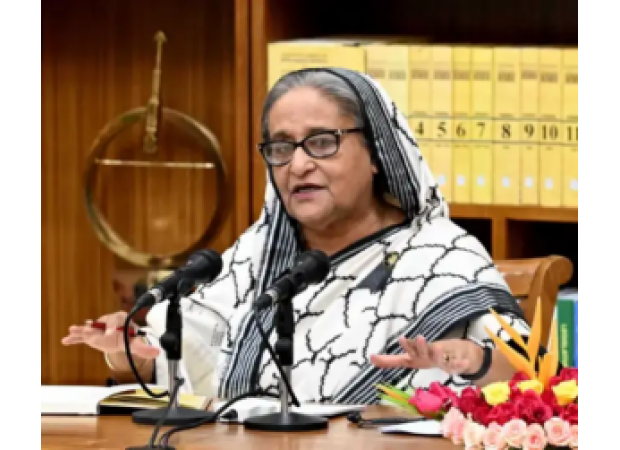

A leading newspaper in Bangladesh, Prothom Alo, shared its opinion on the country's demand for the extradition of former Prime Minister Sheikh Hasina. While it emphasized the importance of standing firm on this demand, it also cautioned against being too rigid as it can limit diplomatic channels. The paper suggested that a more strategic approach would be to use a visit to India as an opportunity for broader discussions, including the extradition request.
The newspaper also noted that an extradition agreement between India and Bangladesh was signed in 2013, and the request for Hasina's extradition has been acknowledged by India. However, the matter is still being reviewed under India's legal framework. In a recent statement, India's External Affairs Minister S.
Jaishankar stressed the importance of mutual interest in the relationship between the two countries. The Prothom Alo article echoed a similar sentiment, stating that there is no reason for Bangladesh to back down from its demand for extradition. It emphasized that this demand is tied to the country's judicial accountability, rule of law, and respect for its own judicial process.
However, the article also pointed out the difference between standing firm on a claim and making it a prerequisite for all aspects of bilateral relations. The piece explained that high-level visits, such as the one planned for Prime Minister Tarique Rahman, are an important tool for negotiation and communication between leaders. It cited examples such as India's then-Prime Minister Atal Bihari Vajpayee's visit to Pakistan in 1999, which set up a framework for dialogue and confidence-building measures.
Similarly, the article also mentioned the 1972 visit of former US President Richard Nixon to China, which opened the way for dialogue and normalization of relations between the two countries. The newspaper stressed the importance of understanding that unresolved conflicts are not the same as holding off discussions for their resolution. It stated that diplomacy is not always about finding an immediate solution but rather about breaking deadlocks and creating room for negotiation.
Therefore, while the demand for Hasina's extradition should not be ignored, it should not overshadow other crucial issues in the relationship between Bangladesh and India, such as water, trade, energy, connectivity, and border management. In conclusion, the Prothom Alo article acknowledged the significance of the extradition demand for Bangladesh but also highlighted the need to consider long-term issues and maintain a strategic approach in diplomacy with India. It urged both countries to find common ground and work towards a mutually beneficial relationship.

2 officials in Bhubaneswar, Odisha were arrested for transferring Rs 9.24 crore of public money to p...
Read More
Xbox announced Minecraft's first new dimension in 15 years, boosting its sales and solidifying its p...
Read More
Readers debate Rare's best game while one explains why they sold their Xbox Series X console....
Read More
Xbox exec reassures fans that GTA 6 pre-orders are doing extremely well despite recent layoffs and w...
Read More