
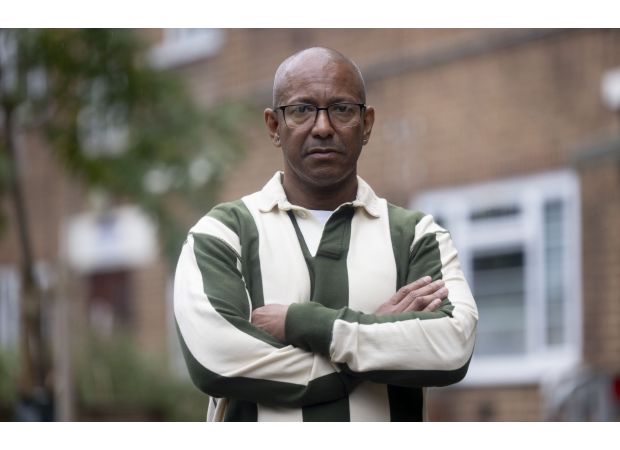

Sebastien Cippe has seen his heating costs jump by 300%. As energy prices continue to climb and temperatures start to fall, some Londoners are not covered by the price cap that has helped millions across the UK save money. People living in large buildings on heat network plans pay through a “service charge” instead of paying a supplier directly.
The London borough of Lambeth is especially known for using these systems, with Metro previously reporting that residents at Wedgewood House were driven into debt to pay for heating even during heatwaves. And the situation is no better in colder weather. At Rusper Court, just a short walk from Stockwell Station, residents have seen their bills rise by 300% since 2019.
The building is heated by a single communal oil boiler, which is expensive as global prices surge, and the council passes those costs on to leaseholders. On top of that, residents must also pay for maintenance and repairs, with more charges still expected. Sebastien Cippe, a nurse and leaseholder, has seen his heating service charge increase from £1,211.32 in 2019 to £3,867.49 this year.
He told Metro: “It is a constant stress. I am losing sleep and having to get counselling at work. “I am working extra shifts just to be able to afford the service charge.
I am dreading the cost of more repairs.” People on heat network plans do not have their own boilers and cannot control how much heat their homes receive. Instead, the whole building relies on a communal system, with a central boiler heating water and sending it to the radiators. That means residents are still charged even if they decide to keep their heating off all the time.
In Rusper Court, because the boiler runs on oil and the cost is included in a service charge, residents are also exempt from the energy price cap, which only applies to mains gas and electricity. Sebastien says he has repeatedly asked Lambeth Council if he can install his own combi boiler in his flat, as some other units already have, but has been refused. He said: “It just doesn’t seem fair.
It then puts more of the costs on the residents who were refused their own boiler.” The rising cost of heating has also made it extremely difficult for leaseholders to sell their homes in search of somewhere cheaper. Steven Schroder’s bills have increased from £998.54 in 2019 to £2,224.17 this year. Between 2024 and 2025, he paid £3,249 after being charged just under £1,000 for boiler repairs and maintenance.
He told Metro: “I live alone in a one-bedroom flat, yet my heating and hot water charges exceed in one case £3,000 a year, costs that feel more comparable to those of a much larger household. “This has placed a considerable strain on me and is also difficult to understand.” Another resident, who lives in a three-bedroom flat, saw her heating service charge rise from £1,486.42 in 2019 to £3,310.87 most recently. She has asked for a clearer explanation of why her costs have more than doubled, but says she was not given a full breakdown.
“On the service charge bill, nearly every item listed includes a total estate cost, then the individual property cost, and repairs are all listed out yearly with their costs for transparency,” she said. “The exception to this is heating and hot water, I do not get visibility of the total estate cost, only the property cost, so there is no transparency that I can find around cost per unit of energy and what my fair share is.” Liberal Democrat councillor Tamora Langley said residents are being put under “extreme stress” and urged Lambeth Council to treat leaseholders fairly. She said: “The council need to make sure all leaseholders are being treated fairly.
Right now, they have no control over their heating costs. This has to change.” Residents at Wedgwood House have been granted a judicial review after Richard Clayton KC said: “I take that view that the Claimant’s grounds are realistically arguable in a context where they raise wider issues and points of law of general public importance.” An FOI request revealed that in 2024, Lambeth Council issued 801 eviction notices to tenants over debts linked to heat networks. The Social Market Foundation estimates that as many as 900,000 households could be on communal heating, including one in 12 households in social housing.
Metro has contacted Lambeth Council for comment.

Despite one entry being called one of the worst games ever, a reader says they’re a Bubsy fan and ...
Read More
Congress raises concerns over judicial independence under Modi, citing Justice Kaul’s memoir and u...
Read More
NDRF deployed 31 teams in states at risk as Cyclone Arnab intensifies into a very severe storm....
Read More
Simon recalls leading the investigation into the murders of five women in Ipswich...
Read More