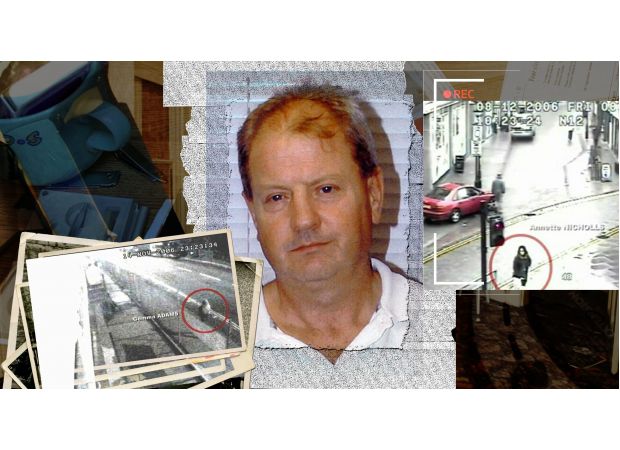

Steve Wright was convicted of the murders in February 2008. Simon Dinsdale was visiting his daughter in Ipswich for lunch twenty years ago when she held up a local newspaper and asked, “What do you think of that, Dad?” It was November, and Kate, who was in her twenties at the time, was looking forward to a Christmas party — but she was worried about whether it would be safe to go out. The headlines reported that 25-year-old Gemma Adams had gone missing, along with 19-year-old Tania Nicol, who had disappeared on October 30, 2006.
Simon’s immediate reaction was grim. “I remember thinking, well, they are dead. Women who were settled, who had family in Ipswich, do not just completely drop off the map,” recalls the retired Essex detective.
Gemma Adams on November 14, 2006, shown to the jury at Ipswich Crown Court. But despite their ties to the community, both women were highly vulnerable because they were sex workers working the streets. Local police had been searching for them, distributing leaflets and running a press campaign, while their parents were desperate for answers.
Soon after that lunch, the bodies of both women were found, six days apart, in waterways near Ipswich. Then, in quick succession, three more women disappeared and were later found murdered: Anneli Alderton, Paula Clennell and Annette Nicholls. Anneli Alderton on the Harwich to Manningtree train, before she was murdered.
Suddenly, the small rural Suffolk Constabulary was dealing with a serial murder investigation unlike anything it had faced before. “It was a shock when Anneli’s body was found because no one had realised she was missing,” Simon says. The force simply did not have the resources to handle a case of this scale, so reinforcements were brought in.
**This Is Not Right** On November 25, 2024, Metro launched This Is Not Right, a campaign aimed at confronting the relentless epidemic of violence against women. With support from our partners at Women’s Aid, This Is Not Right seeks to highlight the scale of this national emergency. You can find more articles here, and if you would like to share your story with us, you can email us at email.
Read more: Introducing This Is Not Right: Metro’s year-long violence against women campaign Remembering the women killed by men in 2024 “I was at home on December 12, off duty, when I got a call from my boss telling me to go to Ipswich because I was being seconded. I didn’t come home until the following April,” Simon remembers. He retired 16 years ago and now works as an author and speaker.
Paula Clennell was one of the women murdered in Ipswich in 2006. Her body was found on the edge of the woods in December 2006. He brought his entire investigation team with him, taking over hotel rooms across Ipswich, and as detective superintendent he became the Senior Investigating Officer for Annette and Paula’s murders.
Simon and his team were working 16-hour days in any space they could find at Suffolk Police headquarters. “Two young women go missing and nothing is seen or heard from them for nearly a month. Their bodies are then recovered in quick succession.
It became clear very quickly that it was the same person responsible. “Then, over a period of four days, another three bodies are found dumped around Ipswich. That is five young women all murdered by the same person in a very short space of time.
We had to stop the killer doing it again,” Simon remembers. Suffolk Police CCTV still from footage of Annette Nicholls on December 8, 2006, before she went missing. Annette Nicholls’s body was found in the same woods where Paula Clennell was discovered.
One of his first tasks was to tell Gemma’s family that her body had been found. Gemma, described by her parents as “bright and bubbly,” loved the Brownies and grew up playing the piano and riding horses. She had been murdered at the age of 25.
“In the police, we refer to these visits as ‘the agony,’ because you have to tell someone a loved one is dead. By that point, I had 25 years’ experience, so I had done it a few times, but it is never easy. It is desperately sad.
“The family are victims too, just as much as the poor girl who’s lost her life. And when you mention the word ‘murder,’ that brings even more disbelief and so many questions from the family,” he explains. Brian Adams, Gemma Adams’s father, arrives at Ipswich Crown Court for the trial of Steve Wright.
For Simon and his colleagues, it was an enormous task. Steve Wright was convicted of the murders in February 2008. Twenty years ago, Simon Dinsdale was visiting his daughter in Ipswich for lunch when she held up a local newspaper and asked, “What do you think of that, Dad?” It was November, and Kate, then in her twenties, was looking forward to a Christmas party but was worried she wouldn’t be safe.
The headlines reported that 25-year-old Gemma Adams had gone missing, along with 19-year-old Tania Nicol, who had disappeared on October 30, 2006. Simon’s reaction was immediate and unsettling. “I remember thinking, well, they are dead.
Women who were settled, who had family in Ipswich, do not just completely drop off the map,” recalls the retired detective from Essex. Gemma Adams on November 14, 2006, shown to the jury at Ipswich Crown Court. Although both women had roots in the area, they were especially vulnerable because they were sex workers operating on the streets.
Local police had been searching for them, distributing leaflets and running a press campaign, while their parents desperately waited for news. Not long after that lunch, the bodies of both women were found six days apart in waterways near Ipswich. Then, in quick succession, three more women went missing and were later found murdered: Anneli Alderton, Paula Clennell and Annette Nicholls.
Anneli Alderton on the Harwich to Manningree train, before she was murdered. Suddenly, the small rural Suffolk Constabulary was dealing with a serial murder investigation unlike anything it had ever faced before. “It was a shock when Anneli’s body was found because no one had realised she was missing,” Simon says.
The force did not have the resources to handle such a major case, so reinforcements were brought in. This Is Not Right On November 25, 2024, Metro launched This Is Not Right, a campaign aimed at confronting the relentless epidemic of violence against women. With support from our partners at Women’s Aid, This Is Not Right seeks to highlight the scale of this national emergency.
You can find more articles here, and if you’d like to share your story with us, you can email us at email. Read more: Introducing This Is Not Right: Metro’s year-long violence against women campaign Remembering the women killed by men in 2024 “I was at home on December 12, off duty, when I got a call from my boss telling me to go to Ipswich because I was being seconded. I didn’t come home until the following April,” Simon, who retired 16 years ago and now works as an author and speaker, recalls.
Paula Clennell was one of the women murdered in Ipswich in 2006. Paula Clennell’s body was found on the edge of the woods in December 2006. He brought his entire investigation team with him, taking over hotel rooms across Ipswich and, as detective superintendent, assuming the role of Senior Investigating Officer for Annette and Paula’s murders.
Simon and his team ended up working 16-hour days in whatever space they could find at Suffolk Police headquarters. “Two young women go missing and nothing is seen or heard of them for nearly a month. Their bodies are then recovered in quick succession.
It became clear very quickly that it was the same person responsible. “Then, over the course of four days, another three bodies are found dumped around Ipswich. That meant five young women had been murdered by the same person in a very short time.
We had to stop the killer from doing it again,” Simon remembers. Suffolk Police CCTV still from footage of Annette Nicholls on December 8, 2006, before she went missing. Annette Nicholls’ body was found in the same woods where Paula Clennell was discovered.
One of his first tasks was to tell Gemma’s family that her body had been found. A woman described by her parents as “bright and bubbly,” who loved the Brownies and grew up playing the piano and riding horses, had been murdered at just 25. “In the police, we call these visits ‘the agony,’ because you have to tell someone that a loved one is dead.
By that point, I had 25 years’ experience, so I had done it a few times, but it is never easy. It is desperately sad. “The family are victims too, just as much as the poor girl who’s lost her life.
And when you say the word ‘murder,’ it brings even more disbelief and so many questions from the family,” he explains. Brian Adams, Gemma Adams’ father, arrives at Ipswich Crown Court for the trial of Steve Wright. For Simon and his colleagues, it was an enormous task.

BJP to hold nationwide protests Monday over Kharge's offensive remarks against PM Modi....
Read More
Jim Withers, 82, reportedly went into the water after boarding a Calmac ferry from Ardrossan to Arra...
Read More
Three died and 18 were injured when a devotees’ van from Maharashtra hit a trailer truck on the Ja...
Read More