

The state of Odisha has taken a significant step towards strengthening its power infrastructure by approving a massive investment proposal of over Rs 15,948 crore. An official from the state revealed that 18 proposals from 12 different departments were greenlit during a meeting of the Chief Minister Mohan Charan Majhi's cabinet. Excitingly, this includes the introduction of 765 kV transmission networks, complete with three new grid sub-stations at Khuntuni, Duburi, and Kolabira.
This will not only support industrial growth but also cater to domestic demand and renewable energy integration. Chief Secretary Anu Garg, while addressing the media after the meeting, highlighted the importance of these initiatives in meeting the state's power needs. Currently, Odisha has five 400kV grid sub-stations in operation, with six more in the works.
With the approval of two more for Kansbahal and Titlagarh, the total number of 400 kV grid sub-stations will increase to 13. Additionally, the state has also given the go-ahead for the construction of 10 new 220 kV grid sub-stations. This will bring the total number of such sub-stations to 75 and complete the 220 KV ring network in Raurkela, Sambalpur, and Baragada.
This move will also facilitate the evacuation of power from floating solar projects in Hirakud and Indravati, along with ground-mounted solar projects in western and southern Odisha. Apart from creating new power infrastructure, the state government is also introducing AI-based maintenance for smarter inspection and predictive maintenance of transmission lines. Additionally, 79 existing substations will be upgraded to meet the increasing load demand.
In a bid to improve connectivity and enhance travel comfort, the cabinet has also approved four road projects worth Rs 538.51 crore in Rayagada district. These projects will not only cater to smoother traffic movement but also lower vehicle operating costs, reduce fuel consumption, and improve road safety through modern traffic management measures. The state government has also revised the 'Buxi Jagabandhu Water Supply to Habitations' scheme, extending its implementation from 2026-27 to 2028-29 with a total state-funded outlay of Rs 5,045 crore.
According to Garg, the revised BASUDHA scheme aims to strengthen rural drinking water supply across Odisha by addressing various challenges, such as incomplete projects, water quality concerns, and infrastructure gaps. It also takes into account emerging climate-related risks. In addition to these developments, the state government has also approved the 'Building Odisha's Irrigation Tourism Amenities' scheme, with an outlay of Rs 650 crore over five years.
This scheme aims to preserve and renovate historic irrigation structures, showcase traditional water management practices, and unlock socio-economic opportunities in the region. The cabinet has also given the green signal to the Odisha Jan Vishwas Bill, 2026, which marks the second phase of the state's regulatory reforms. Building on the Odisha Jan Vishwas Act, 2025, the Jan Vishwas Bill 2.0 aims to simplify licensing and permission requirements, remove overlapping and duplicative approvals, introduce longer validity periods for industrial licenses and registrations, and enable intimation-based wherever appropriate.
As per Garg, the Bill will amend 62 provisions across 16 state Acts administered by 11 government departments. In terms of education and irrigation, the state has allocated Rs 312.96 crore for the implementation of the 'Panchasakha Shikhya Setu Scheme' and Rs 8,653.04 crore for the creation of irrigation potential through deep bore wells with solar and non-solar pumping systems over the next five years. This is a significant step towards enhancing the state's educational and agricultural infrastructure.
In conclusion, the Odisha government's recent decisions reflect its commitment to the overall development and progress of the state. These initiatives will undoubtedly have a positive impact on the lives of its citizens and pave the way for a brighter future for Odisha.
Exelon CEO Calvin Butler gave an emotional acceptance speech at the 2026 Black Enterprise XCEL Summi...
Read More
A Small Business for America’s Future survey found 72% say business has gotten harder to run in th...
Read More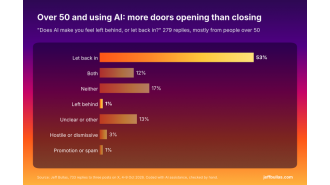
What 733 people over 50 told me about AI: more capable, less fearful, but concerned about one thing....
Read More
Wednesday’s letters page picks the year’s best Nintendo game, while a reader fears his Xbox Seri...
Read More