
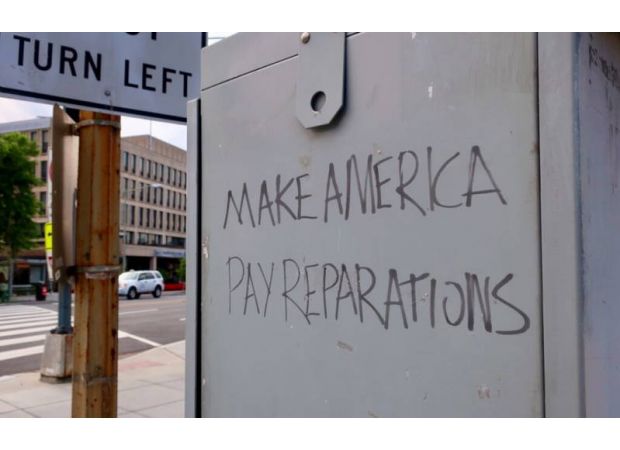

At a recent hearing in New York State, tensions rose as advocates for descendants of enslaved Americans clashed with civil rights groups and lawmakers over who should be eligible for reparations. The event, hosted by the New York State Community Commission on Reparations Remedies, was held in Hempstead, Long Island and was met with heated debates and differing opinions. The commission, which was established by Gov.
Kathy Hochul in 2023, was created to study the effects of slavery and make recommendations for potential reparations for people of African descent in New York. The main point of contention during the hearing was whether reparations should be reserved solely for descendants of enslaved Americans, also known as "Foundational Black Americans," or if all Black residents impacted by systemic discrimination should be eligible, including those who migrated to the U.S. by choice.
Aubrey Muhammad, a member of the United States Freedmen Project, argued that reparations should be based on lineage rather than race, stating that "As Foundational Black Americans who have been here since the founding of the country, coming in as slaves, and also indigenous people who are here, we have a claim to the country." Muhammad also emphasized the importance of acknowledging and compensating for the trauma and injustices faced by their ancestors. However, representatives from the New York Civil Liberties Union (NYCLU) advocated for a broader interpretation of reparative justice, acknowledging that discriminatory government policies have affected all Black New Yorkers, regardless of lineage. This drew criticism from descendants-only advocates who argued that including other groups would dilute their story and diminish their claim to the country.
The form that reparations should take was also a topic of discussion during the hearing. Attendee Caprice Reins stated that she believes Black Americans are owed a debt, while another participant, Tanasia Poke, argued that financial compensation is the only way to achieve true justice. These differing opinions highlight the complexity of the issue and the importance of thorough and thoughtful consideration.
Assemblymember Michaelle Solages, one of the lawmakers who helped create the commission, defended the need for a broader examination of slavery's legacy. She stated, "When we draft the legislation for the commission, we want to ensure that we're having a thorough conversation about slavery and its harms, whether it's mass incarceration, health disparities, the lack of educational opportunity for folks, or the wealth gap." The commission will continue to gather public feedback before making recommendations to state leaders. Any reparations program would ultimately require approval from the New York Legislature and governor.
The importance of this issue cannot be understated, as it not only addresses past injustices but also aims to create a more just and equitable future for all Black Americans.

Polish PM Donald Tusk will visit India Oct 21-23 for talks with PM Modi to strengthen India-EU ties....
Read More
Square Enix brings back turn-based combat and 2D visuals in a retro Final Fantasy spin-off starring ...
Read More
John Legend is helping struggling students cover off-campus housing, AfroTech says, as Bilt and Scho...
Read More
Mumbai: Sources say Tiger Shroff shooting suspects scoped out several celebrities’ homes, includin...
Read More