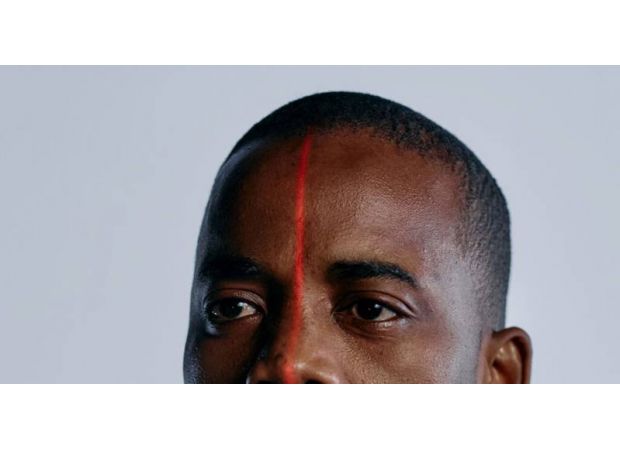

Elii Emeghebo, a Nigerian-Australian model, recently made headlines after filing a racial discrimination complaint with the Australian Human Rights Commission. According to reports from Afrotech, Emeghebo claims that menswear retailer Peter Jackson used artificial intelligence without his consent to alter his appearance in advertisements, raising concerns about the role of AI in advertising. The complaint, which was first reported on June 30 by ABC News Australia, alleges that the retailer went beyond the terms of Emeghebo's modeling agreement by creating and displaying a digitally altered version of him in one of their Sydney storefronts.
Emeghebo's contract only allowed for the use of his original photographs on the company's digital platforms, and did not permit any AI-generated modifications or additional commercial uses. Emeghebo was shocked to discover the altered image while walking past one of the retailer's stores. In an interview with the Australian outlet, he expressed his disappointment, saying, "My nose was reshaped, my skin tone and eye color were significantly lightened, and there were changes to my eyebrows and eye shape to make me look more Eurocentric and less black.
It was really confronting and unfair to see myself without my identity." Paloma Buhagiar Cole, principal legal officer at Victoria's Young Workers Centre, is representing Emeghebo in this case. She argues that the responsibility lies with those who made the decision to publish the altered image. "Human beings chose to use those particular images and decided the image that is devoid of Elii's identity was the one they wanted to use," Cole stated.
She also pointed out that the model's contract specifically allowed for certain uses of his images, and the altered version was not one of them. In response to the complaint, Peter Jackson acknowledged using "AI-assisted tools" to alter Emeghebo's appearance, but denied any racial discrimination. The company claims that the model was fully compensated for the original photo shoot and that his unaltered photographs were used in accordance with their agreement.
"Any suggestion that we intentionally engaged in racial discrimination is false, and we reject it unequivocally," the company stated. This case adds to a growing number of disputes over AI-generated advertising, highlighting important questions about consent, compensation, and the legal protections for models whose images are digitally altered for commercial use. It is a reminder that the use of AI in advertising must be carefully monitored and regulated to ensure that individuals are not subjected to discrimination or exploitation.
Fund backs theater instruction, productions, & performance chances for future students....
Read More
CIPET: CSTS, Bhubaneswar and MCL, Sambalpur have signed an MoU for employment-oriented training prog...
Read More
Odisha Tourism Department signs MoUs to boost homestays and adventure/heritage tourism with SBI, Dep...
Read More