
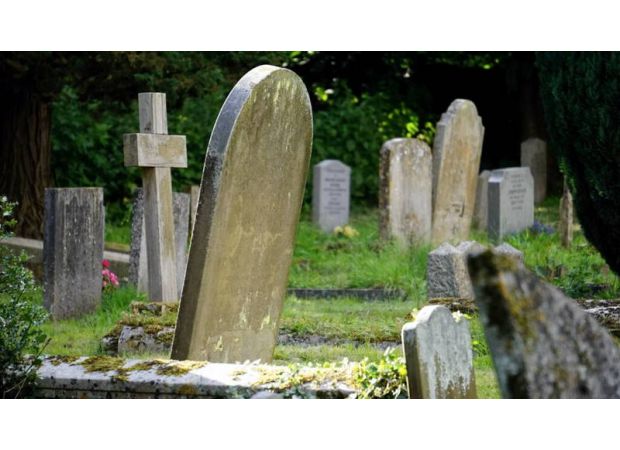

Lawmakers in Maryland are making strides towards acknowledging and honoring the memory of over 230 Black children who were buried near the Cheltenham Veterans Cemetery. These children were laid to rest in unmarked graves, a heartbreaking reflection of the systemic neglect and mistreatment they faced in life. According to WUSA9, on February 25th, the State Senate discussed a bill that would establish a commission to compile a comprehensive report of these children's lives and deliver it to the governor and General Assembly by the end of 2029.
The burial site, located in the woods next to the Cheltenham Veterans Cemetery, is a grim reminder of the House of Reformation and Instruction for Colored Children, a state-run facility that opened in 1870, just six years after slavery was abolished in Maryland. It was a place where these children were subjected to brutal conditions, similar to those of a plantation, and were forced to work and endure severe abuse and neglect. Marc Schindler, a research professor at the Georgetown Center for Youth Justice, compared the treatment of these boys to that of slaves, saying that they were even leased out to work on nearby farms owned by white families.
It wasn't until researchers began examining the burial site that they discovered the true extent of the tragedy. Initially believed to contain around 100 unmarked graves, they found nearly double that number, with evidence suggesting that there may be even more, potentially reaching 230 or more. Georgetown University has taken on the task of identifying these forgotten children through their Forgotten Children Initiative.
The goal is to not only preserve their stories but also to connect with any living relatives. Tyrone Walker, who runs a program for former inmates at Georgetown, remarked on the tragic fate of these children who were often picked up for minor offenses and never made it back home. He questions what their parents were told and if they even knew what had happened to their children.
Through this legislation, lawmakers aim to uncover the truth about what occurred at the site while it was under state oversight. It is a crucial step in bringing justice to these young lives and their families. State Delegate Jeffrie Long Jr., who introduced a companion bill in the House, believes that this effort is essential for holding those responsible accountable and pushing for much-needed reform.
He explains that this legislation is part of a larger initiative to reform Maryland's youth justice system and ensure that the mistakes of the past do not continue to affect future generations. The hope is that by acknowledging and rectifying past injustices, Maryland can move towards a more just and equitable future for all.
Exelon CEO Calvin Butler gave an emotional acceptance speech at the 2026 Black Enterprise XCEL Summi...
Read More
Congress raises concerns over judicial independence under Modi, citing Justice Kaul’s memoir and u...
Read More
Odisha put all districts on alert as a Bay of Bengal low-pressure system may strengthen into a cyclo...
Read More
FDA approved IORT in 1999; it delivers one radiation dose to breast tissue after surgery instead of ...
Read More