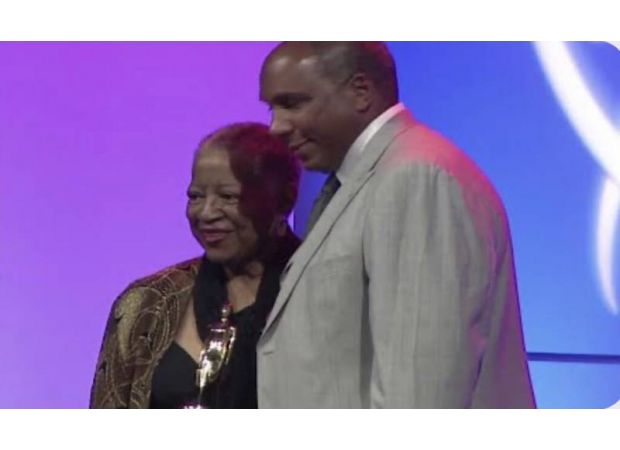

In 2017, Marcia Ann Gillespie spoke with Selena Hill, BLACK ENTERPRISE’s director of multiplatform content, after receiving the Barbara Graves Legacy Award at the 12th Annual Women of Power Summit. When asked what she hoped her legacy would be, Gillespie said she had not spent much time thinking about it. Still, she reflected on how she would like to be remembered: “I hope if I’m going to be remembered, that it will be as someone who helped to create publications that have meaning and worth for women and help to inspire and inform great numbers of women, especially Black women,” Gillespie told BE.
On Oct. 31, at age 82, the media trailblazer passed away. She is remembered as a pioneering Black woman and as someone who helped build publications with purpose, especially for millions of Black women.
Gillespie also leaves behind an editorial legacy that opened doors for many Black women in journalism and across the media industry. The path she created is truly invaluable. In 1970, Essence Magazine hired Gillespie as managing editor, and just a year later, at 26, she became editor-in-chief.
In 1975, she also took on the role of vice president of Essence Communications Inc. She led Essence throughout the decade before handing the reins to Susan Taylor and moving on to Ms. Magazine, where she rose through the ranks and became the first Black editor-in-chief of a mainstream publication, according to The History Makers.
Back in 2017, the celebrated editor also shared her thoughts on mentorship and the course of her career. She said that intergenerational conversation, oral history, and shared family experiences are essential to helping young people understand who they are and where they are headed. Gillespie explained that her own career eventually led her to teach media and communications at SUNY Old Westbury.
Drawing from her life experience, she emphasized that real learning often happens outside the classroom through everyday exchanges between generations. Marcia Ann Gillespie’s Philosophy on Oral History, Education and Identity Gillespie believed strongly in the link between the past, present, and future. “If you don’t know where you come from, you never know where you’re going,” she told BE.
She also stressed the importance of starting the search for knowledge early, saying that her own sense of identity “really came from listening to my grandmother, my maternal grandmother who lived down the street, talk about what her life was like.” Gillespie argued that adults in a child’s life should make time every day to share stories about the past, calling those moments true education: “It doesn’t happen always in the classroom,” Gillespie said. “Some of the most meaningful exchanges are those that happened just like… sitting and being women together.” The Former Essence Editor Transitioned to Teaching After more than two decades in editorial roles at Essence and Ms. Magazine, and after writing a biography on Maya Angelou, Gillespie moved into teaching.
“I knew that I always wanted to teach,” Gillespie said. “It was what I thought I was going to do when I went to college. I thought I was going to be an American historian.” Calling teaching her “semi-retired career,” Gillespie said it was “a wonderful way, and quite selfishly, to stay in touch with young people and to learn from them.” She added, “I think that I, because of my life experience and my work experience, have something to tell them and share with them because I’m basically… teaching media and communications majors, and I do know a thing or two about that.” BLACK ENTERPRISE continues to celebrate Gillespie and honor her trailblazing contributions and lasting impact on Black journalism and the mainstream media world.
RELATED CONTENT: Women Of Power Legacy & Luminary Award Honorees

PM Modi said the Opposition has become an obstruction, not a true opposition, and stressed national ...
Read More
ED has filed a money laundering case against Subhash Chandra over an alleged Rs 1,322 crore loan fra...
Read More
Supervisors also allegedly made her take down a whiteboard with jokes and inspirational messages out...
Read More