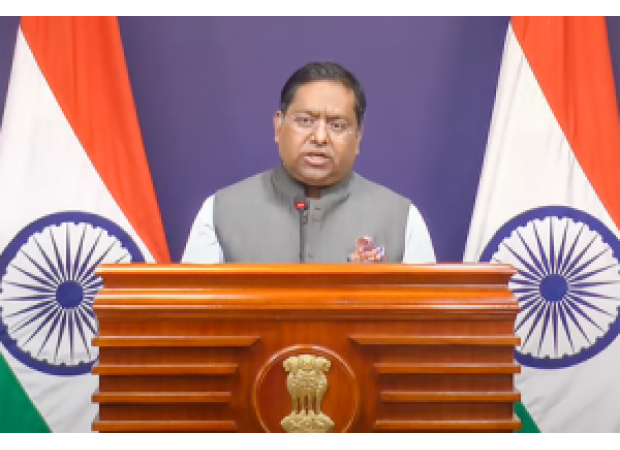

In a recent media briefing, Randhir Jaiswal, a spokesperson for India's Ministry of External Affairs, strongly refuted claims made by Pakistani media that India was intentionally causing flooding in Pakistan. He dismissed these allegations as baseless, factually incorrect, and technically untenable. Jaiswal explained that the recent increase in the flow of the Chenab River was a direct result of heavy monsoon rainfall in the Jammu and adjoining areas between July 20-23.
He clarified that the flood advisory issued by Pakistan's flood forecasting division on July 22 acknowledged the high flood levels in the Chenab River as a natural consequence of heavy rainfall, and not as a result of any deliberate action by India. Jaiswal also emphasized that India, as a humanitarian gesture, will continue to share high-flood data with Pakistan whenever necessary, similar to last year. Responding to allegations that India deliberately withheld flood warnings, Jaiswal stated that the observed flows during this period did not reach extraordinary discharge levels that would require the issuance of special flood warnings.
He further pointed out that these flows were consistent with the prevailing monsoon conditions over the upper catchment, as confirmed by Pakistan's own flood forecasting authorities. Jaiswal emphasized that any suggestion of India withholding flood-related information is unfounded. However, he reassured that India will continue to share such data with Pakistan through diplomatic channels whenever needed.
On the topic of the Indus Waters Treaty, Jaiswal reiterated India's stance that the agreement will remain in abeyance until Pakistan renounces its support for cross-border terrorism. He emphasized that India's position on this matter remains unchanged and clear. The Indus Waters Treaty, signed in 1960, regulates the use of the waters of the Indus system rivers between India and Pakistan.
However, after the heinous Pahalgam terror attack last year, India exercised its rights as a sovereign nation under international law and put the treaty on hold until Pakistan takes credible and irrevocable steps to end cross-border terrorism. In conclusion, Jaiswal firmly denied the allegations made by Pakistani media and clarified India's position on the Indus Waters Treaty. The Ministry of External Affairs remains committed to sharing high-flood data with Pakistan as a humanitarian gesture and hopes for a peaceful resolution of any issues between the two countries.

Readers support Count Binface's support for Shenmue 4 and agree that digital games can be more cost-...
Read More