
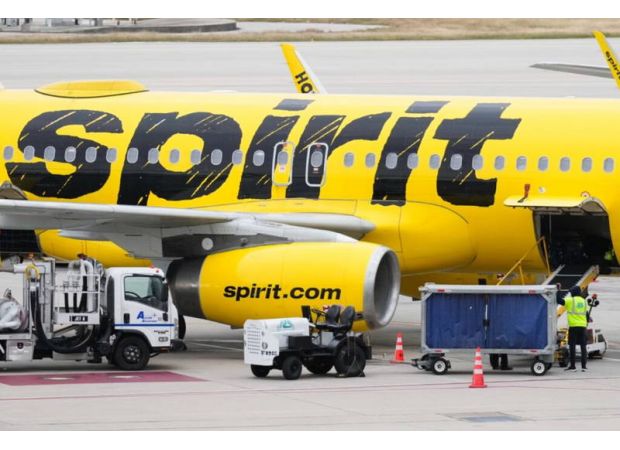

According to Business Insider, Google has recently made a bid of $10 million for Spirit Airlines' internal business data. This has raised concerns about the fate of employees' workplace communications once a company goes out of business. The bankruptcy auction was won by Google, giving them access to a vast collection of Spirit's corporate data, including internal documents, employee emails, Microsoft Teams messages, and software code.
However, the sale is still subject to approval by a U.S. bankruptcy court. Court documents reveal that the data in question consists of about 100 million emails and 500 million Teams messages.
Google's bid outdid AI recruiting company Mercor's offer of $7.5 million. Google has stated that the information could be used for product development and artificial intelligence systems. They have also promised to have a third party remove any personally identifiable information before transferring the data.
It is important to note that the sale does not include passenger profiles, loyalty program records, or other customer information. This transaction has brought to light the limited control that employees have over their workplace communications that are created and stored on company-owned systems. Experts in employment and privacy have stated that, depending on company policies and applicable laws, employers generally have the right to retain and use workplace emails, chats, and other information generated through company systems.
Therefore, workers should not assume that these communications will remain private or disappear after leaving a job. The value of workplace data has been on the rise as technology companies seek specialized information to develop and train AI systems. Internal corporate records can provide valuable insights into business operations, decision-making processes, and workplace communication that may not be publicly available.
However, employers are not given unlimited rights to use or transfer employee information. Certain sensitive personal information is still subject to privacy and data-protection laws. The proposed sale of Spirit Airlines' data is already facing scrutiny over these concerns.
The Association of Flight Attendants-CWA, which represents Spirit's cabin crew, has objected to the transaction, arguing that it may include confidential information about former employees. The union has requested that confidential employee data be excluded from the sale or receive the same privacy protections as customer information. In response to these concerns, U.S.
Bankruptcy Judge Sean Lane has postponed a hearing on the sale to allow time to consider the union's objections. Experts advise workers to treat workplace emails and messaging platforms as professional records and to review their employer's policies regarding data retention, monitoring, and AI use. This is especially important in light of the recent incident where Spirit Airlines denied entry to a woman due to her shorts.
It is clear that workplace data and its potential uses are becoming increasingly relevant and workers should take steps to protect their privacy and rights.

One reader believes that Marvel's Wolverine is the top game of 2026, despite conflicting opinions fr...
Read More
Improved education but still issues at Baman Abakash High School in Itamati panchayat, as mid-day me...
Read More
Readers are surprised by Super Mario 64's 30th anniversary and one defends Marvel's Wolverine on the...
Read More
Marxism and other radical philosophies face constant criticism, but their ideals of social, cultural...
Read More