
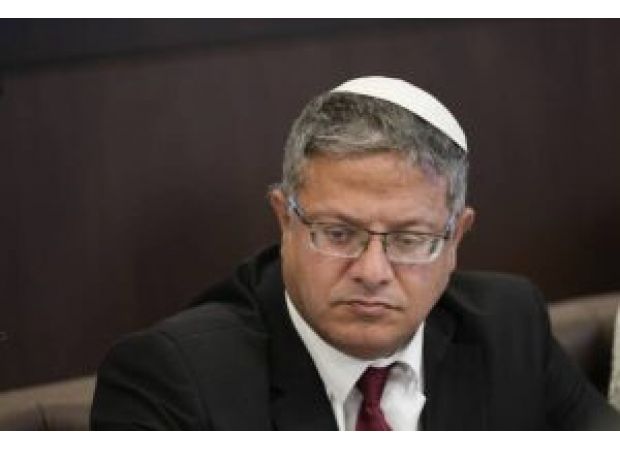

In the bustling city of Jerusalem, there was a lot of buzz surrounding a controversial statement made by one of Prime Minister Benjamin Netanyahu's coalition members. The lawmaker, Minister of National Security Itamar Ben-Gvir, had publicly expressed his support for killing 30 to 40 people in Gaza each night. The statement had quickly spread through Palestinian media and sparked outrage among many.
Ben-Gvir had made these remarks during an interview on a podcast with former Gaza-held hostage, Rom Braslavski. They were discussing the recovery of Israel from a previous attack by Hamas in 2023. During the conversation, Ben-Gvir criticized Israel's recent decision to decrease their strikes in Gaza.
"I don't see eye to eye with the prime minister on this matter," he said. "I believe that targeted assassinations should be carried out in Gaza, taking down 30 to 40 individuals every night. This should not be limited to those who pose an immediate threat, as there are people living there who don't deserve to live.
They are not even human beings." Similar statements made by Ben-Gvir and other Israeli officials have been met with widespread condemnation in the past. Many have even been presented as evidence of genocidal intent to the UN's world court. However, Israel has denied any such actions and has maintained that they are not committing genocide in Gaza.
Interestingly, the domestic media in Israel has not given much attention to Ben-Gvir's statement. This highlights the fact that once fringe ideologies, like Ben-Gvir's, are now gaining popularity in the lead up to the upcoming Israeli elections on October 27th. This surge in popularity can be attributed to the brutal attack by Hamas in 2023, where they killed over 1,200 people and took 251 hostages.
The hostages have since shared their harrowing stories of long-term starvation, physical and psychological abuse, and even sexual abuse. Although Ben-Gvir does not have the authority to order strikes on Gaza, he holds significant control over key parts of Israel's security apparatus. This includes running the country's prisons, where thousands of Palestinians from Gaza and the West Bank are currently incarcerated.
He has even boasted in the past about reducing food rations for Palestinian prisoners. However, this was deemed inhumane by Israel's top court in 2025. It is worth noting that until recently, Israel was carrying out strikes on Gaza almost every day.
These attacks have resulted in the deaths of over 1,250 people since the truce deal was put into effect in October. However, the Israeli military has since eased off on their attacks, possibly in response to U.S. President Donald Trump's latest attempt to move the truce forward.
According to Israeli media, the power to carry out strikes has now been limited to the army's chief of staff. This has caused backlash from right-wing lawmakers like Ben-Gvir, who believe that this decision weakens Israel's stance on the matter. During the same interview where Ben-Gvir made his controversial remarks, he also advocated for the mass emigration of Palestinians from Gaza and their resettlement in other countries.
This proposal has been deemed by international lawyers as a form of ethnic cleansing. He also expressed his desire for Israel to expand its settlements throughout Gaza. "Twenty years ago, Israel withdrew from the Gaza Strip, dismantling 21 Jewish settlements.
But I believe that all of Gaza belongs to us, not just those settlements. We should encourage Palestinians to leave and move to other countries, and for the terrorists, there should be no option for emigration. They should be dealt with one by one," said Ben-Gvir.
Meanwhile, Trump's latest proposal involves Hamas gradually giving up their weapons while Israeli forces halt their attacks and begin withdrawing from Gaza. Although Hamas has accepted the deal, they have linked the surrender of their weapons to the creation of a Palestinian state. This is something that Israel's current government and most of its political class are strongly against.
Netanyahu has stated that Israel will not retreat from any of its positions in Gaza until Hamas has completely disarmed. This stance has put a halt on other elements of the ceasefire, such as the deployment of international forces and the reconstruction of the devastated territory. As the situation in Gaza continues to remain volatile, people are closely watching the upcoming Israeli elections and the decisions made by their leaders regarding this delicate matter.

Many gamers are now in their 40s, yet publishers still prioritize catering to younger audiences, lea...
Read More
Xbox exec reassures fans that GTA 6 pre-orders are doing extremely well despite recent layoffs and w...
Read More
Switch 2 price increase by Nintendo didn't last a month as some retailers are now selling it for les...
Read More
Trump's ban on three news outlets from the White House has been temporarily blocked by a judge, but ...
Read More