
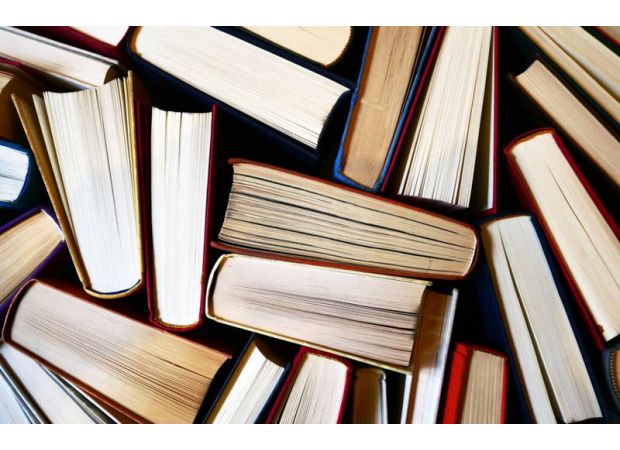

When people talk about "protecting the culture," their minds often go to things like music, fashion, or social media fads. But there's a group across the pond that wants to remind everyone that the true treasures of our culture can be found on the shelves of our bookstores. A new movement called Save Our Stories is rallying support to safeguard a massive collection of over one million books written by Black authors, believed to be one of the largest archives of Black literature in Britain.
The urgency of this campaign stems from recent break-ins at the building where the collection is housed, causing serious concerns about the future of decades worth of Black history, scholarship, and storytelling, as reported by The Voice. Leading the charge is veteran Pan-African activist and bookseller, Nkrumah Pepukayi. For more than fifty years, he has been collecting books that document the rich history of African, Caribbean, and Black British cultures, ranging from children's literature to works on health, politics, and personal memoirs.
However, Pepukayi now believes that preserving this legacy is just as important as building it. "I have access to over a million books, but I can only read a fraction of them because I am constantly working," he explained to The Voice. "But one thing I have learned is that the more we know, the more we realize how little we actually know." Activists involved in the #Save1MillionBlackBooks campaign argue that losing this archive would be a devastating blow, far greater than just losing a few books.
They believe that this is about protecting intellectual property, historical records, and the stories that have too often been overlooked by mainstream institutions. That's why this campaign is working tirelessly to secure and repair the building, catalog the collection, and ultimately make it available for the public to browse and purchase. Founder of the Black British Book Festival, Selina Brown, who is also supporting the cause, emphasized the gravity of the situation in a video for the campaign.
"Every single one of these books is right here in London, in the UK," she stated. "And what if I told you that this building, and all one million of these books, are in danger of being lost?" Brown continued, "We cannot let this happen. This is our history, and if we lose our history, we lose everything." Pepukayi believes that reading is a powerful tool for liberation.
"It starts with one simple fact: intelligence rules the world, while ignorance carries the burden," he stated. He also warned against allowing others to dictate our own history, urging us to take control of our own stories. "If we don't record our own stories and tell them ourselves, others will do it for us, twisting the narrative to suit their own agendas and making it seem as though we have contributed nothing to society," he cautioned.
"We have a long, honest, and important story to tell as African people, and it's crucial that we share it with each other and the world." This sentiment is shared by author and advocate Denene Millner, who is dedicated to uplifting the humanity of Black children through her books. As she says, "Our stories are not just for us, they are for everyone to learn from and be inspired by."

The public is advised to stay away from him....
Read More
Nabarangpur DFO suspends forester Bipin Kumar Harijan for unauthorized tree cutting and financial ir...
Read More
Thursday letters page excited for new Resident Evil movie, reader curious about difficulty of Fire E...
Read More
Many people are still unhappy about Sony's all-digital direction, but one fan is amazed by the loyal...
Read More