
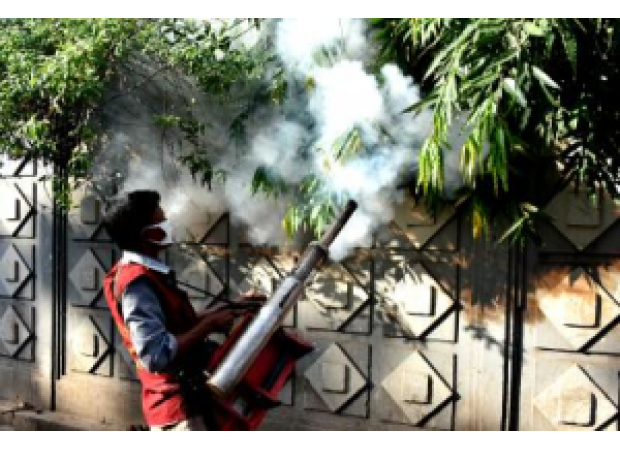

In the city of Dhaka, Bangladesh, a severe outbreak of dengue has caused great concern. According to reports from the Directorate General of Health Services, at least 59 people have lost their lives to this disease, while approximately 17,880 cases have been reported so far this year. The majority of these cases have been recorded in the Dhaka division, with a staggering 6,871 cases, including 4,404 in Dhaka city alone.
This is followed by Barishal division with 3,647 cases, Chattogram with 3,082, and Khulna with 2,272. Dhaka division has also been hit the hardest in terms of fatalities, with 26 deaths so far. The majority of these deaths, 25 to be exact, were reported in Dhaka city.
Khulna comes in second with 12 deaths, followed by Chattogram and Mymensingh with seven and six deaths respectively, as reported by The Daily Star, a leading newspaper in Bangladesh. Dengue, a mosquito-borne viral disease, has become a major public health issue in Bangladesh. It is primarily transmitted by the Aedes aegypti mosquito, and the latest data from the country's National University of Bangladesh shows that Dhaka's high population density, persistent mosquito breeding, and inadequate vector control measures have created the perfect environment for the disease to thrive.
Associate Professor GM Saifur Rahman from the Department of Zoology at the National University of Bangladesh explains that the warm climate and abundance of breeding sites in Dhaka provide ideal conditions for both Aedes mosquitoes and the dengue virus to circulate year-round, making the city a major hotspot for dengue. During a recent examination at Central Metropolitan Women's College, Saifur discovered Aedes mosquito larvae in a small container of water, a common breeding site found in residential areas throughout the city. He believes that the lack of preventive measures and the reactive approach to mosquito control have contributed to the worsening dengue situation in Bangladesh.
He suggests that the most effective strategy would be to intensify mosquito control during periods of low dengue transmission when breeding sites are fewer and interventions can be more effective. However, the current focus on mosquito control only intensifies once the dengue season has already begun, by which time infections have already increased rapidly. According to Saifur, the lack of a centralized mosquito control mechanism in Bangladesh has only made things worse.
He calls for the formation of a national mosquito control authority with expert entomologists to coordinate, monitor, and oversee vector control measures nationwide. He warns that until such a system is established, dengue cases are likely to continue to rise in the country. Professor Kabirul Bashar from the Zoology Department at Jahangirnagar University predicts that dengue infections will continue to surge throughout August and could even peak in September.
He stresses the need for continued awareness and preventive measures to combat this disease. It is evident that the dengue outbreak in Bangladesh has reached critical levels, and it is crucial for the government and the public to work together to address this issue. With proper preventive measures and a coordinated effort, it is possible to control the spread of dengue and prevent further loss of lives.

In November 2016, PM Modi made a sudden decision to withdraw 86% of India's currency, causing signif...
Read More
Thursday letters page excited for new Resident Evil movie, reader curious about difficulty of Fire E...
Read More
CSK announced Zaheer Khan as their new head coach, replacing Stephen Fleming who held the position f...
Read More
Teachers and employees of non-government colleges in Odisha protested at PMG during heavy rain cause...
Read More