
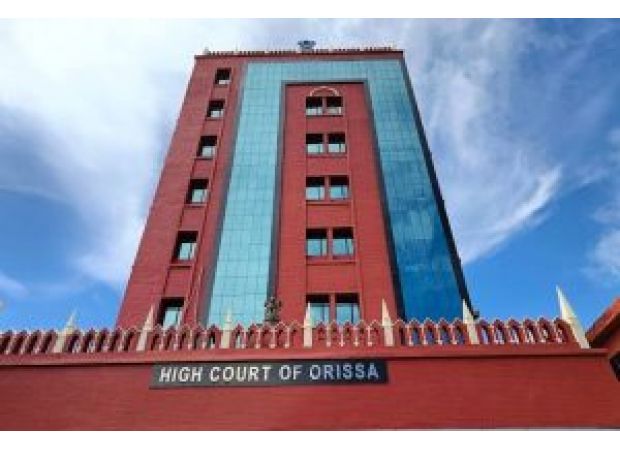

In a recent ruling, the Orissa High Court addressed the issue of invalid academic qualifications and fake or forged degrees. The court made it clear that there is a difference between the two and held that an employee cannot be demoted after serving for more than 15 years unless the state can prove that they lacked the required qualifications at the time of their appointment. The division bench, consisting of Justices Dixit Krishna Shripad and Chittaranjan Dash, overturned a previous order that had reverted Pravat Kumar Mishra from his position as Assistant Director to Programmer cum-Training Officer.
The court directed his immediate reinstatement with all the corresponding service and financial benefits. Additionally, the bench imposed a fine of Rs 1 lakh on the state and allowed for the amount to be recovered from the responsible officials. Mishra's case dates back to 1998 when he was appointed as a Programmer-cum-Training Officer through a regular recruitment process.
In 2005, he was given charge of the post of System Analyst and was later absorbed into the position. He then became Assistant Director after the post was redesignated. However, in 2020, he was demoted based on the allegation that he did not possess the necessary MCA qualification and that his degree was fake.
Rejecting the state's claim, the court stated that there was no evidence to suggest that an MCA degree was a mandatory requirement at the time of Mishra's appointment or when he was absorbed into the higher post. The bench also clarified that just because a degree was awarded by an institution that was later found to be unauthorized, it cannot automatically be considered fake or forged. The court further noted that there was no proof of fraud or forgery on Mishra's part and that the state had failed to establish any deception on his behalf.
The judges went on to say that once an employee has been validly appointed and has served in a higher post for over 15 years, the employer cannot arbitrarily reverse that position without a valid legal basis. Criticizing the authorities, the court emphasized that the state should act as a model employer and not make arbitrary decisions. This landmark ruling by the Orissa High Court sets a precedent for future cases involving the demotion of employees based on their academic qualifications.

A Small Business for America’s Future survey found 72% say business has gotten harder to run in th...
Read More
What 733 people over 50 told me about AI: more capable, less fearful, but concerned about one thing....
Read More
Across Europe, fuel prices, poor schools, weak public services, and a housing crisis are fueling wee...
Read More
Karan Deol wished father Sunny Deol a happy birthday, thanking him for his love, guidance and cheris...
Read More