
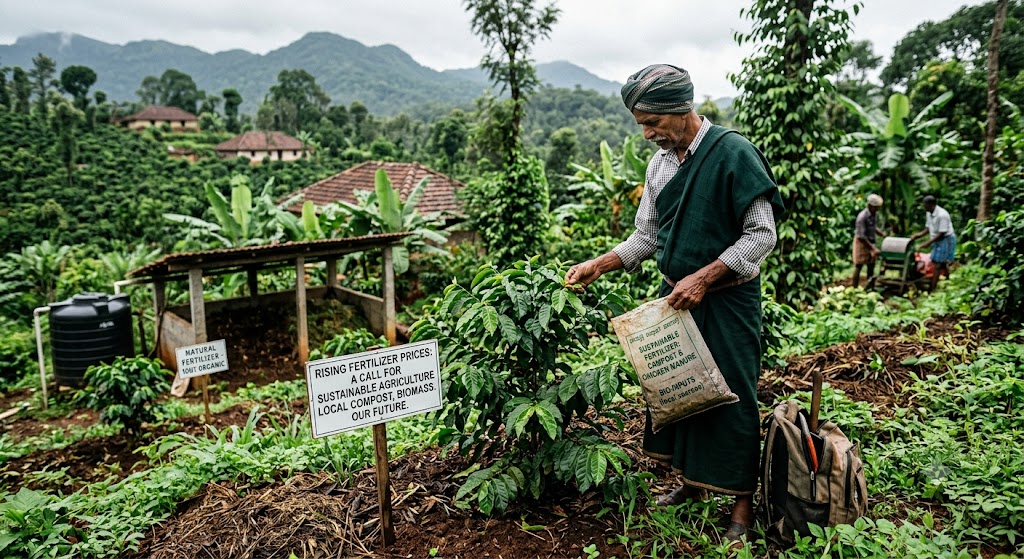

“If we protect the soil, the soil will protect us.” The saying of the elders is more relevant in today’s agricultural situation. In recent times, the rise in the price of chemical fertilizers has put farmers in trouble. However, if this challenge is turned into an opportunity and scientific farming practices are adopted, the cost can be reduced as well as the health of the soil can be preserved.
Fertilizer price increase - impact on farmers
The cost of agriculture is increasing significantly due to the rise in the price of urea, DAP and other complex fertilizers. Most farmers are using more fertilizer than necessary, believing that “more fertilizer - more yield”. This increases the cost and reduces the fertility of the soil.
Soil testing - the first step to reducing costs
If you do a soil test: * The amount of fertilizer required is known. * Unnecessary fertilizer use is avoided. * Savings in fertilizer costs can be made. * Crop yield and quality improve.
Getting a soil test done every three years is essential for the economic well-being of farmers.
Adverse effects of excessive use of urea and DAP
* Soil organic matter decreases. * Soil pH becomes unbalanced. * Deficiency of micronutrients like zinc, sulfur, boron etc. occurs.
* Crops become more susceptible to pests and diseases. * More fertilizer application is required in the coming years.
How to deal with the increase in fertilizer prices?
Soil test-based fertilizer use
Using fertilizer only as much as required can reduce costs by 15-30%.
Use of organic fertilizers
* Cow dung * Compost * Vermicompost * Green manure * Recycling of crop residues These improve soil health and reduce dependence on chemical fertilizers.
Soil pH management
Using lime based on soil test increases the effectiveness of fertilizers. This can yield better results with less fertilizer.
Balanced fertilizer use
Use of micronutrients along with OP provides good nutrition to crops.
Use of fertilizer at the right time
* Base fertilizer at the right time. * Urea in stages. * Use by observing the situation before and after the rains.
Role of cooperative societies
Agricultural cooperative societies and farmer organizations:
* Soil testing camps should be organized. * Scientific agricultural training should be provided to farmers.
* Organic fertilizer production should be encouraged. * The importance of soil health certificates should be conveyed.
Instead of seeing the increase in fertilizer prices as just a problem, it should be considered as an opportunity to move towards scientific and sustainable farming practices. Farmers can reduce fertilizer costs and save soil health by conducting soil testing, using balanced fertilizer, managing soil moisture, using organic fertilizers and proper agricultural management.
“Soil health is the wealth of a farmer; saving soil is saving agriculture.” The care we give to the soil today will determine the prosperity of tomorrow's farmers and the food security of the country. "Test the soil - Use fertilizer in moderation - Reduce costs - Maintain soil health - Increase farmer's income."
Disclaimer: This article has been translated by xklsv.com using advanced AI-based translation tools. Please note that the use of AI for translation is still experimental and may not be 100% accurate. The original content is sourced from shakthidaily.info, and Shakthi Daily is not responsible or liable for any errors, omissions, or inaccuracies that may appear in the translated version, including spelling, grammar, or contextual misunderstandings.
If you come across any mistakes or inconsistencies in this translation, we kindly request you to report them by sending an email to [email protected]
Your feedback will help us improve the quality.
The image in this article has been generated using artificial intelligence and is intended for illustrative purposes only. It may not reflect real-world accuracy.

A.K. Subbayya and Ponnamma Trust Distributes Scholarships...
Read More
.jfif)
**Awareness Is Key to Eradicating Corruption: Sadashiva Swamiji** ...
Read More.jfif)
MLA Contributes ₹3 Lakh for Temple Development...
Read More