December 10th 2025.
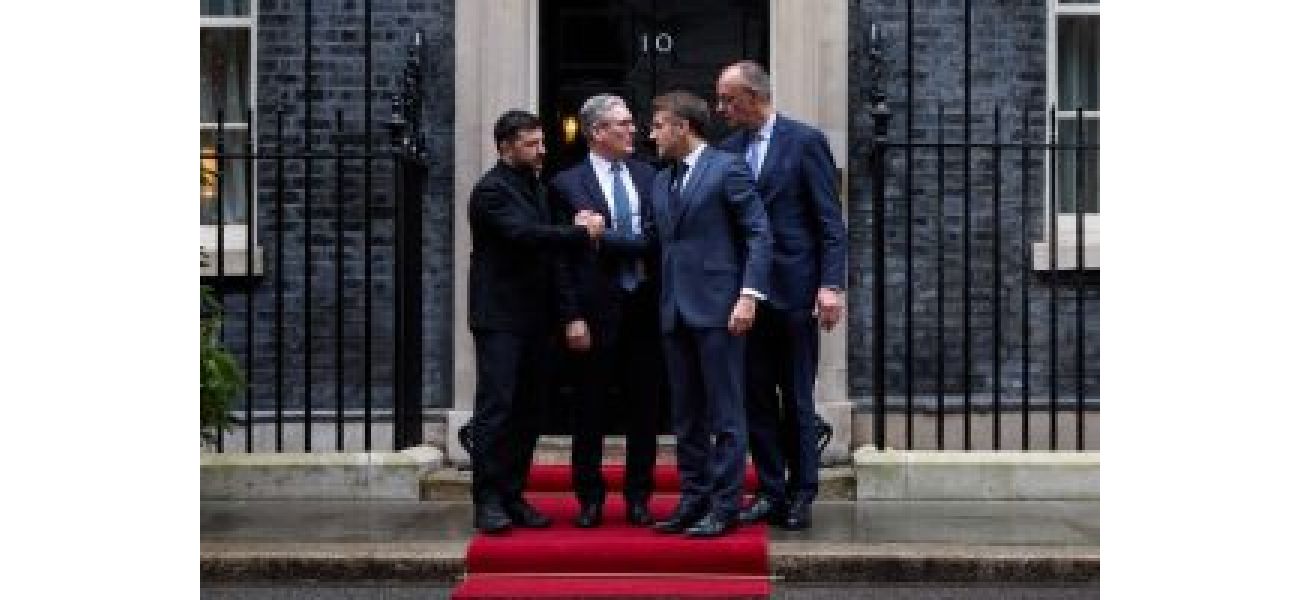
As tensions continue to rise between the United States and Russia, three European countries – UK, France, and Germany – have stepped in to show their support for Ukraine's President Volodymyr Zelenskyy. In a show of solidarity, UK Prime Minister Sir Keir Starmer, French President Emmanuel Macron, and German Chancellor Friedrich Merz met with Zelenskyy in London on December 8th. The meeting was a reassuring gesture as the US has been pressuring Ukraine to make concessions to Russia in order to end the ongoing war.
At the heart of the issue is the US-brokered plan that aims to end the conflict by asking Ukraine to give up some of its territory to Russia. However, this is a difficult pill for Ukraine to swallow as it not only means losing land, but also potentially compromising its security in the future. Prime Minister Starmer echoed this sentiment by stating that Ukraine needs "hard-edged security guarantees" to ensure that any agreement with Russia is respected. He also emphasized that Ukraine should be able to determine its own future without any imposed conditions.
The concern of the three European countries goes beyond just Ukraine's future. They fear that if Russia is allowed to take Ukrainian territory as part of a peace deal, it could embolden them to make similar demands on other European countries in the future. This could potentially destabilize the entire continent and have far-reaching consequences. The worry is further compounded by recent incidents of cyberattacks, drone disruptions, and railway sabotage that have been linked to Russia. This has raised concerns that the war in Ukraine is just one aspect of Russia's larger goal to weaken Europe.
Despite their concerns, the European leaders are walking a tightrope when it comes to dealing with the US and its unpredictable President. Zelenskyy, too, is in a delicate position as he needs both the US and European powers to support his country. However, the US holds a significant amount of power and influence within NATO, and Europe relies on them for various military capabilities. This difference in perception between the US and European leaders is making the peace process in Ukraine difficult and uncertain.
The European leaders are well aware of Trump's fickle nature and the impact it can have on their relationship. While they have praised his efforts in brokering peace, they also acknowledge that his flip-flopping on the issue could derail any progress made. This puts them in a precarious position, as they cannot afford to anger Trump, but also cannot fully rely on him for a lasting solution.
The question remains, how long will Trump listen to the concerns of the European leaders? And will Putin, who may be counting on Trump's wavering stance, use this to his advantage? These are crucial factors that will determine the outcome of the peace negotiations in Ukraine and the future of the continent.
[This article has been trending online recently and has been generated with AI. Your feed is customized.]
[Generative AI is experimental.]