
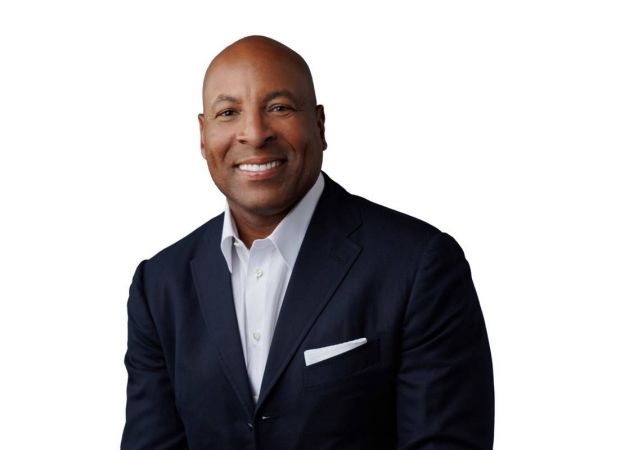

David Grain is at the center of an $8 billion telecommunications deal that could help reshape the U.S. wireless industry. His investment firm, Grain Management, has agreed to sell its nationwide 800 MHz wireless spectrum portfolio to Elon Musk’s SpaceX, giving the satellite company a major boost in its Starlink Mobile plans.
The agreement covers up to 14 MHz of low-band spectrum, which is especially valuable because it can transmit signals over long distances and improve indoor cellular coverage. SpaceX intends to pair these assets with its Starlink satellite network to expand direct-to-phone service and compete more aggressively with established carriers such as AT&T, Verizon, and T-Mobile. Grain Management, which specializes in communications and related infrastructure, has built its reputation by acquiring and managing assets that support connectivity since it was founded in 2007.
Before starting the firm, Grain held senior leadership positions at companies including Global Signal, AT&T, and Morgan Stanley & Co. In March, he also joined an exclusive group of African American billionaires that includes Oprah Winfrey, Tyler Perry, and Shawn “Jay-Z” Carter, with a net worth of $2.3 billion. “For nearly 20 years, we have built Grain to see opportunity where others see complexity,” Grain said, according to Data Center Dynamics.
“Our spectrum expertise allows us to connect the strategic value of these assets with the technologies and operators that can realize their potential.” The deal follows Grain Management’s acquisition of the spectrum portfolio through a $2.9 billion exchange with T-Mobile in August, according to Data Center Dynamics. The later agreement with SpaceX highlights how strategic infrastructure assets can attract buyers looking to expand into emerging markets. Musk called the purchase the final piece of Starlink’s spectrum strategy.
After the announcement, shares of AT&T, Verizon, and T-Mobile reportedly dropped between 5% and 7.3% in extended trading, reflecting investor worries about growing competition. The transaction could also open the door for businesses involved in wireless expansion, including telecom equipment suppliers, fiber network contractors, and infrastructure maintenance firms. Even so, SpaceX will still need regulatory approval and major investment to build out a competitive terrestrial network.
For Grain, the proposed sale marks a significant milestone in the commercialization of wireless spectrum. For the industry as a whole, it suggests that control of essential connectivity assets may become even more valuable as satellite and terrestrial networks continue to converge.

Xbox announced Minecraft's first new dimension in 15 years, boosting its sales and solidifying its p...
Read More
John Legend is helping struggling students cover off-campus housing, AfroTech says, as Bilt and Scho...
Read More
Readers are surprised by Super Mario 64's 30th anniversary and one defends Marvel's Wolverine on the...
Read More
AI makes solo AI startups easier to build, but harder to discover. The real challenge is getting fou...
Read More