
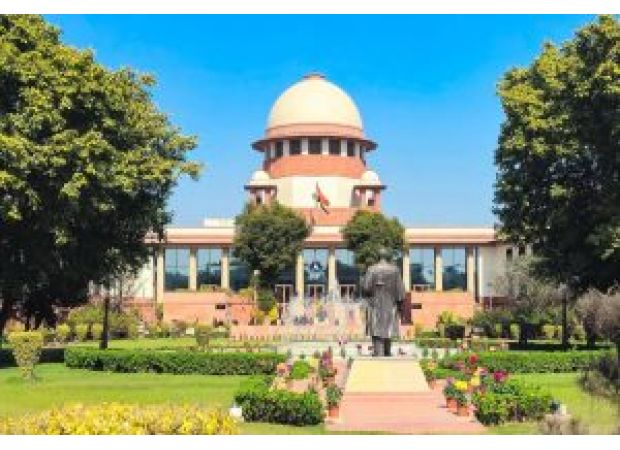

New Delhi: On Friday, the Supreme Court described vehicular emissions as a major factor behind air pollution in Delhi-NCR and said that urgent, medium-term and long-term steps were necessary to bring down the steadily worsening air quality index. While hearing a suo motu matter on the regulatory framework for air pollution, a bench of Chief Justice of India Surya Kant and Justices Joymalya Bagchi and V Mohana also raised concerns over the heavy “bumper-to-bumper” traffic across Delhi-NCR. “We keep talking, sometimes make statements and suggestions, but the point is that AQI is already touching 400,” the CJI said.
The bench pointed to the huge number of vehicles running on roads linking Delhi with neighbouring cities such as Ghaziabad, Greater Noida, Gurugram and Faridabad. “Look at the roads in Delhi and the roads connecting Delhi with the NCR. Take a look at any road and the kind of vehicles moving on them.
That is the major problem,” the CJI said. The judges observed that the real sufferers are the poor, who are out on the roads, especially since the festive season is often the only time they are able to earn their livelihood. On the issue of stubble burning, the bench underlined the need to make farmers aware of using machines instead of setting fields on fire.
Regarding the petition seeking closure of schools, or running them in hybrid mode for students of all age groups when the air quality index crosses a certain threshold, the bench said it would rely on expert opinion. Additional Solicitor General Aishwarya Bhati, appearing for the Centre and other authorities, explained the regulatory framework across five key sectors: industrial emissions, vehicular pollution, construction and demolition dust, road dust and stubble burning. She informed the bench that several steps had already been taken, including restrictions on the entry of certain vehicles, geo-tagging of pollution under control certificates, and action against visibly polluting vehicles based on complaints received through apps and social media.
Bhati also said that stubble burning contributed 14 per cent to Delhi’s pollution on Thursday. The bench said it would issue some orders and hear the matter again on November 16, after the court reopens following the Diwali vacation. Meanwhile, a thick blanket of smog covered the national capital on Friday as air quality worsened sharply and moved closer to the “severe” category, with the overall AQI reaching 391.
Out of the 59 monitoring stations across the city, 30 reported “severe” air quality at 9 am, while the rest remained in the “very poor” category. According to official data, Rohini recorded the worst AQI at 475, followed by IIT Delhi at 472.

Odisha minister Rabi Narayan Naik sparked controversy after a viral video showed his PSO carrying hi...
Read More
Yolanda Renee King, the only grandchild of Martin Luther King Jr. and Coretta Scott King, voted for ...
Read More
Payback is coming soon....
Read More
Over 50 and facing hiring bias? Learn three AI strategies to create opportunities beyond the hiring ...
Read More