
.jpg)

Chikkamagaluru and Hassan districts are living in fear of losing their plantations. After the loan repayment deadline expired on June 30, these growers have a total of more than Rs. 500 crore due to various banks. Banks have started auctioning the plantations under the SARFAESI Act, and auction notices have already been issued in many areas. This has created anxiety and uncertainty in coffee growing districts. It is a fundamental mistake not to consider coffee plantations as agricultural land. Coffee is also an agricultural crop like rice or other food crops. Weather extremes, heavy rains, drought, insect pests and price fluctuations. Coffee growers are also facing all these risks. However, the loan concessions, compensation and protective policies available to food growers are not available to coffee growers. This unequal policy has pushed thousands of families into hardship today. For coffee growers, a plantation is not just an asset; it is their livelihood, their home and their dignity. Losing a plantation means not only losing income, but also their entire lives. Many families are under severe psychological stress. Children’s education is being interrupted, healthcare is becoming unaffordable. Families that have lived with dignity for centuries are now struggling for existence.
The impact of this hardship on society is also severe. Thousands of workers, helpers, traders, transporters and small businesses depend on coffee plantations. If plantations are auctioned, jobs are lost, the rural economy collapses. Social bonds are weakened by financial pressure and communities begin to disperse.
Even more serious is the threat to the culture and identity of indigenous communities who have inhabited this land for centuries. Their festivals, rituals, temples and social systems have adapted to the land. As families leave the land, the enthusiasm of festivals diminishes, community life becomes empty and living culture slowly fades.
Forced migration is the most painful face of this crisis. Lack of land and income is forcing many families to migrate to cities. This is not a dream migration, but a migration for survival. Farmers who once lived with dignity are now confined to insecure and low-paid jobs. 4 to page five
Villages are slowly emptying, leaving only the elderly.
In this context, community leaders, people's representatives and social and cultural organizations should put aside their differences and stand united. It is necessary to draw the attention of the government through peaceful struggle and joint appeal. Through public meetings, non-violent protests and dialogue, the government should be negotiated with for a temporary halt to the plantation auction process, loan restructuring, interest subsidy and recognition of agricultural land for coffee plantations. This is not just a banking problem; it has led to social, cultural and humanitarian hardship. If the government remains silent, no policy can reverse this loss. If the land is lost and communities are scattered, there is no resurrection. Protecting coffee growers is not a matter of kindness. It is justice. It is a question of preserving a society, culture and lifestyle that has survived for centuries.
-Pudiyatanda Devaiah, K. Boikeri, Virajpet
Disclaimer: This article has been translated by xklsv.com using advanced AI-based translation tools. Please note that the use of AI for translation is still experimental and may not be 100% accurate. The original content is sourced from shakthidaily.info, and Shakthi Daily is not responsible or liable for any errors, omissions, or inaccuracies that may appear in the translated version, including spelling, grammar, or contextual misunderstandings.
If you come across any mistakes or inconsistencies in this translation, we kindly request you to report them by sending an email to [email protected]. Your feedback will help us improve the quality of our translations.
.jfif)
Ayudha Puja to Be Held in Napoklu on the 20th...
Read More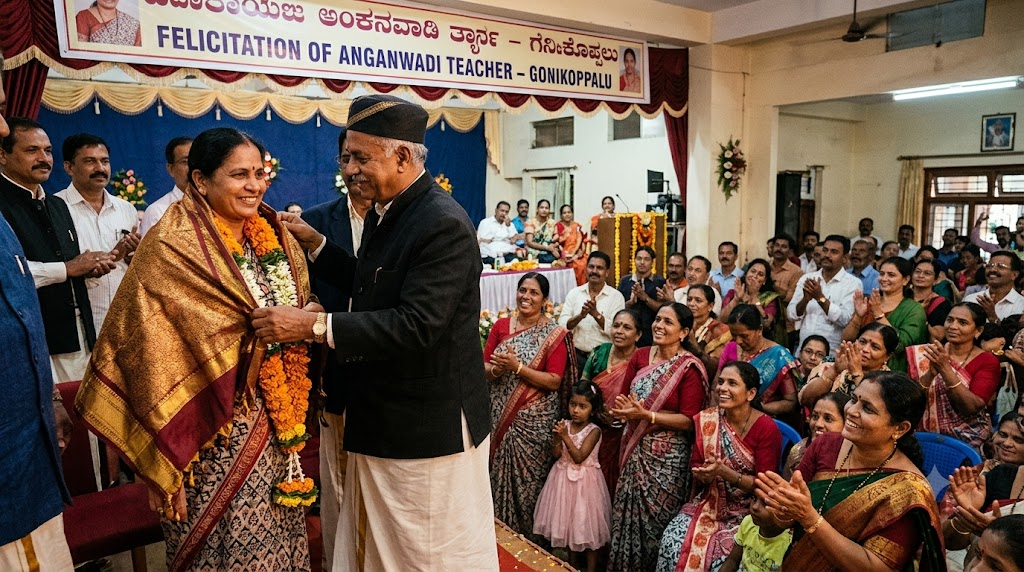
Anganwadi Teacher Honoured at Felicitation Ceremony...
Read More
Ritual Offering of Arati and Bagina to River Kaveri...
Read More.jfif)
MLA Felicitated for Providing Borewell Facility...
Read More