
Kover Gulf Indresh
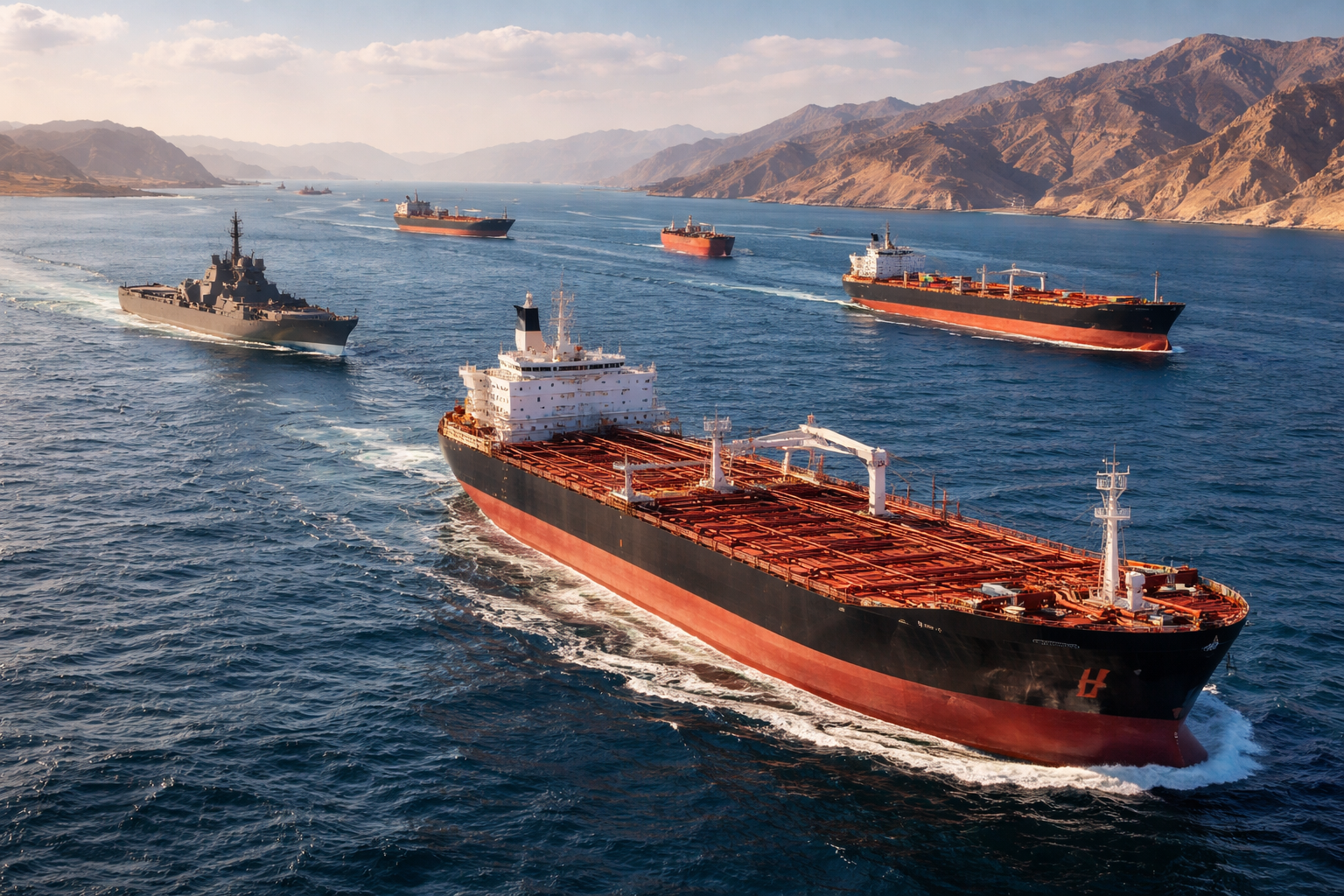
Tehran, Mar. 15: The war crisis between Iran and the US and Israel is escalating day by day. Despite being a small country, Iran, which is standing in the face of the giant America, has announced that it will not allow the ships of the US and Israel and their allies to transport goods in the strait for any reason.
Now, sources in the US military intelligence department have said that explosives have been placed in the sea to prevent ships from moving in the Strait of Hormuz. US President Donald Trump responded by saying that if Iran has placed any water explosives in the Strait of Hormuz, they should be removed immediately. If they are not removed, a military attack will be carried out on Iran in a way that has not been seen before. The US also said it had destroyed 16 Iranian ships that were laying naval mines in the Strait of Hormuz.
The US Central Command, which oversees US military operations in West Asia, said it had destroyed several Iranian naval vessels, including 16 water mines, near the strait. However, it did not provide any information about the mines that Iran may have laid. However, US intelligence says that Iran is using small boats instead of ships to lay its water mines in an attempt to deter further US activity along the canal, The New York Times reported.
What are naval mines?
You may have heard of Naxalites and militants planting bombs underground. These land mines explode when people step on them or when vehicles drive over them. Similarly, naval mines are used to destroy ships and submarines by placing explosives underwater. They are designed to explode when ships come into contact with them or when they approach them. These mines are used offensively (to prevent the movement of enemy ships). They are self-explosive devices placed in the water to destroy submarines and ships. They are also used to prevent enemy entry into restricted areas or to quarantine enemies in a specific location.
How are naval mines destroyed?
Naval mines use the same technology used to plant land mines. However, they are not planted in the seabed, but are floated 15 to 50 meters above the water. Sometimes they are also attached using steel wire. These are equipped with sensors. The bottom of the ship is made of steel and is painted with a special paint made of zinc or magnesium to prevent rusting. However, the sensors of the explosives are easily attracted to steel. The explosives detonated as soon as they hit the surface of the ship, causing extensive damage and possibly sinking.
First use in the world
These explosives were first used during the American Revolution (1765–83), when Yale student David Bushnell discovered that gunpowder could be detonated underwater. The US Naval History and Military Command later recorded that a team led by George Washington (the first president of the US) used the newly invented sea explosive to destroy part of the British fleet stationed on the Delaware River in Philadelphia. This first explosive used gunpowder. Although the device failed to damage any British ships, the invention proved promising.
Is it possible to disarm underwater explosives?
Ships sailing in this type of waterway would not explode if they were fitted with wood or fiberboard on the outside. Minesweepers, unmanned aerial vehicles, and drones are used to destroy underwater explosives. The outer shell of the minesweepers is made of fiberboard, which prevents them from exploding.
How many explosives does Iran have?
According to a March 2026 Congressional Research Service (CRS) report, Iran has an estimated 5,000 to 45,000
6,000 underwater explosives. According to a Reuters report, Iran has laid about a dozen underwater explosives since early March. The CRS report acknowledged this, but said that Iran's ability to lay or "seal" explosives in the strait may be limited after recent US and Israeli military operations.
However, according to a CNN report, the country still retains 80-90% of its small boats and explosive-laying capabilities. In addition, the Islamic Revolutionary Guard Corps (IRGC) has the capability to deploy explosives, including the use of 'suicide' boats loaded with explosives and shore-based battery-powered missiles. This was noted in a 2019 Defense Intelligence Agency report, which noted that the IRGC planned to use small, fast vessels for explosive deployment, and that the sources said that the small boats were equipped with them.
According to a 1984 CIA document declassified in 2009, most of the Strait of Hormuz is more than 45 meters deep, making it suitable for anchored and bottom-mounted mines. The Persian Gulf is about 1,000 km long and 330 km at its widest, but is no deeper than 100 meters. This record is for the northern Gulf, near Kuwaiti and Saudi Arabian ports, in areas with depths of less than 20 meters.
Disclaimer: This article has been translated by xklsv.com using advanced AI-based translation tools. Please note that the use of AI for translation is still experimental and may not be 100% accurate. The original content is sourced from shakthidaily.info, and Shakthi Daily is not responsible or liable for any errors, omissions, or inaccuracies that may appear in the translated version, including spelling, grammar, or contextual misunderstandings.
If you come across any mistakes or inconsistencies in this translation, we kindly request you to report them by sending an email to [email protected]
Your feedback will help us improve the quality of our translations.

.png)
Kamagra Jelly Australia: Uses, Dosage, Side Effects & Benefits Explained...
Read More