In a surprising move, Iran announced the temporary closure of the Strait of Hormuz on Tuesday for military drills. This rare show of force comes as its negotiators engage in another round of indirect talks with the United States in Geneva regarding its disputed nuclear program. It is the first time Iran has announced the closure of this key international waterway, which is responsible for 20% of the world's oil transportation, since the US began threatening Iran and sending military assets to the region.
This announcement marks a further escalation in the already tense standoff between the two nations, sparking fears of another war in the Middle East. As the talks began, Iran's state media reported that it had fired live missiles towards the Strait and would temporarily close it for several hours due to "safety and maritime concerns." The semiofficial Tasnim news agency, known for its close ties to the paramilitary Revolutionary Guard, stated that the missiles launched within Iran and along its coast had successfully hit their targets in the Strait.
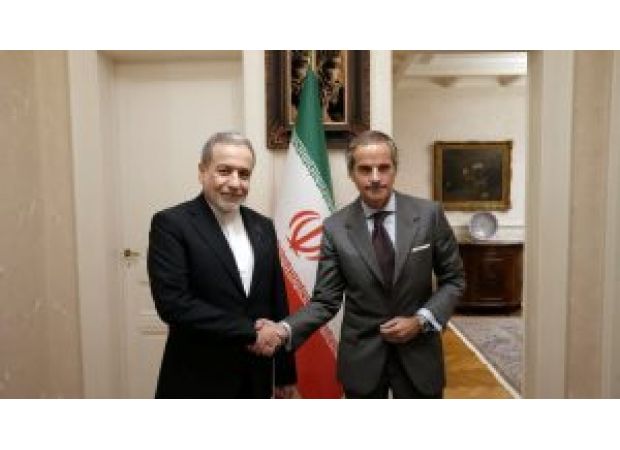
After nearly three hours of discussions, Iranian state TV confirmed that the talks had concluded. This was the second round of indirect talks between the two nations, with the first taking place in Oman earlier this month. The latest talks were held inside the residence of the Omani envoy to Geneva, with both sides reportedly meeting separately with mediators.
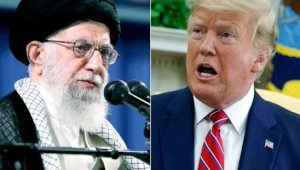
The negotiations focused solely on Iran's nuclear program and did not touch upon any other domestic policies, including its recent crackdown on protests. US President Donald Trump has repeatedly threatened to use force to compel Iran to agree to limit its nuclear activities, while Iran has vowed to respond with its own attack. Trump has also condemned Iran's violent suppression of protests that erupted last month.
In addition to the talks in Geneva, the US is also hosting discussions between envoys from Russia and Ukraine, just days before the fourth anniversary of Russia's full-scale invasion of its neighbor. Meanwhile, Iran has been conducting live-fire drills in the Strait of Hormuz, the Persian Gulf, and the Gulf of Oman, which are crucial international shipping routes. This is the second time in recent weeks that Iran has held such a drill in this region.
Iran's Supreme Leader Ayatollah Ali Khamenei has issued stern warnings to the US regarding its increasing military presence in the Middle East. He stated that while a warship may be a dangerous weapon, a greater danger is the weapon that can sink that warship into the depths of the sea. He also cautioned the US against forcing the outcome of the talks and called it a foolish move.
Last week, Trump announced that the USS Gerald R. Ford, the world's largest aircraft carrier, was being deployed from the Caribbean Sea to the Middle East to join other warships and military assets that the US has amassed in the region. This includes the USS Abraham Lincoln and its accompanying guided-missile destroyers, which have been in the region for over two weeks. Just last week, US forces shot down an Iranian drone that approached the Lincoln, and Iran also attempted to stop a US-flagged ship in the Strait of Hormuz.
The Gulf Arab nations have expressed concerns that any attack could spiral into a larger conflict in an already volatile region. The Trump administration is seeking a deal to limit Iran's nuclear program and prevent it from developing nuclear weapons. Iran maintains that its nuclear program is for peaceful purposes and has so far refused to comply with demands to halt uranium enrichment or hand over its stockpile of highly-enriched uranium.
The talks between the US and Iran were interrupted in June when Israel launched a 12-day war against Iran. During this war, the US bombed Iranian nuclear sites, potentially destroying many of the centrifuges used to enrich uranium. Additionally, Israel targeted Iran's air defenses and ballistic missile arsenal. Iran has repeatedly insisted that its nuclear program is for peaceful purposes and had been enriching uranium up to 60% purity before the war in June.
In the midst of these ongoing tensions, Iran is also marking 40 days since one of the deadliest days of the recent protest crackdowns. Activists claim that over 7,000 people were killed in the violent suppression of protests that swept the country last month. The US-based Human Rights Activists News Agency, which has been accurate in counting deaths during previous rounds of unrest in Iran, relies on a network of activists within the country to verify these numbers. However, due to disrupted communication and internet access in Iran, the exact death toll remains unknown.
The Iranian government has planned a memorial at the Grand Mosalla mosque in Tehran to mark the 40-day period, attributing the protests to "violent actions by armed groups allegedly directed by foreign intelligence agencies." As the talks between the US and Iran continue, the world holds its breath, hoping for a peaceful resolution to the ongoing tensions between these two nations.